






Framed Portrait of Saint
A framed portrait of saint brings centuries of devotional devotion into a room, spanning Baroque oils to delicate miniatures.
Framed Portrait of Saint
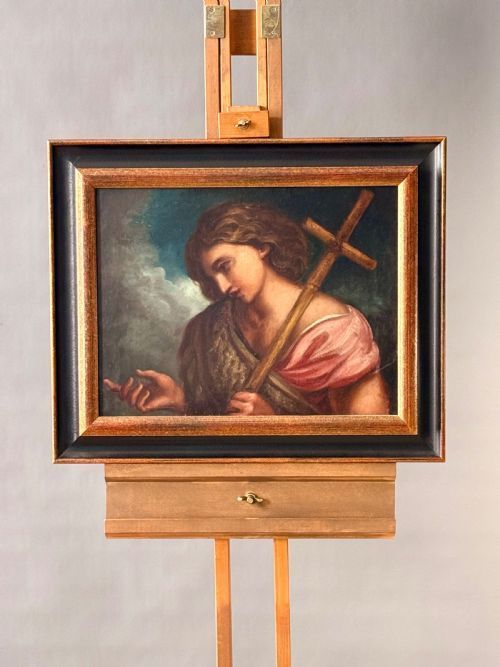
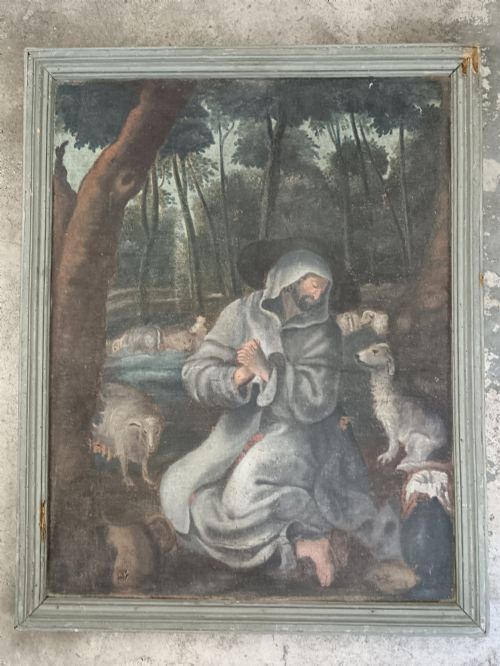
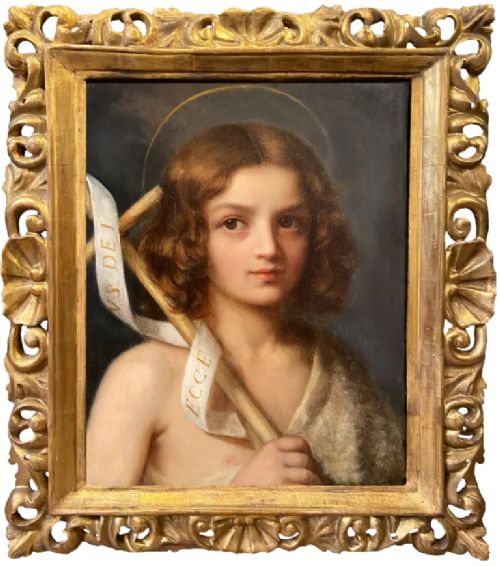
A framed portrait of saint depicts figures such as Saint John the Baptist, the Virgin Mary, and various venerated historical holy figures. These works emerge primarily from seventeenth and eighteenth-century European traditions, including Italian, Spanish, and French schools.
Most examples take the form of oil on canvas, though collectors also encounter reverse glass pictures, Limoges enamel plaques, and miniature paintings. They capture regional stylistic shifts from rigorous Baroque compositions to more naive provincial interpretations.
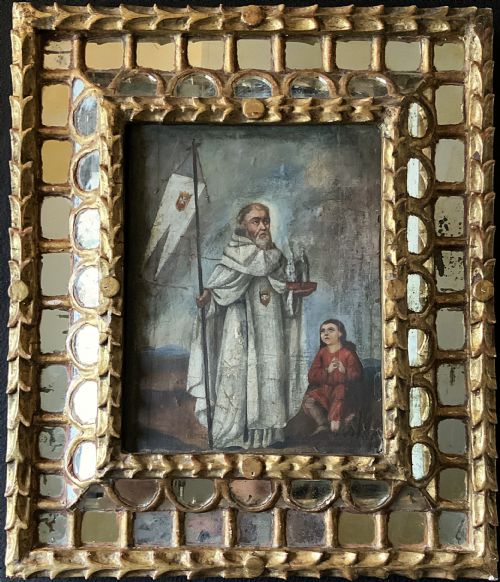
Subjects range from single contemplative studies like Saint Francis of Paola to complex narrative scenes involving the Holy Family. The accompanying frames, often made of giltwood, complement the historical weight of the canvas or panel within.
Materials and construction methods
Artists painted these works using oil paint and pigment applied to prepared canvas, wood, or glass surfaces. Canvases are typically stretched over wooden frames and housed in period surrounds such as carved giltwood.
Techniques vary from the confident brushwork of major workshops to naive provincial executions showing underlying pentimenti. Specialised methods like reverse glass painting and enamel work on copper plaques appear alongside standard oil paintings.
Framed Portrait of Saint Retail Price Guide 2026
Typical asking prices for framed portrait of saint among the pieces listed under this phrase on Sellingantiques today, from the lower quarter to the upper quarter. They describe what is for sale here now, not the wider market.
Current listings feature oil on canvas, wood, giltwood, paper, and pigment across seventeenth-century and eighteenth-century periods.
Factors determining the grade of a piece
Quality rests in the expressive power of the brushwork and the anatomical confidence of the figure. Masterful handling of light and shadow, typical of Baroque painting, separates accomplished studio work from stiff provincial copies.
The integrity of the original surface and the harmony between the artwork and its period frame dictate desirability. Pieces retaining undisturbed pigments and authentic seventeenth or eighteenth-century giltwood mounts command greater attention.
Francesco Solimena·Gaspar de Figueroa·Raphael·Murillo
The Framed Portrait of Saint Glossary
- Baroque
- A stylistic period spanning the seventeenth and eighteenth centuries characterised by drama, deep shadow, and dynamic movement. It informs many of the religious oil paintings seen on this page.
- Pentimento
- An alteration in a painting where previous brushstrokes show through the upper layers of pigment. This reveals the artist changing their composition during the creative process.
- Reverse glass picture
- An image painted directly onto the back of a glass panel so that the final composition is viewed through the front. This technique produces a distinct glossy finish common in certain eighteenth-century works.
- Giltwood
- Wood carved and covered with a thin layer of gold leaf. It forms the decorative frames that house many antique oil paintings.
- Limoges enamel
- A technique involving fused glass powder applied to metal plates, creating vibrant devotional plaques. These objects date back to early centuries and require specialist firing.
Framed Portrait of Saint: Frequently Asked Questions
How do I identify a seventeenth century canvas?
Examine the weave of the fabric, the stretcher construction, and the type of ground preparation used beneath the oil paint. Older canvases often display irregular thread counts and hand- forged tacks.
Look closely at the craquelure across the pigment surface, as older oil paint develops a fine, natural network of cracks over centuries. Comparing the stylistic conventions of Italian or Spanish Baroque schools also helps confirm the period.
What is a reverse glass picture?
A reverse glass picture is created by applying paint directly to the rear side of a glass panel. The artist paints details in reverse, starting with the foreground elements before the background.
When viewed from the front, the glass protects the pigment while imparting a brilliant, luminous surface. This method appears in eighteenth-century devotional works.
How should I care for an antique oil painting?
Keep the artwork away from direct sunlight, high humidity, and rapid temperature fluctuations that can cause the canvas to warp or the oil paint to crack. Stable indoor conditions protect both the stretcher and the frame.
Dust the surface very gently with a soft, dry brush, avoiding any harsh cleaning agents or moisture. Professional conservation should be left to specialists if structural repairs become necessary.
What does after an artist mean?
When a painting is described as after a master such as Raphael or Murillo, it indicates that the work is a later copy or interpretation of a famous composition. These pieces were often produced by students or regional artists studying established masterworks.
Such paintings allowed patrons to own versions of celebrated religious imagery without acquiring the original prime work. They remain valued examples of period painting technique in their own right.