
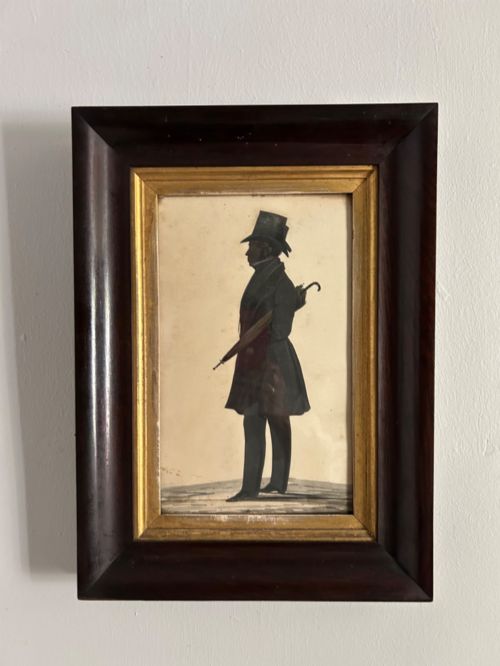


Framed Paper Silhouette
A framed paper silhouette captures a likeness in profile, offering a direct encounter with past lives through hand-cut precision.
Framed Paper Silhouette
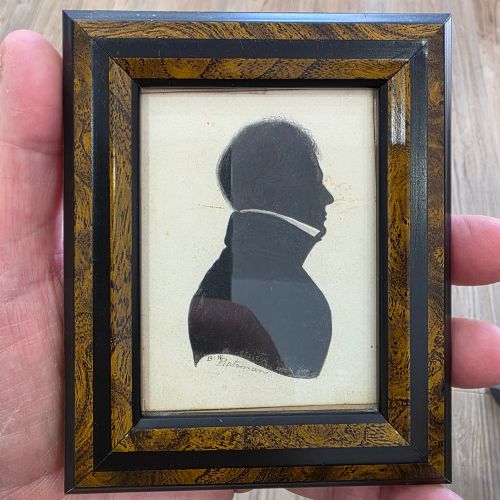
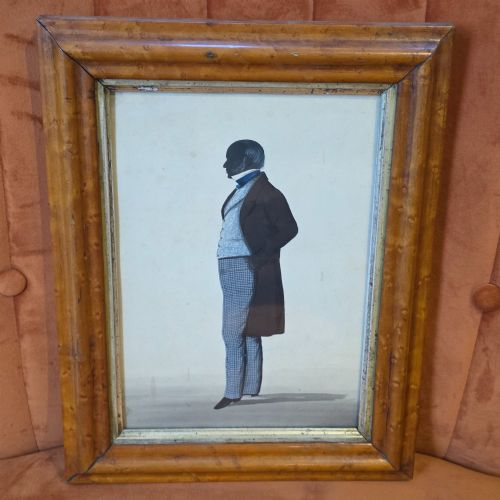
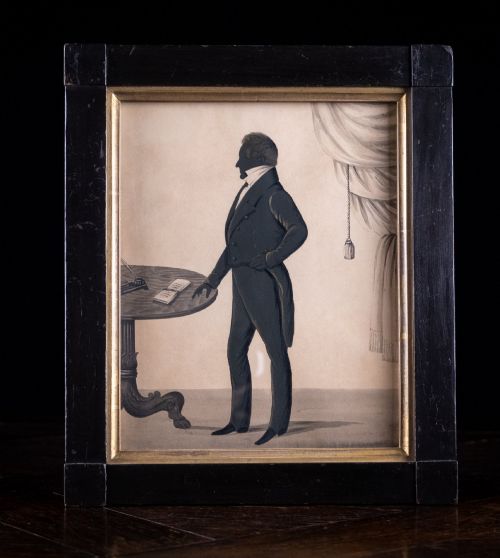
A framed paper silhouette records the profile of a sitter, often executed with scissors or knife and mounted against a contrasting background. These works emerge primarily from the eighteenth and nineteenth centuries, spanning the Georgian, Regency, and Victorian periods.
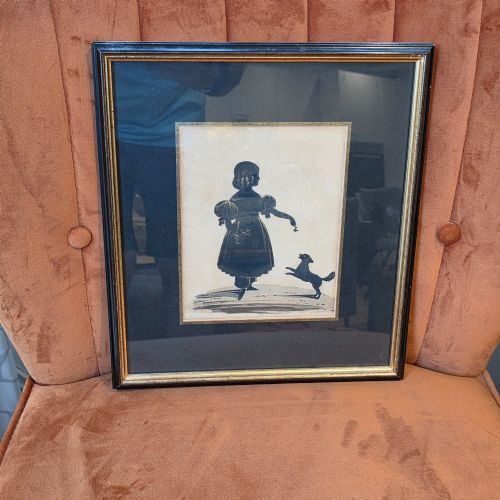
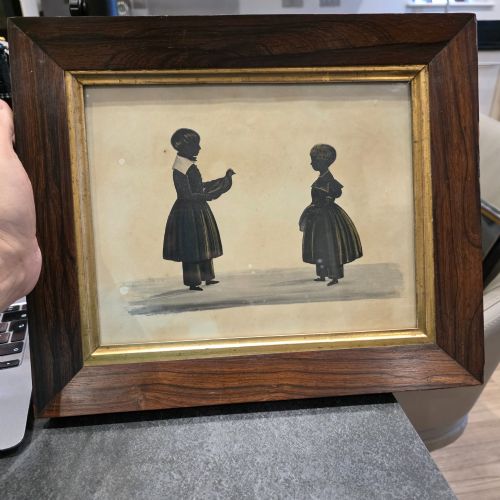
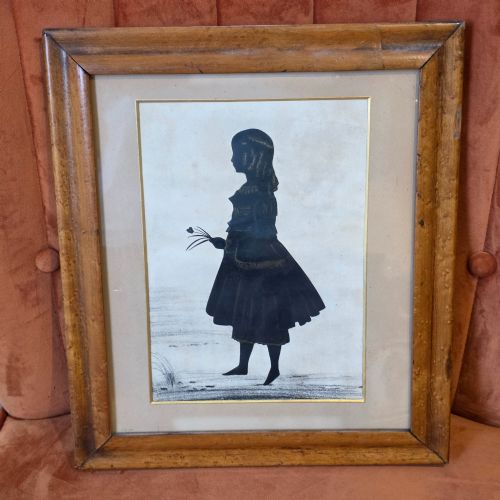
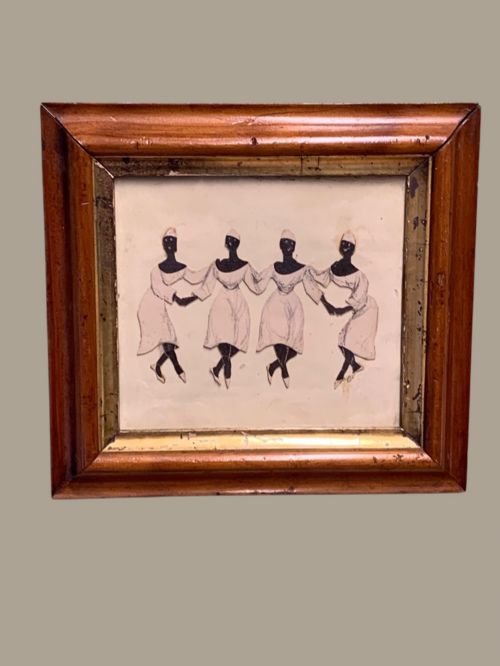
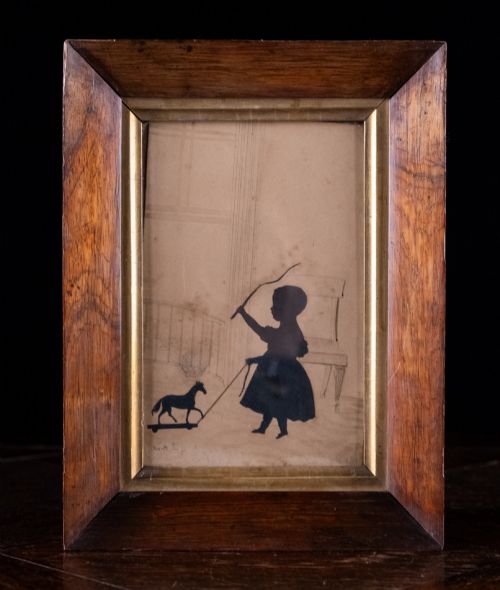
The pieces on this page appear in various formats, ranging from simple head-and-shoulder portraits to elaborate conversation pieces depicting multiple figures, children, and animals. Alongside single portraits, one encounters cut paper pictures of flowers and narrative scenes.
Makers recorded in the evidence range from itinerant profileists to established galleries such as the Hubard Gallery and the Royal Victoria Gallery. Portraits frequently show gentlemen, ladies in caps, and children, sometimes enhanced with watercolour or gilding.
Materials and construction methods
The primary technique relies on paper, manipulated through cutting with fine blades or scissors to form a sharp profile. Artists often added detail using ink, watercolour, or pastel directly onto the paper or background.
Gilding and gold leaf frequently highlight buttons, bonnets, or borders, adding luminosity to the dark profiles. Backgrounds employ paper or painted surfaces, occasionally incorporating collage work.
Framing is integral to survival, utilising wood such as maple and ebony, enclosed behind glass with brass fittings. These materials protect the delicate paper media from moisture and handling.
Listings span the eighteenth century through the 1920s, utilising paper, glass, maple, brass, and gold leaf.
Distinctions in execution and finish
Quality rests upon the deftness of the hand-cutting and the accuracy of the profile likeness. Superior examples capture individual character and posture clearly, whereas lesser works rely on generic outlines.
The inclusion of secondary media, such as delicate watercolour detailing or gilding, elevates the sophistication of the piece. Well-preserved original frames of maple or ebony add contextual integrity to the artwork.
William James Hubard·Augustin Edouart·John Smith of Edinburgh·Nathaniel Bermingham
The Framed Paper Silhouette Glossary
- Silhouette
- A profile portrait filled in with a solid dark colour, typically black, against a light background. The name derives from Étienne de Silhouette, an eighteenth-century French finance minister.
- Conversation piece
- An artwork depicting a group of figures engaged in a social setting or daily activity. In silhouettes, these complex scenes often feature family members, children, and pets.
- Gilt
- A thin layer of gold applied to surfaces such as paper highlights or picture frames. This technique provides metallic contrast against the dark cut paper.
- Collage
- An artistic composition made by adhering various materials, such as cut paper and printed elements, to a backing surface. Some nineteenth-century works utilise this method to build multi-figure scenes.
Framed Paper Silhouette: Frequently Asked Questions
How are silhouettes dated?
Dating relies on costume details, such as Regency bonnets, hairstyles, and collars, combined with framing styles. Inscribed dates or artist signatures on the reverse provide definitive markers.
Paper characteristics and handwritten notes by contemporary owners also assist in establishing the period of creation.
Where should I hang these?
These works suit study walls, hallways, or grouped arrangements in traditional interiors. Their monochrome profiles contrast effectively against patterned or brightly coloured wall coverings.
Keep them away from direct sunlight to prevent the fading of dark paper and watercolour pigments.
Are all silhouettes cut from paper?
While cutting remains the dominant method, some examples are painted directly onto card or glass using ink or watercolour. Mixed media pieces combine cut paper with painted backdrops and gilded highlights.
Printed versions also exist, particularly from later periods like the early twentieth century.
What frames are original?
Early nineteenth-century pieces frequently retain narrow maple or ebony frames protected by convex or flat glass. Brass hangers and backing papers from the period indicate untouched original mountings.
Re-framing occurs often, so original seals and labels add significant historical weight.