




Framed Ornithology Prints
These framed ornithology prints bring the precise observation of avian life indoors, combining scientific study with centuries of decorative tradition.
Framed Ornithology Prints
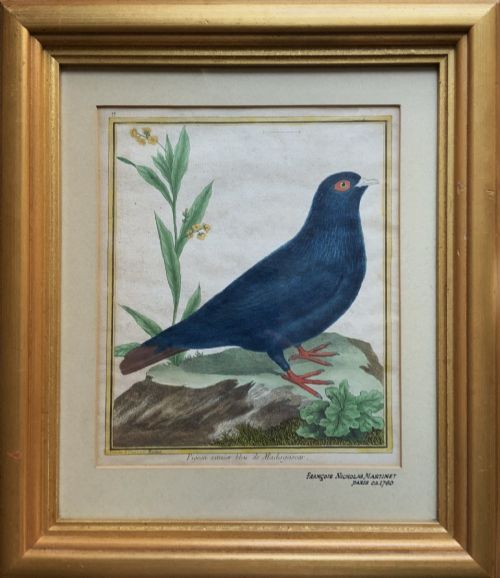
These framed ornithology prints encompass hand-coloured engravings, lithographs, and watercolours depicting birds from the eighteenth and nineteenth centuries. You will frequently encounter Georgian and Victorian natural history plates alongside Edwardian pairings and later twentieth-century watercolours.
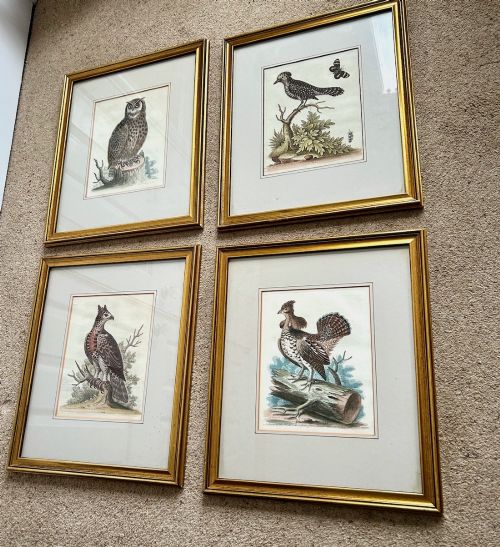
The subjects range from single exotic parrots and game birds to sets of waterfowl, pigeons, and tragopans. Most pieces arrive mounted behind glass within wooden frames, occasionally featuring ebonised finishes or deep giltwood mounts.
Originating primarily as scientific illustrations or portfolio plates, these works now function as wall art and framed artwork. The selection spans single sheets to complete sets of four or ten matching plates.
Materials and technique
The foundation of these works is paper, upon which artists and printers applied ink through copperplate engraving, lithography, or direct watercolour painting. Many plates received hand-colouring to enhance the natural plumage of the birds.
Framing materials rely heavily on wood, sometimes enhanced with gold leaf, gilt, or gilt wood. Protective glass fronts preserve the delicate paper and watercolours from environmental moisture and light degradation.
Listings span the eighteenth, nineteenth, and twentieth centuries, featuring paper, glass, wood, and watercolour materials within natural history styles.
Distinctions in execution
The finesse of the original hand-colouring separates workshop production from master ornithological illustration. Precision in rendering anatomical details of feathers and beaks distinguishes fine engravings by named artists from anonymous decorative prints.
The preservation of the paper support and the integrity of the early framing materials dictate the overall standard. Original ebonised frames and deep giltwood mounts contribute significantly to the visual weight and period authenticity of the piece.
François-Nicolas Martinet·George Edwards·William Swainson·Edward Lear·Eleazor Albin·Archibald Thorburn
The Framed Ornithology Prints Glossary
- Engraving
- A printmaking technique where an artist cuts an image into a metal plate to hold ink. This method produces crisp, fine lines essential for detailed feather patterns.
- Lithography
- A planographic printing process based on the repulsion of oil and water. It allowed publishers to produce coloured bird plates efficiently in the nineteenth century.
- Hand-coloured
- The application of watercolour or tint by hand after the monochrome outline is printed. This adds vibrant life to the plumage of parrots, game birds, and waterfowl.
- Giltwood
- Wood carved and covered with a thin layer of gold leaf or gilt. It provides a reflective, ornate border frequently paired with nineteenth-century natural history art.
Framed Ornithology Prints: Frequently Asked Questions
How do I care for framed bird watercolours?
Keep these works away from direct sunlight to prevent the watercolour pigments and hand-colouring from fading over time. Maintain a stable room temperature to protect the antique paper and wooden frames from warping.
Ensure the glass remains sealed to stop dust and moisture from reaching the paper surface. Clean the glass gently with a dry microfiber cloth rather than spraying liquid cleaner directly onto the frame.
Are these prints from original natural history books?
Many plates originated as unbound scientific volumes or portfolios published during the eighteenth and nineteenth centuries. Publishers employed artists to document newly discovered species for scholarly study.
These pages were later separated from broken bindings and placed into frames for interior display. The presence of plate numbers, descriptive text, and watermark evidence often confirms their book origins.
How do I identify a hand-coloured engraving?
Examine the surface under magnification to spot the distinct plate mark indentation left by the printing press. The ink lines will sit slightly depressed into the paper fibres.
Look closely at the washes of colour for subtle brushstrokes and minor overlaps that confirm human application. Printed colour screens show uniform dot patterns, whereas antique hand-colouring displays organic variation.
How should I display a set of bird prints?
Hang matching series, such as sets of four engravings or waterfowl plates, in a symmetrical grid or linear arrangement. Consistent frame styles, such as ebonised wood or gilt mounts, help unify disparate subjects.
Balance the visual weight of deep giltwood mounts against simpler surrounding decor. Grouping pieces by period, such as Georgian or Edwardian, creates a cohesive gallery wall.