



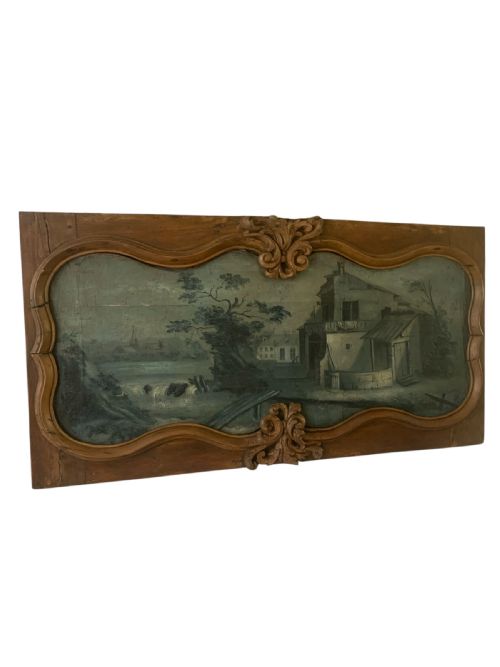


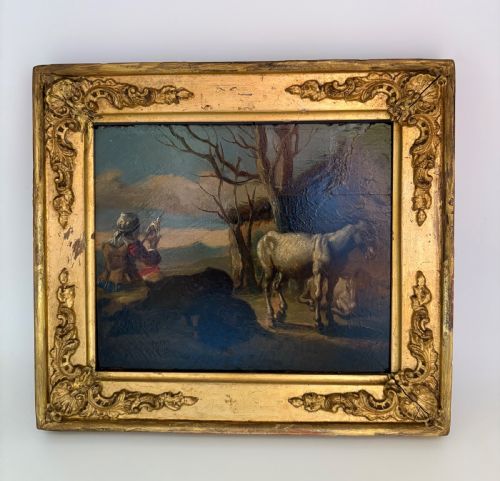
Framed Oil Landscape Panel
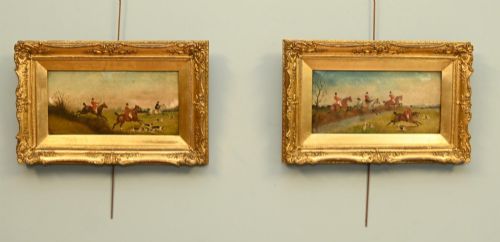
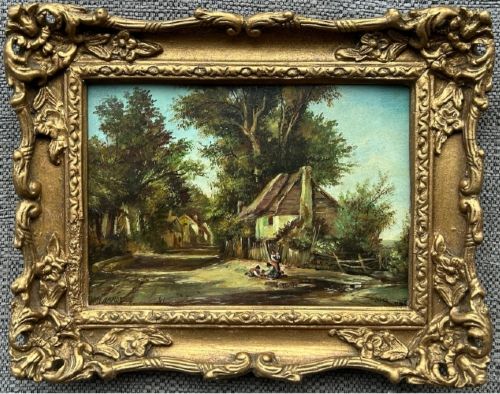
When you search for a framed oil landscape panel, you are looking at small-scale portable art that brings outdoor scenes indoors within period frames.
Framed Oil Landscape Panel
A framed oil landscape panel consists of a rigid wooden support painted with oil pigments, enclosed within a decorative frame. These works span multiple centuries, ranging from eighteenth-century topographical scenes and overdoor panels to twentieth-century impressionist sketches.
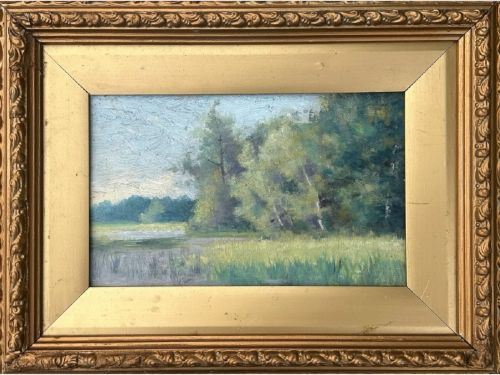
The selections on this page commonly feature British and continental rural views, rivers, and coastal harbours. Smaller boards were frequently painted outdoors, capturing light and weather directly on a solid wooden or oak support.
How They Were Made
Artists painted primarily with oil pigments applied directly onto prepared wood panels, oak boards, or occasionally canvas laid over board. These rigid surfaces offered a smooth, stable ground that resisted the cracking common to stretched fabrics.
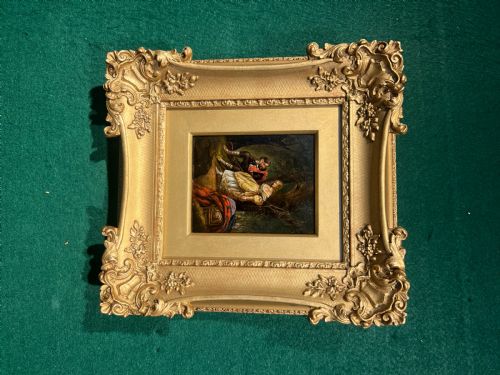
Many works are housed in original giltwood or gesso frames decorated with moulded plaster ornamentation. The combination of oil paint on a timber substrate, secured inside a gilded wooden moulding, created a durable and self-contained picture object.
A charming panel preserves the record of a past repair on the back involving children, adults, and two dogs.
What Varies in Quality
Quality rests upon the confidence of the brushwork and the sensitivity of the composition. Finer panels display adept handling of light, atmospheric depth, and natural colour harmonies rather than rigid mechanical precision.
The integrity of the panel itself and the preservation of the original gilt frame significantly influence the character of the piece. Untouched surfaces retain the artist's initial touch, whereas inferior examples suffer from heavy overpainting or later, unsympathetic framing.
William Howard Hardy·Maud Raphael Jones·Florence Adelina Hess·Paul Elie Gernez·Hubert Wellington·Pieter Cornelis Dommersen·Cornelis Van Poelenburgh·Manet·H Wallace·John Henry Dell·Jeffrey Pratt·Kershaw Schofield·Edmond Defonte·John Constable·George Smith·Owen Bowen·Joseph Vickers de Ville·Richard Wilson
The Framed Oil Landscape Panel Glossary
- Oil Paint
- A slow-drying paint made by mixing pigments with oils such as linseed. This medium allows artists to blend tones smoothly and build up rich, textured layers.
- Wood Panel
- A flat piece of timber used as a rigid painting support instead of canvas. Oak and mahogany were frequently utilised by artists across various centuries.
- Gesso
- A plaster-like mixture applied to wood mouldings or panels to create a smooth surface for gilding and ornamentation. It forms the base of traditional decorative frames.
- Giltwood
- Wood carved and coated with gold leaf or metallic powder. It provides the characteristic bright finish seen on antique picture frames.
- Plein Air
- The practice of painting outdoors to capture direct natural light and environmental conditions. This method is closely associated with impressionist landscape works.
Framed Oil Landscape Panel: Frequently Asked Questions
Are these panels painted on solid wood?
Many examples are executed on solid timber supports, including oak and other prepared wooden boards. These rigid panels provided a sturdy base that prevented the sagging associated with stretched fabric.
Some later pieces utilise board or panel derivatives. Inspecting the reverse usually reveals the grain and construction of the wooden support.
How can I date a landscape panel?
Dating relies on a combination of artistic style, the construction of the wooden support, and the framing techniques used. Eighteenth-century panels often show distinct hand-tool marks and heavier oak boards.
Nineteenth and twentieth-century works frequently reflect movements like British Impressionism or Post-Impressionism. Signatures, inscriptions, and labels on the reverse also offer chronological clues.
Where should I hang an oil panel?
Panels should be displayed away from direct sunlight, radiators, and damp walls to protect the wood and paint layers. Stable indoor temperatures prevent the timber from warping or the gesso frame from cracking.
Because these works are relatively compact, they suit intimate wall spaces or groupings. Proper picture hooks suited to the weight of the frame must be used for secure mounting.