
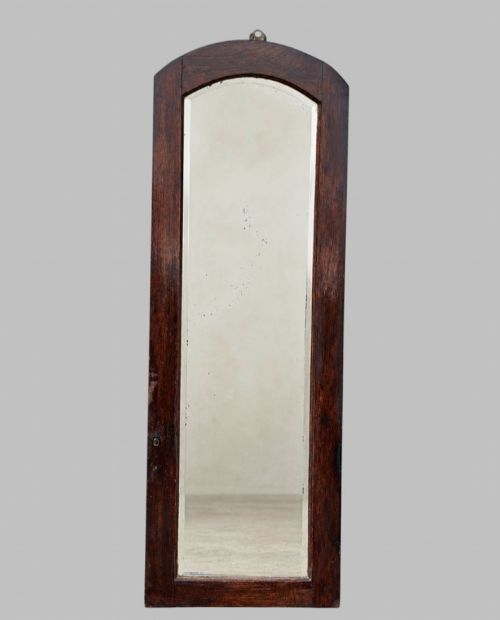
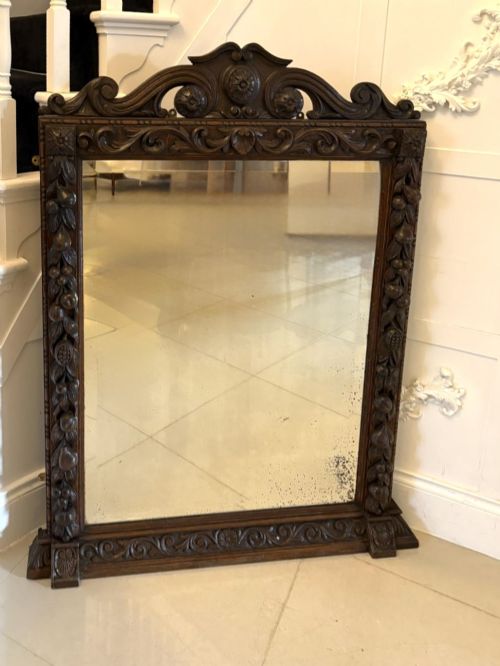
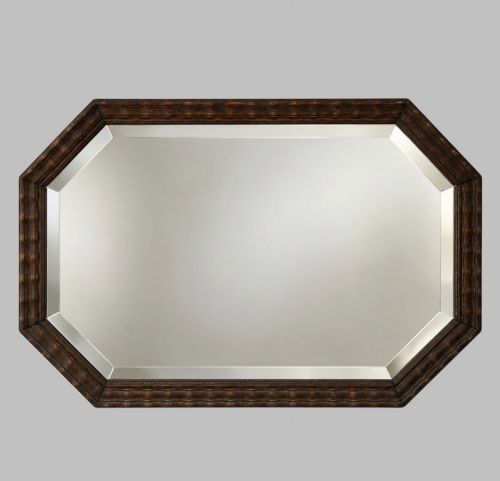
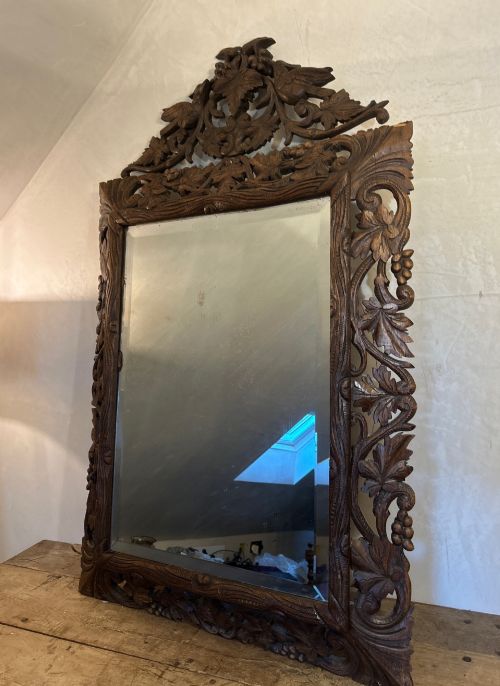





Framed Oak Glass Mirror
A framed oak glass mirror brings solid timber grain and polished reflection together, grounding a hallway or overmantel with quiet substance.
Framed Oak Glass Mirror
A framed oak glass mirror satisfies the search for sturdy domestic reflectors built from durable hardwoods, appearing most frequently on this page as wall-hung or overmantel pieces.
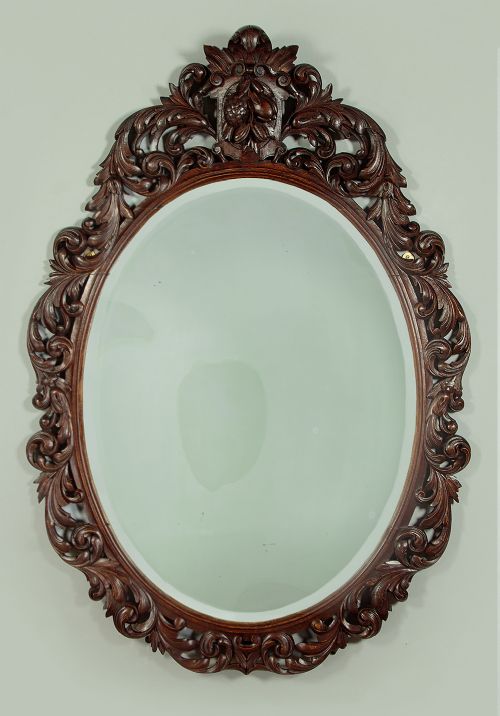
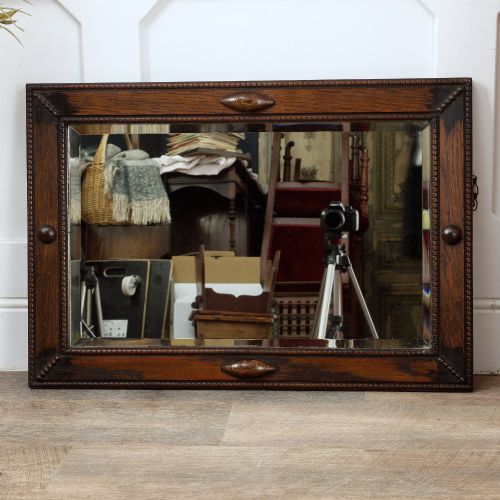
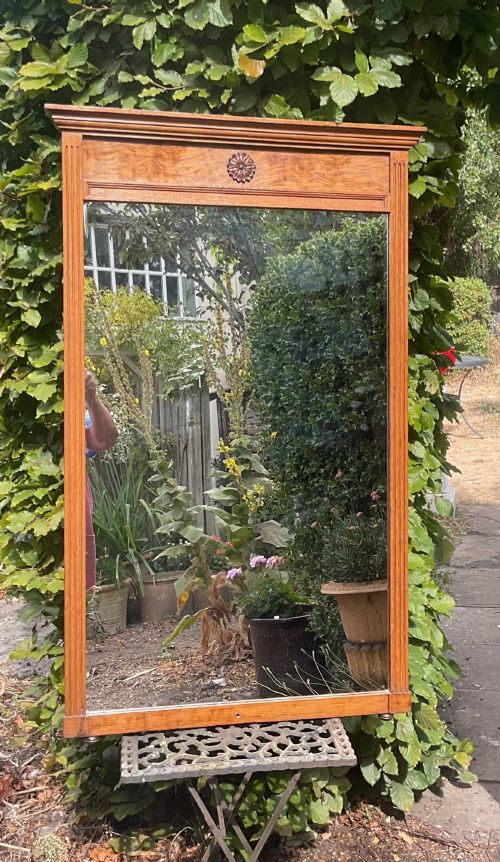
Makers shaped these objects into arches, ovals, and rectangular cushion frames spanning the nineteenth and early twentieth centuries, drawing on styles from Gothic Revival to Arts and Crafts.
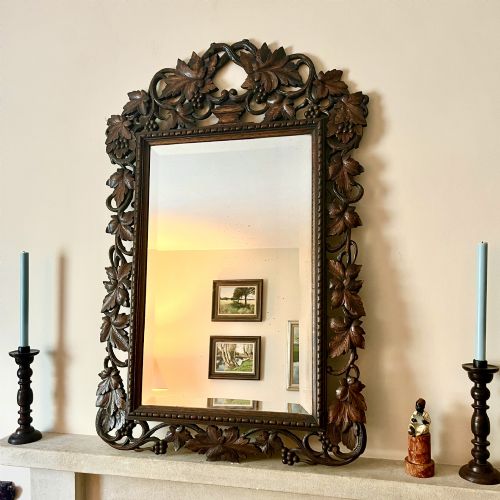
Buyers encounter everything from simple dressing mirrors to large French Renaissance Revival architectural pieces and rustic Black Forest carvings.
Materials and construction
Frames rely primarily on solid oak, sometimes highlighted with parcel-gilt, brass, copper decorations, or gesso accents, housing thick glass plates.
Glazing technique involved bevelling edges or utilising original plates, while surface enrichment depended on deep relief carving, reverse painting, or etched details.
Materials documented across these frames include solid oak, brass, copper, gesso, and gold leaf.
Craftsmanship and design
Distinctions in quality rest upon the depth and crispness of the hand-carved oak ornament and the integrity of the original glass plate within its frame.
Pieces bearing specific stylistic movements, such as the Oxford Movement or Arts and Crafts copper work, display greater ambition in design than standard utility mirrors.
Waring and Gillow
The Framed Oak Glass Mirror Glossary
- Overmantel mirror
- A large glass designed to hang specifically above a fireplace mantelpiece. These frames often match the architectural scale of Victorian and Edwardian reception rooms.
- Bevelled glass
- A mirror plate whose outer edges are cut and polished at an angle to catch light. This technique adds depth and a prismatic sparkle to the reflection.
- Gesso
- A plaster-like material applied to wooden frames as a smooth base for gilding or paint. It allows intricate moulded relief details around the mirror edge.
- Cheval glass
- A full-length dressing mirror suspended on a vertical frame with pivots. It lets the user tilt the glass to adjust their viewing angle.
- Cushion frame
- A convex, rounded moulding profile that swells outward toward the outer edge. This heavy form gives visual weight and prominence to the oak timber.
Framed Oak Glass Mirror: Frequently Asked Questions
Where should I hang a large overmantel mirror?
Position it directly above a fireplace mantel in a reception room to anchor the wall and reflect natural light across the space. Ensure the fixings match the substantial weight of the oak frame and glass.
Alternatively, place it on a blank dining room wall to create an illusion of depth and openness. Keep it high enough to clear any decorative objects sitting on the mantelpiece ledge.
How do I identify a Victorian oak mirror?
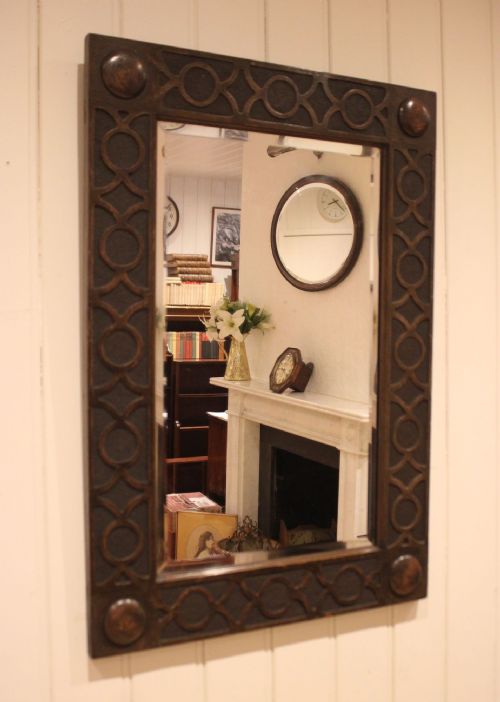
Victorian examples frequently display deep hand-carvings, Gothic Revival influences, or heavy architectural mouldings. Look for dark-toned oak and traditional pegged joinery at the frame corners.
Many of these pieces also feature thick, hand-bevelled glass plates or parcel-gilt highlights. The sheer weight of the timber usually separates them from lighter twentieth-century versions.
What is an Arts and Crafts oak mirror?
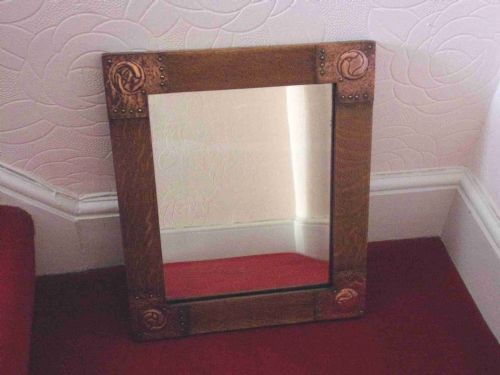
An Arts and Crafts mirror emphasises simple construction and honest materials, often featuring exposed joints or hammered metal accents. Copper strapwork and Celtic knot motifs frequently appear on these frames.
The oak is usually left in a natural blonde or medium finish rather than heavily stained. This style aligns with early twentieth-century ideals of handcrafted domestic utility.
Can I use an oak hall mirror in a modern hallway?
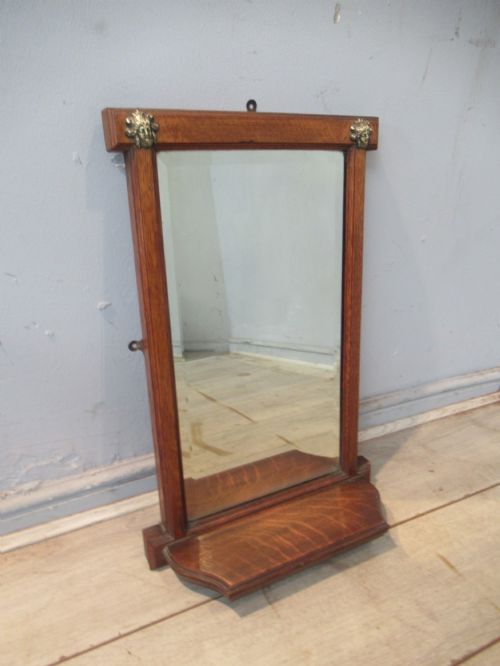
An oak hall mirror brings warmth and functional surface reflection to contemporary entranceways. Its neutral timber grain pairs easily with minimalist white walls and neutral flooring.
Check the hanging brackets on the back to ensure the heavy timber construction is securely supported. A hall mirror provides a practical final check before leaving the house.