

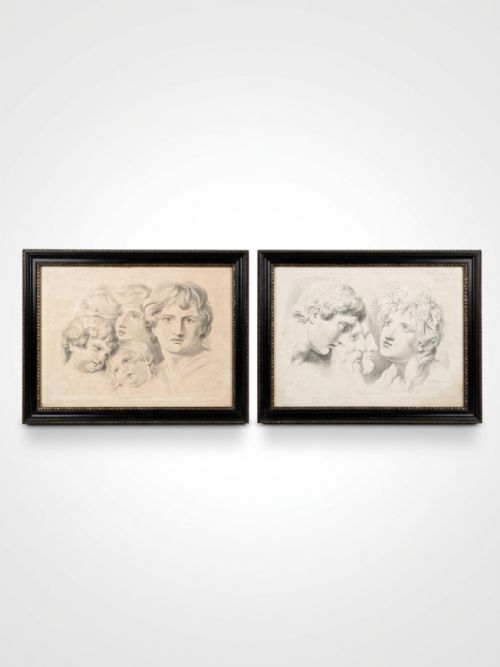
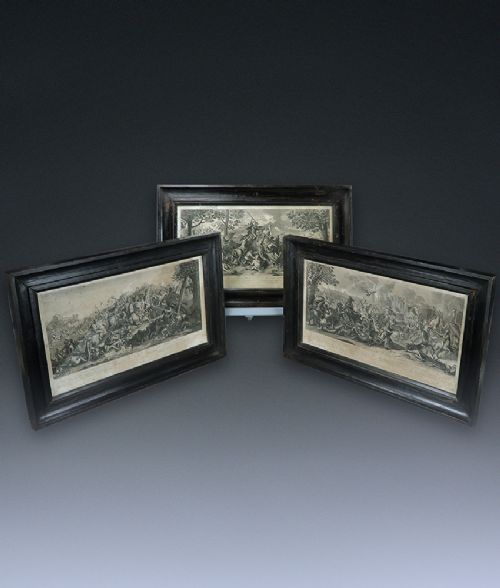


Framed Neoclassical Etchings
Framed neoclassical etchings bring classical antiquity and architectural majesty directly to the interior wall.
Framed Neoclassical Etchings
Framed neoclassical etchings capture the architectural monuments, mythological scenes, and archaeological discoveries that fascinated travellers on the Grand Tour. These works record the sculpture and ruins of ancient Rome and Athens through detailed line work.
Most pieces encountered here date from the eighteenth and nineteenth centuries, often housed in period wooden frames with glass protection. Architectural elevations and mythological narratives dominate the subjects available.
The selection ranges from individual plates documenting Greek temples to large coloured sets depicting architectural scenes or Raphael's Vatican loggia. Buyers will find both monochrome ink impressions and hand-watercoloured plates among the listings.
Materials and technique
Printmakers applied ink to paper using engraved metal plates, capturing intricate architectural details and figures. Skilled hands occasionally added watercolour washes to enhance specific elements of the composition.
Framing materials primarily consist of wood, frequently finished with gold leaf or giltwood to complement the classical subject matter. Glass protects the delicate paper surfaces from environmental damage.
Framed Neoclassical Etchings Retail Price Guide 2026
Typical asking prices for framed neoclassical etchings among the pieces listed under this phrase on Sellingantiques today, from the lower quarter to the upper quarter. They describe what is for sale here now, not the wider market.
Ancient Greek winds and winged deities jostle for wall space alongside grand architectural porticos and mythological figures.
Assessing quality
Quality rests in the crispness of the plate impression and the fidelity of the architectural draughtsmanship. Earlier printings retain finer lines and sharper details than later impressions taken from worn plates.
The character of the frame significantly influences the overall presentation. Period frames featuring original gold leaf or giltwood enhance the historical context of eighteenth and nineteenth-century works.
Le Brun·Pierre Buillon·Henri Chatillon·Ottaviani·James Basire
The Framed Neoclassical Etchings Glossary
- Etching
- A printmaking method where acid bites lines into a metal plate to hold ink. This technique allows for fluid, highly detailed linear work compared to rigid engraving.
- Grand Tour
- A traditional trip through Europe undertaken by upper-class young men in the eighteenth and nineteenth centuries to study classical art. Travellers frequently collected prints and antiquities as souvenirs of these journeys.
- Neoclassical
- An artistic movement drawing inspiration from the classical art and culture of ancient Greece and Rome. The style emphasises symmetry, proportion, and classical architectural motifs.
- Giltwood
- Wood carved and covered with a thin layer of gold leaf or gold paint. This finish frequently appears on period frames housing classical prints.
Framed Neoclassical Etchings: Frequently Asked Questions
How do I date an antique etching?
Dating relies primarily on paper characteristics, plate marks, and typographic styles found in the captions. Examining the framing materials and backboards also provides clues to the age of the piece.
Period references within the titles, such as eighteenth-century publication dates or Victorian framing styles, help narrow down the timeframe of creation.
Are these prints hand-coloured?
Some plates feature delicate watercolour additions applied by hand over the ink impression. This technique was common in decorative architectural sets to highlight specific design elements.
Monochrome ink impressions remain equally prevalent, particularly among detailed architectural and archaeological plates.
What subjects are most common?
Subjects focus heavily on classical architecture, including Greek temples, Roman statues, and triumphal arches. Mythological narratives and scenes from archaeological excavations also appear frequently.
Views from major publications like the Antiquities of Athens or records of Grand Tour travels form the core of the available imagery.
How should I display framed prints?
Hang these pieces away from direct sunlight to protect the paper and watercolour pigments from fading. Maintaining stable indoor humidity prevents warping in the wooden and giltwood frames.
Grouping sets together, such as architectural scenes or multi-part mythological series, creates a balanced display reminiscent of period interiors.