


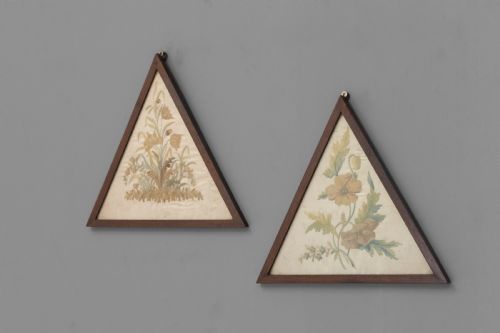
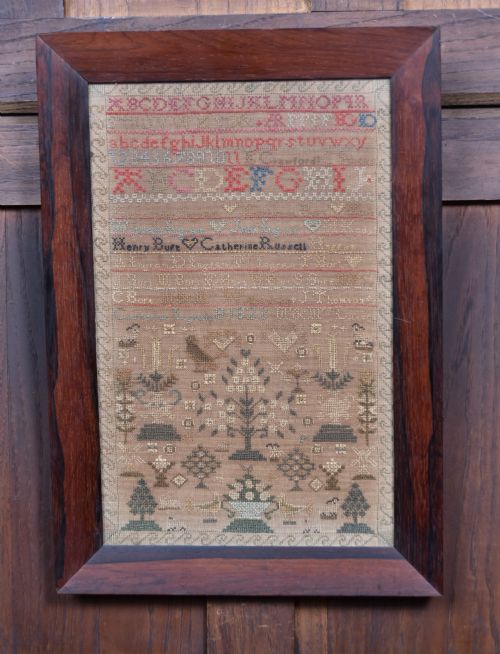


Framed Needlework Artwork
Framed needlework artwork brings historical stitchwork onto the wall, preserving centuries of silk, wool and canvas craftsmanship.
Framed Needlework Artwork
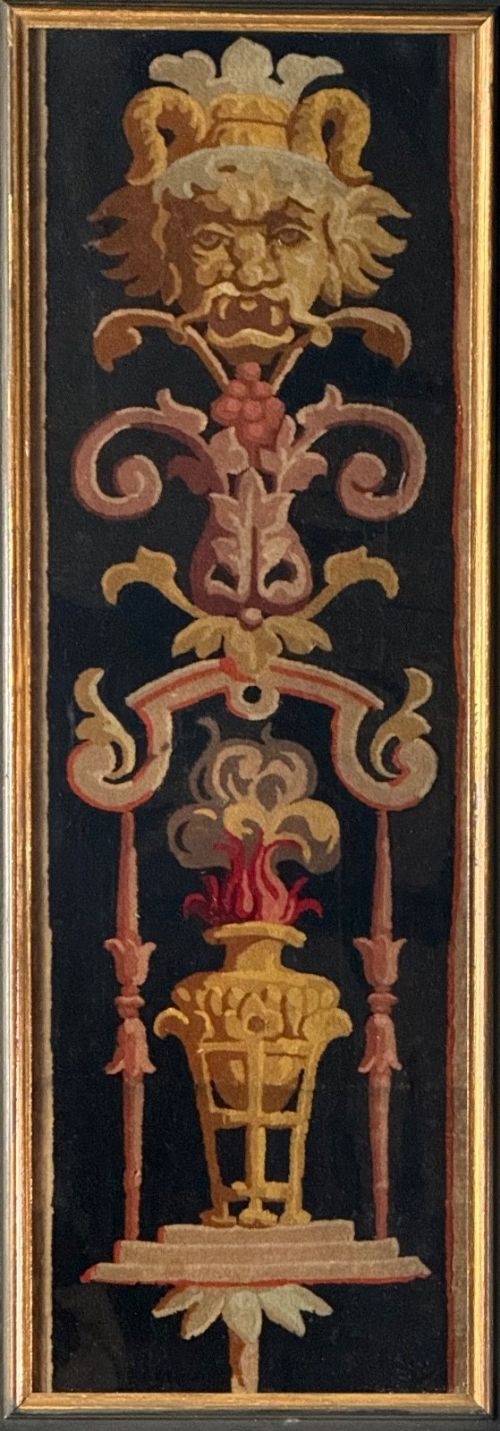
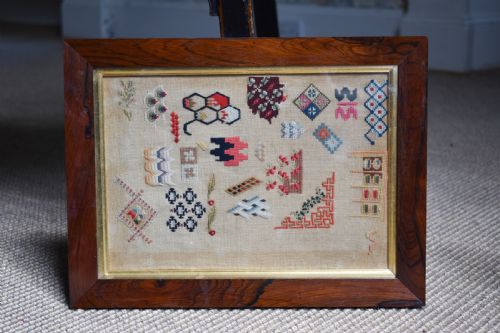
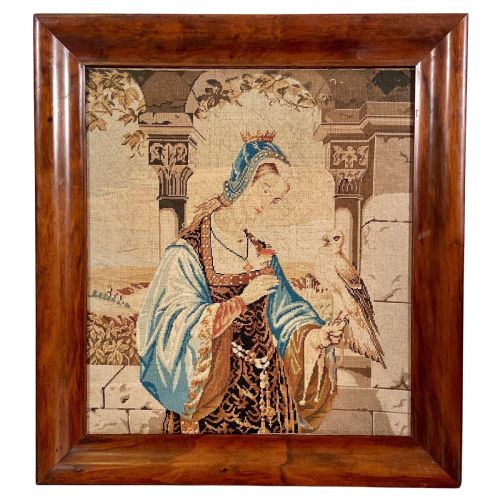
When you search for framed needlework artwork, you encounter textiles spanning from the seventeenth century to the twentieth century, mounted and protected behind glass. The selection ranges from devotional scenes and pastoral farming pictures to detailed alphabets and maps.
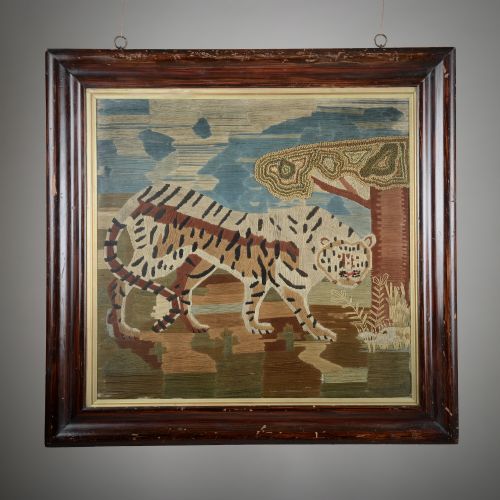
Nineteenth-century examples dominate the offerings, particularly wool work pictures, Berlin work panels, and alphabet samplers worked by young makers. Earlier pieces from the eighteenth and seventeenth centuries appear as embroidered silk panels, classical masks, and tapestries.
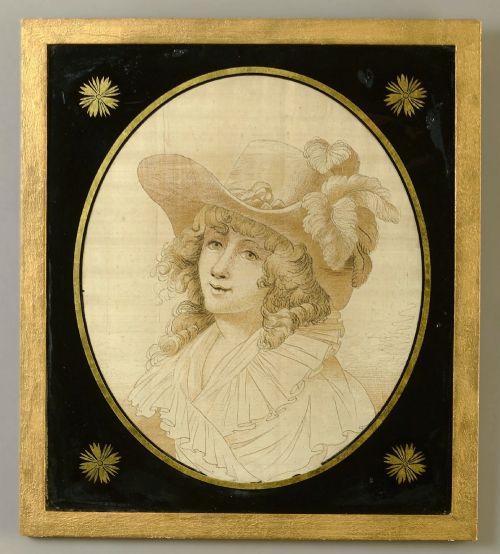
The forms encompass wall art, needlework samplers, and textile panels housed in period surrounds such as burr maple or verre églomisé frames.
Materials and Technique
Maker's work relied heavily on natural fibres, combining silk, wool, and linen threads stitched onto canvas or woven fabric grounds. Crewel work, long stitch, gros point, and Berlin work formed the primary techniques used to build pictorial depth and texture.
Glazing and framing protected these textile surfaces, utilising wood, giltwood, and specialised verre églomisé glass panels to shield the delicate threads from environmental damage over the centuries.
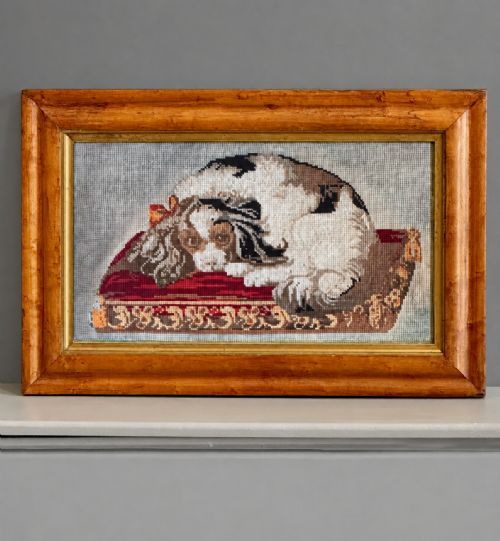
A King Charles spaniel immortalised in nineteenth-century Berlin wool gazes out from an original burr maple frame.
Distinctions in Quality
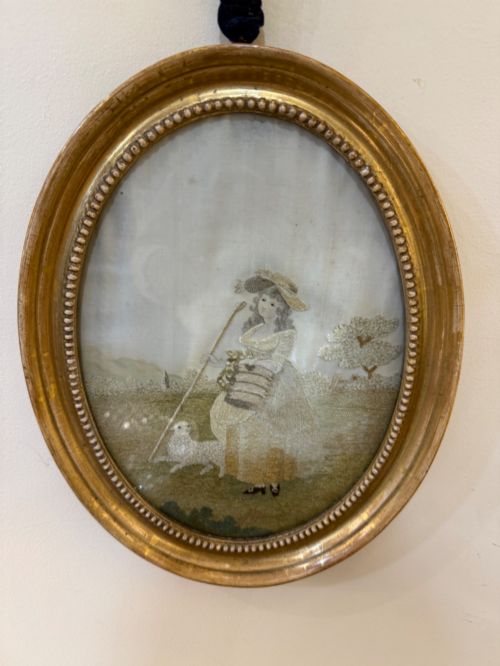
The sophistication of the needlework execution dictates the distinction between standard and superior pieces, seen in the intricacy of the stitch control and the shading of wool and silk threads. Pictorial clarity in complex subjects like pastoral farming scenes or portraits separates accomplished work from simpler exercises.
The preservation of the original frame, such as burr maple or giltwood, alongside the integrity of the textile without excessive fading or loss, defines the standing of an individual piece.
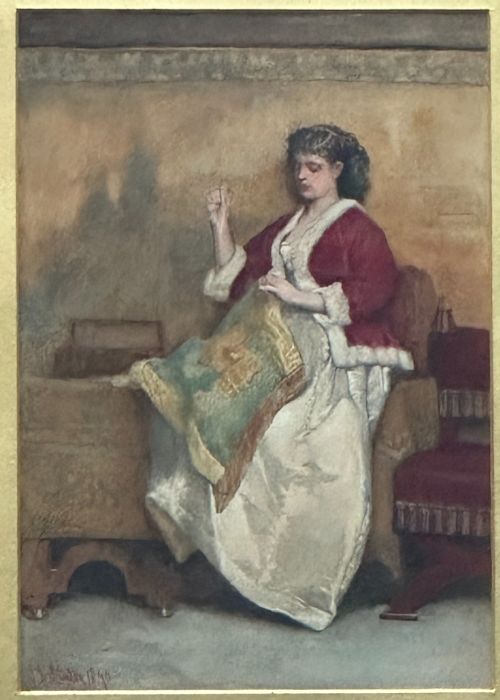
Sir James Dromgole Linton·Emma and Hannah Barnes·Jane Pattinson·Annabella Samon
The Framed Needlework Artwork Glossary
- Berlin work
- A style of needlepoint popular in the nineteenth century, worked in coloured wools on canvas using charted patterns. It allowed for rich, vibrant depictions of animals and figures.
- Sampler
- A piece of needlework demonstrating skill in various stitches and alphabets, often including dates and the maker's name. They served as both practice pieces and records of domestic education.
- Gros point
- A coarse needlepoint stitch worked on canvas, typically used for the background or heavier details of pictorial panels. It creates a durable, textured surface.
- Verre églomisé
- A process of applying gold or silver leaf to glass with a design etched into it, frequently used for decorative antique picture frames. It adds a reflective, dark border around the artwork.
- Crewel work
- Embroidery executed using wool yarn on a linen or cotton twill fabric. This technique produces tactile, raised designs seen in early decorative panels.
Framed Needlework Artwork: Frequently Asked Questions
How should I hang framed needlework artwork?
Keep textile pieces away from direct sunlight to prevent the silk and wool threads from fading over time. Maintaining stable indoor humidity also protects the fragile fabric and wooden frames.
Ensure the piece is hung securely using appropriate fixings suited to the weight of the glass and wooden surround.
What is the difference between a sampler and a picture?
Samplers primarily record alphabets, numbers, and stitch variations, often bearing the name of the maker and a date. They functioned as educational exercises.
Needlework pictures depict specific pictorial scenes, such as pastoral landscapes, portraits, or religious subjects, focusing on imagery rather than typography.
How do I identify a nineteenth-century wool work picture?
Nineteenth-century wool work typically employs bright Berlin wools on canvas grounds, often featuring popular subjects like animals, domestic scenes, or literary references. The stitching is usually dense and heavy compared to lighter eighteenth-century silk work.
Frames from this period frequently include burr maple veneers or simple moulded wood profiles.
Were these textiles always framed?
Many samplers and decorative panels were framed soon after completion to protect the delicate embroidery from dust and handling. Some textile pieces, such as cushion covers or large tapestries, served functional domestic purposes before later being mounted for display.
Original frames provide valuable clues to the age and history of the artwork.