


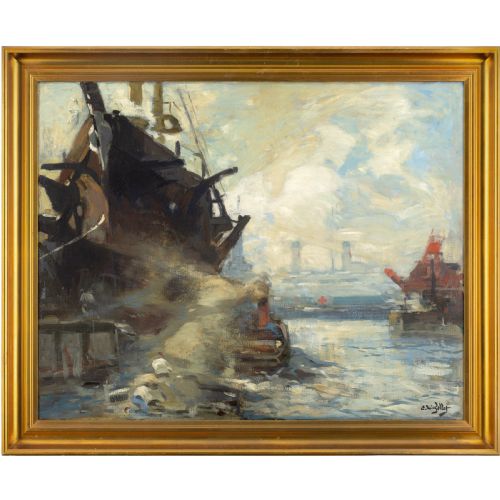
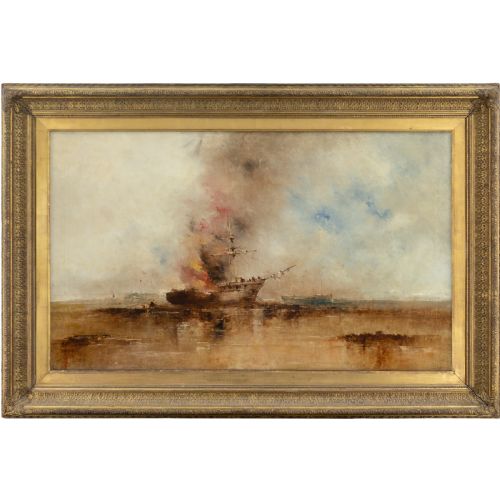
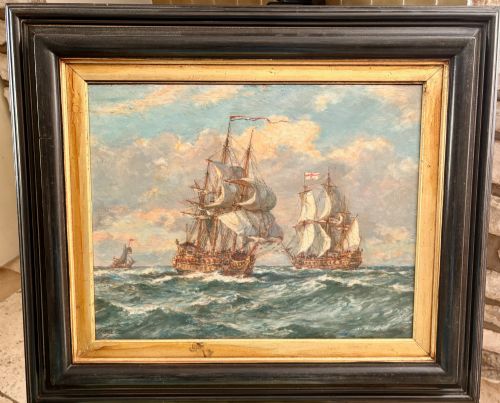
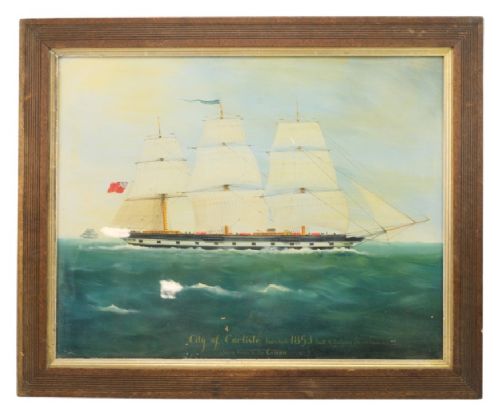
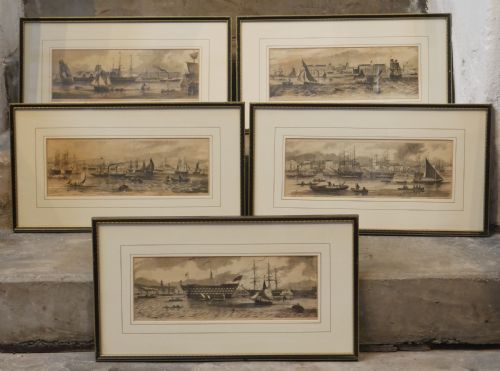

Framed Naval Ship Artwork
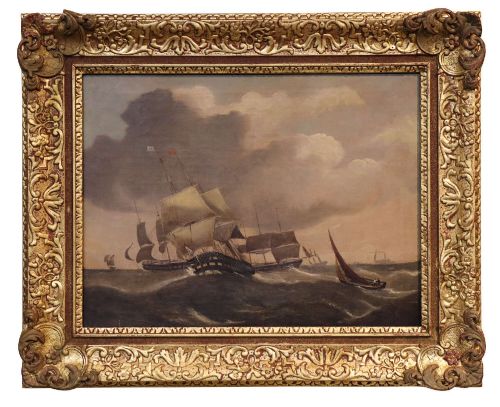
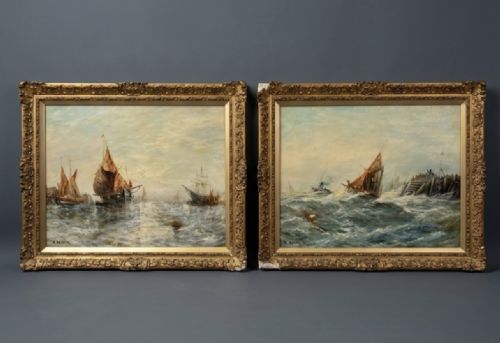
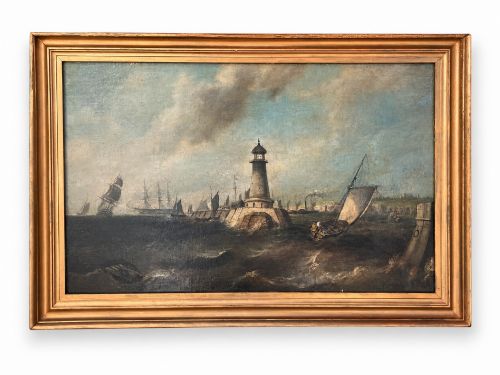
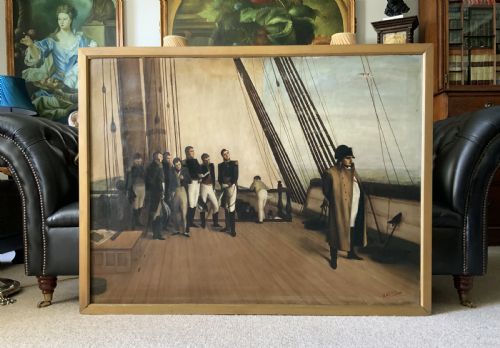
Framed naval ship artwork captures centuries of maritime power on canvas and paper, bringing historic sea battles and grand vessels straight to your wall.
Framed Naval Ship Artwork
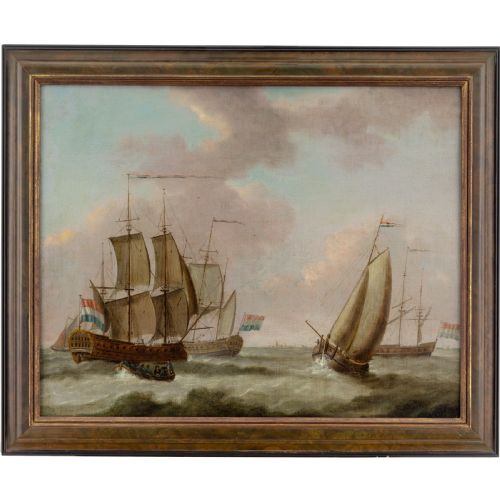
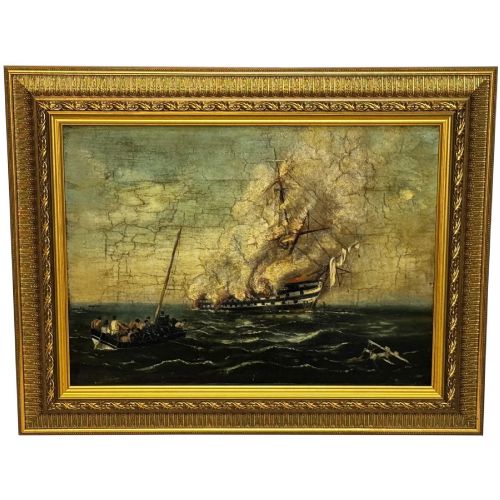
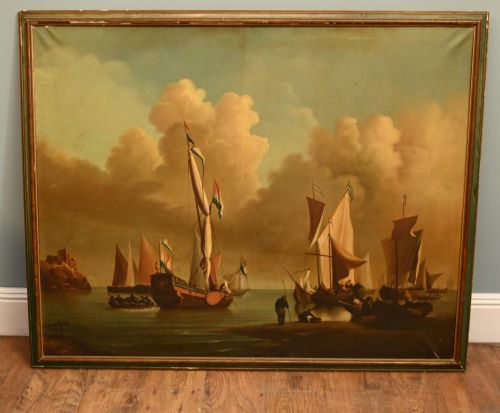
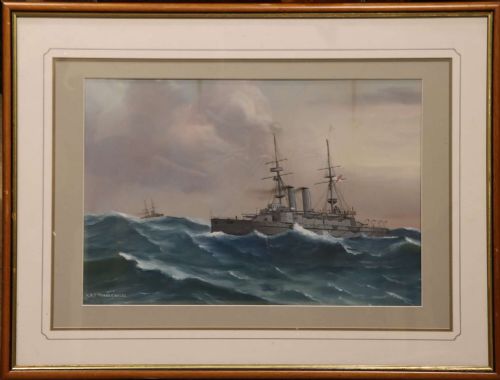
When you search for framed naval ship artwork, you find a specialised selection of maritime paintings, watercolours, and engravings depicting warships, naval engagements, and historic vessels. These works document specific ships, fleet reviews, and dramatic sea battles across the centuries. The most common examples on this page are oil paintings and watercolours originating from the nineteenth and early twentieth centuries.
The subjects range from majestic Royal Navy cruisers and ironclads to detailed depictions of named vessels like HMS Prince of Wales and HMS Victory. Pieces often place the viewer amid heavy seas, coastal harbours, or pivotal historical moments such as Trafalgar. Makers and schools span British and continental artists working in oil, gouache, and watercolour.
Materials and methods behind the art
Artists record these maritime scenes using traditional media including oil paint on canvas or panel, delicate watercolours, and gouache on paper. Canvases are frequently housed within period giltwood frames that complement the nautical subject matter. Paper works utilise glass protection to preserve the pigments of detailed watercolours and engravings.
The construction of these pieces relies on stable wooden supports, stretched canvas, and heavy gilt frames designed to display and protect the artwork. Technique varies from the expressive brushwork of oil paintings depicting choppy waters to the fine, precise lines found in naval watercolours and engravings.
Sailors occasionally created sentimental mixed-media tributes to their ships using watercolour and gouache.
What distinguishes finer pieces
Quality in these maritime works rests on the artist's command of atmospheric conditions, vessel architecture, and maritime rigging. Finer examples capture the movement of heavy seas and the accurate technical details of contemporary warships with precision.
The integrity of the original support, the preservation of the painted surface, and the harmony of the framing elevate certain pieces. Works attributed to known marine painters or signed by contemporary naval officers demonstrate superior artistic execution and historical authority.
Eugène-Louis Gillot·William McAlpine·Bernard Gribble·Charles William Adderton·Eric Tufnell·Vincenzo D’Esposito·Dion Pears·Samuel Owen·Marie-Edouard Adam·Richard Brydges Beechey·Charles Dixon·Frank Wood·William Langley·WF Mitchell·Frank Wasley
The Framed Naval Ship Artwork Glossary
- Gouache
- An opaque water-based paint that dries to a matte finish, frequently utilised in maritime works for dense cloudscapes and hull details.
- Engraving
- A printmaking technique where an image is incised into a metal plate, producing sharp linear details suited to documenting ships and docks.
- Giltwood
- Wood carved and coated with gold leaf, forming the traditional decorative frames seen on nineteenth-century oil paintings.
- Barque
- A sailing vessel with three or more masts, appearing frequently in nineteenth-century maritime watercolours and oil paintings.
- Seascape
- A painting or other work of art that depicts the sea, ships, and coastal views without necessarily focusing on a naval engagement.
Framed Naval Ship Artwork: Frequently Asked Questions
How do I date a naval painting?
Dating relies on the ship types, uniform styles, and the stated commission dates of the vessels shown in the composition. Signatures, artist lifespans, and framing styles provide additional chronological markers.
Paper stock, canvas preparation, and handwritten inscriptions on the reverse often confirm the exact decade of creation.
Where should I hang maritime art?
These works suit studies, libraries, and hallways where traditional decor complements the rich tones of oil paint and gilt frames. Natural light enhances the detail of watercolours and oils without causing fading.
Keep pieces away from direct sunlight and damp environments to protect the canvas, paper, and wooden frames.
What is the difference between an oil and a watercolour?
Oils utilise slow-drying pigments suspended in medium, allowing for textured brushwork that captures rough seas and dramatic lighting. Watercolours employ translucent pigments on paper, offering delicate precision for architectural ship details.
Oils are traditionally stretched on canvas or panel, while watercolours require framing beneath glass for protection.
Are these depictions historically accurate?
Many works were created by artists who observed naval fleets firsthand or served at sea themselves, ensuring precise rendering of rigging and vessel classes. Others reflect romanticised interpretations of historic engagements created decades after the events.
Researching the specific vessel and artist helps determine whether a piece is an eyewitness record or a retrospective tribute.