


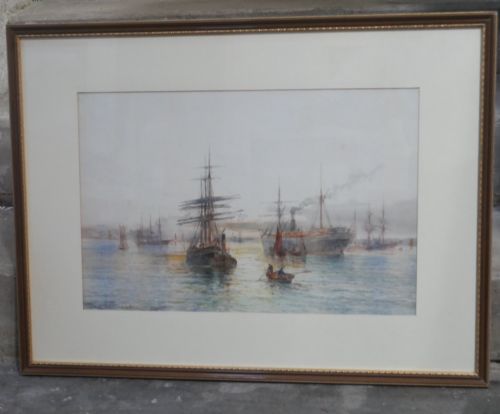
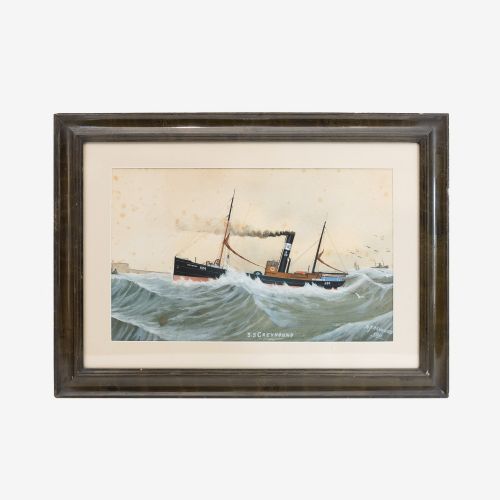
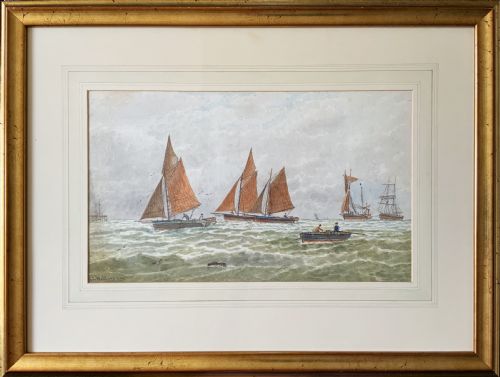
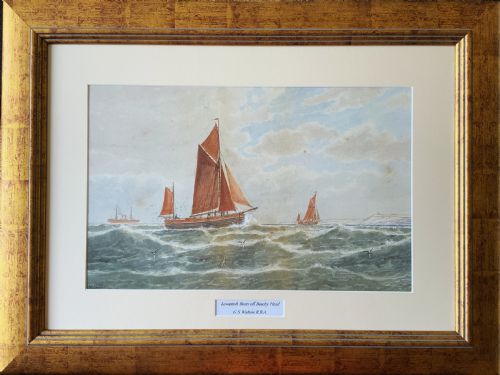
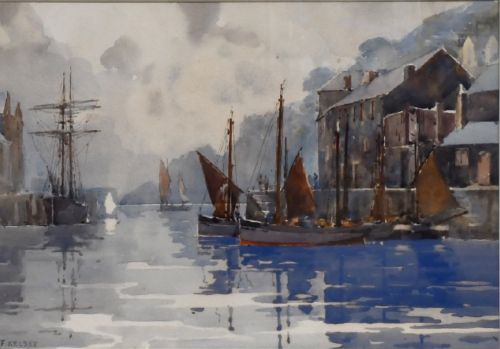

Framed Nautical Watercolour
Framed nautical watercolour works capture the motion of vessels and the atmosphere of harbours across the Victorian and Edwardian periods.
Framed Nautical Watercolour
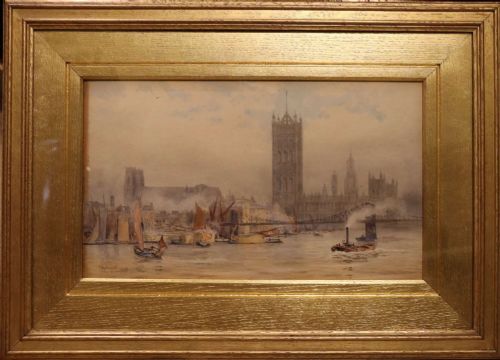
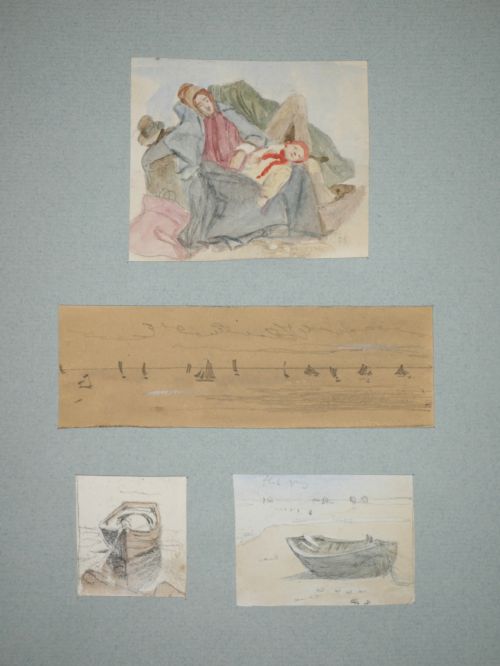
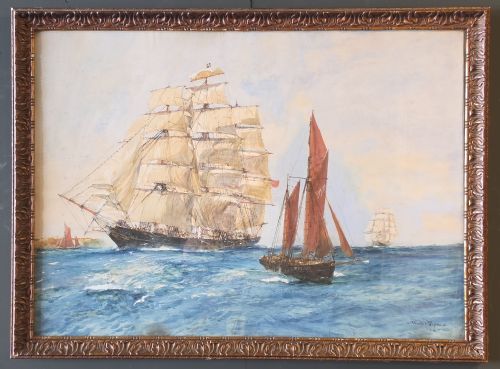
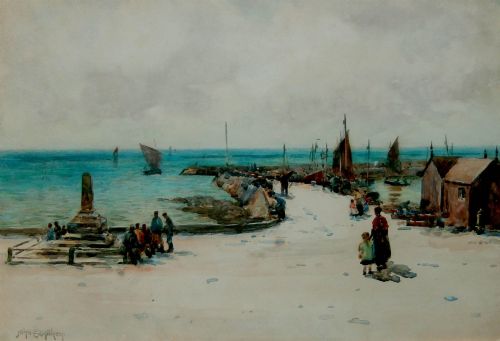
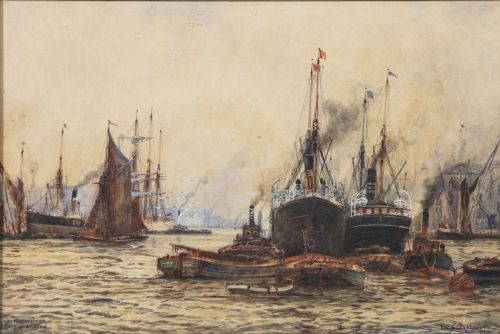
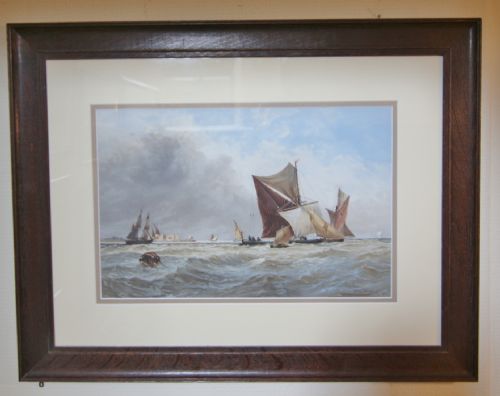
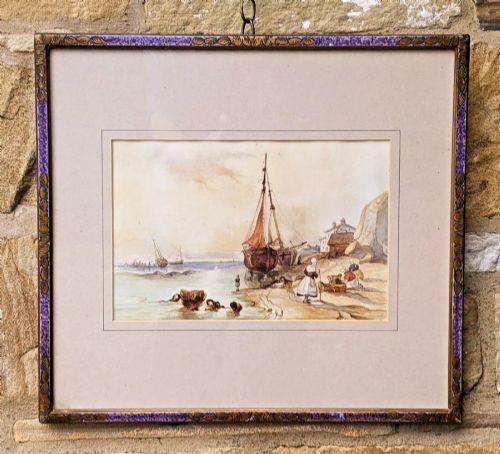
A framed nautical watercolour records maritime life, from bustling fishing ports to naval vessels at sea, across the nineteenth and twentieth centuries. These works include detailed studies of ships, coastal harbours, and open water painted on paper.
Victorian and Edwardian maritime scenes dominate the selections here, alongside later mid-century works. Common subjects involve named ships, local luggers, and quiet estuary scenes painted by British and European artists.
Materials and Technique
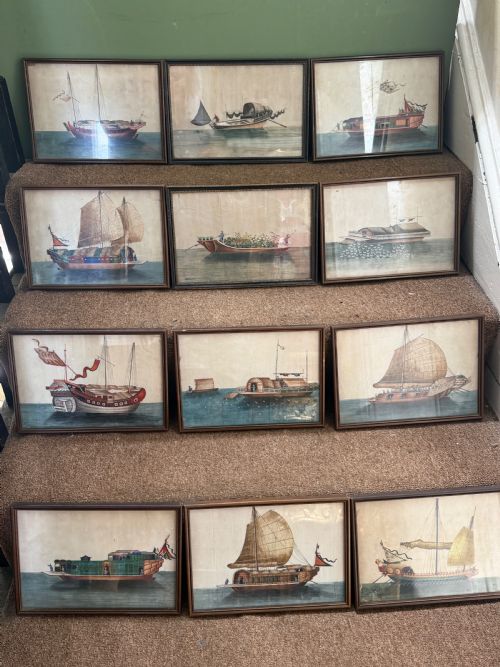
Artists painted primarily on paper using watercolour pigment, frequently combining gouache to build opaque highlights on sails, white-capped waves, and hull details. Gold leaf occasionally appears on specialised decorative works, while Chinese export gouache employs dense pigments on paper.
Framing typically involves wood and glass to protect the delicate water-soluble pigments from moisture and light. Many period pieces retain gilt wood frames that complement the maritime subject matter.
Listings feature works on paper utilising watercolour pigment and gouache, housed behind glass in wood and gilt wood frames.
Evaluating Quality
Technical control over the translucent medium separates casual sketches from accomplished maritime paintings. The best examples capture atmospheric light, water movement, and correct vessel rigging with confident brushwork.
The degree of historical and topographical detail also influences the work. Named vessels, identifiable ports, and signed compositions by recognised marine artists carry stronger documentary and artistic value than anonymous coastal views.
Thomas Bush Hardy·George Stanfield Walters·James Orrock·Frank William Scarbrough·Vincenzo D Esposito
The Framed Nautical Watercolour Glossary
- Gouache
- An opaque water-based paint often used alongside watercolour to create dense highlights and solid areas of colour. It allows artists to add sharp details to rigging and foaming water.
- Lugger
- A small fishing vessel carrying lug sails on one or more masts. These boats frequently appear in nineteenth-century coastal scenes from Devon and Cornwall.
- Seascape
- A work of art depicting the sea, coastal views, ships, or marine life. This genre forms the primary focus of the works gathered under this search phrase.
- Works on Paper
- A broad category encompassing drawings, paintings, and sketches executed on paper supports. Watercolour and gouache pieces fall directly into this grouping.
Framed Nautical Watercolour: Frequently Asked Questions
What periods do these watercolours come from?
The works span the nineteenth and twentieth centuries, with a strong representation of Victorian and Edwardian pieces.
Dates range from early nineteenth-century studies through to mid-century maritime paintings from the nineteen-fifties.
How should I hang a watercolour painting?
Watercolours are sensitive to direct sunlight, which can fade pigments over time.
Display them away from bright windows and damp areas to preserve the paper and original framing.
Are these paintings signed by the artists?
Many pieces feature artist signatures, monograms, or contemporary inscriptions noting the specific vessel or harbour.
Attributions are also noted where the hand is recognised by dealers and specialists.
What subjects are most common in marine watercolours?
Common subjects include fishing boats in coastal harbours, naval warships, and commercial sailing vessels.
Artists frequently documented specific British ports, rivers, and international maritime scenes.