

Framed Narrative Oil Painting
When you search for framed narrative oil painting, you find works that tell stories on canvas, held in heavy timber and gesso mouldings.
Framed Narrative Oil Painting
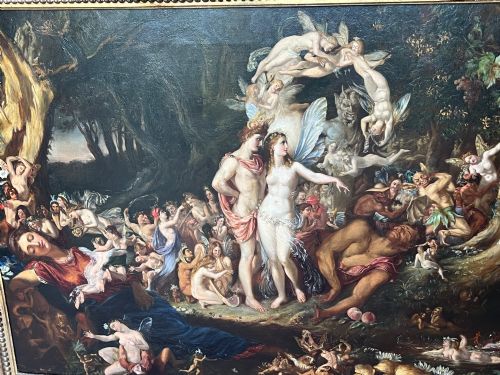
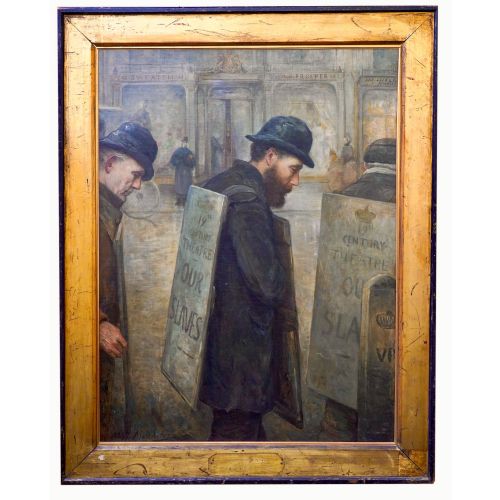
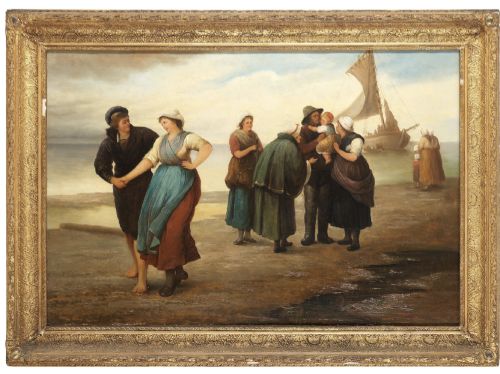
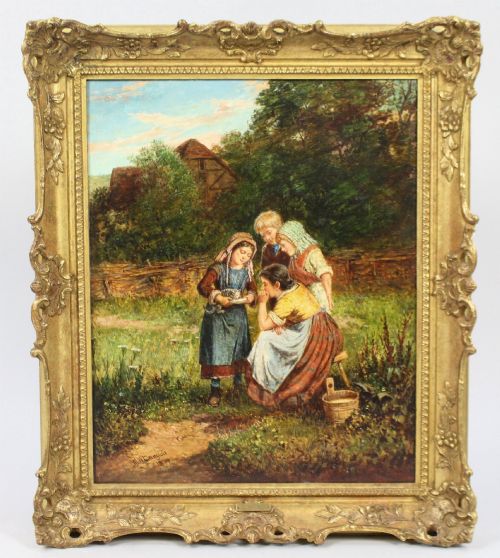
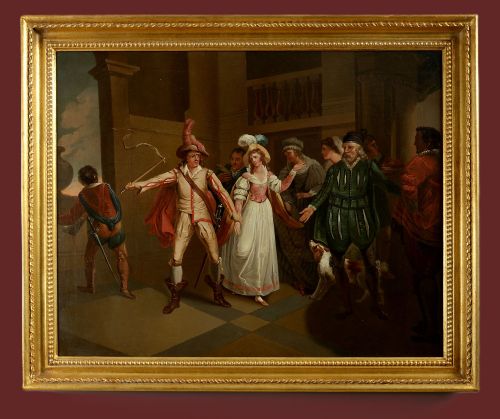
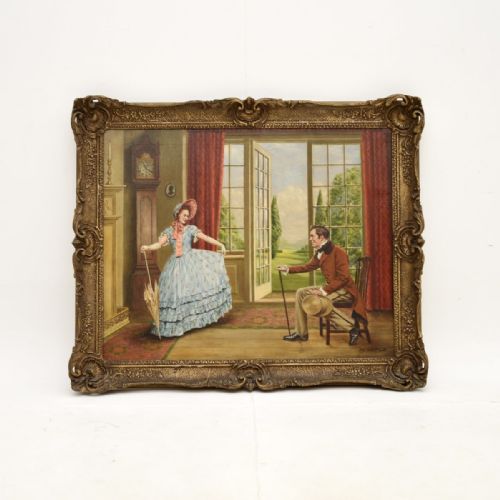
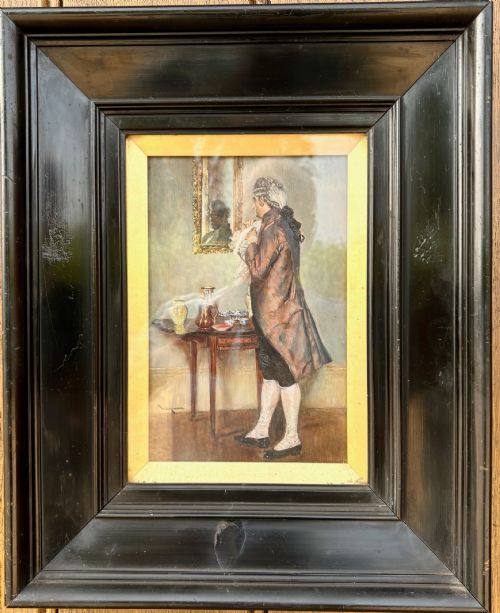
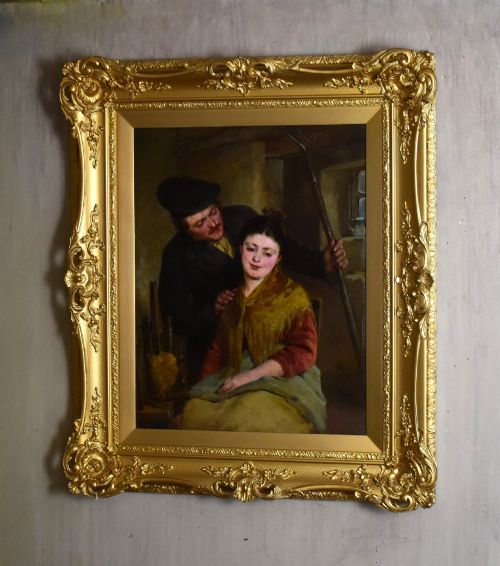
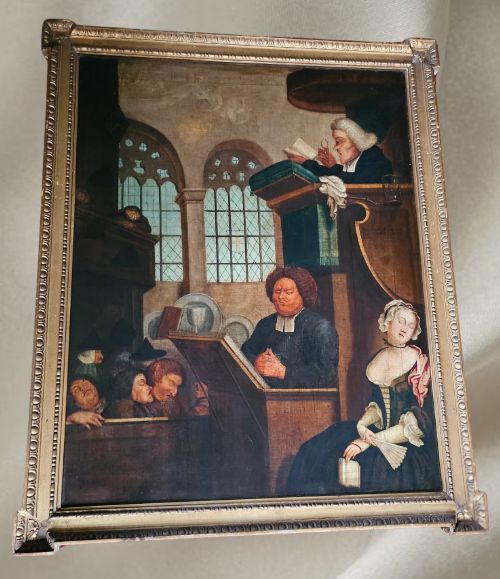
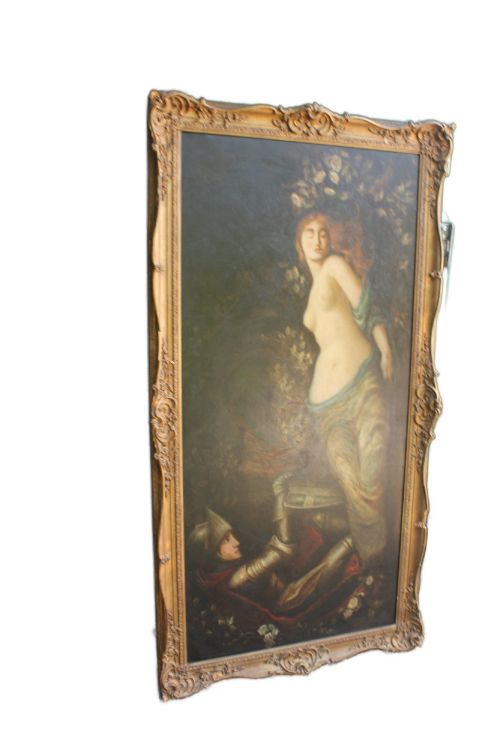
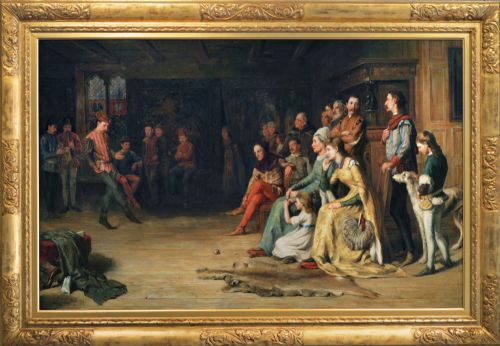
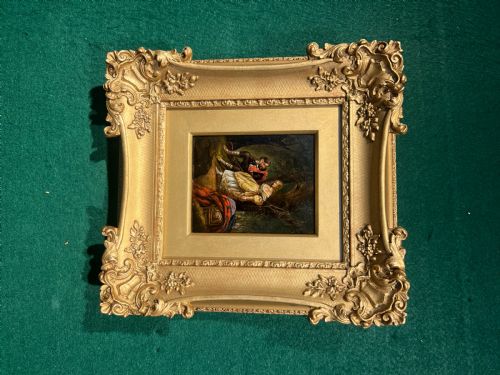
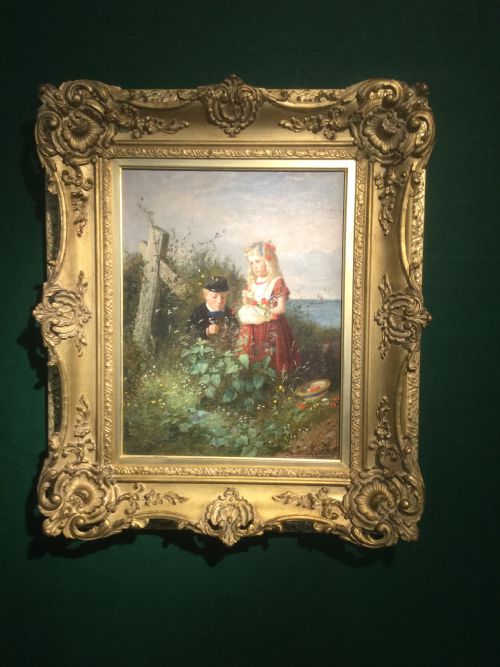
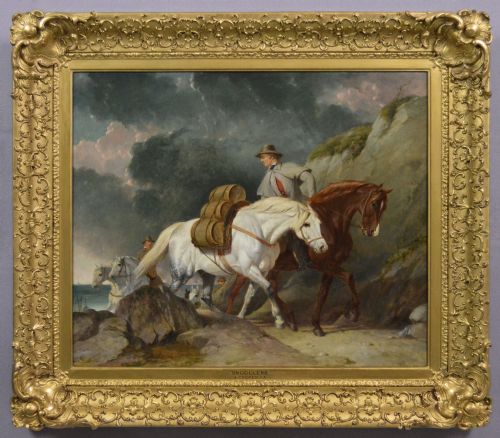
A framed narrative oil painting tells a clear story, depicting historical scenes, literary moments, domestic drama or social history. When looking for a framed narrative oil painting on this page, the pieces you meet most often date from the nineteenth century, including Victorian genre paintings and scenes of country house interiors.
The subjects range from Shakespearean tales and biblical accounts to everyday cottage scenes involving children, animals or workers. These canvases capture human interaction and dramatic action, framed in period giltwood or wood to complete the presentation.
How They Were Made
These works consist of oil paint applied to woven canvas stretched over wooden frames, or occasionally painted on wood panels. Artists built up depth through layered pigments, capturing fine details in costume, expression and interior settings.
The surrounding frames are constructed from wood, embellished with gesso and finished in gold leaf or giltwood to accentuate the composition within. Mouldings vary from simple stepped profiles to ornate Victorian ornamentation.
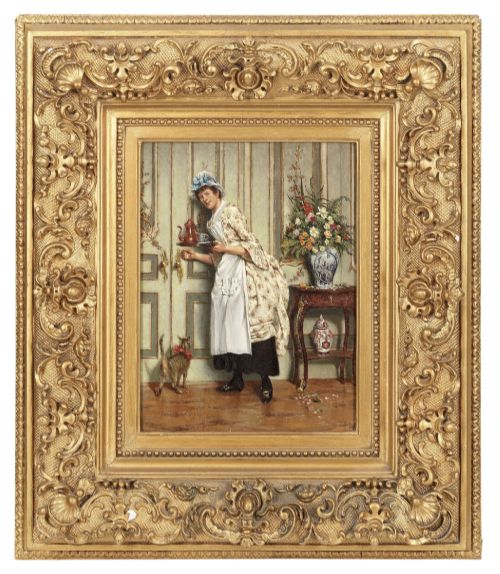
Cats, kittens and geese make unexpected appearances alongside the human subjects in several domestic and narrative scenes.
What Varies in Quality
The strength of a framed narrative oil painting lies in the handling of the figures and the clarity of the storytelling. Superior works display expressive faces, convincing drapery and well-composed spatial depth that draw the viewer into the scene.
The quality of the enclosing frame also matters, as original period giltwood mouldings that complement the palette and era of the canvas elevate the whole object. Finer paintings maintain crisp brushwork and harmonious colour relationships across the entire surface.
Sir Joseph Noel Paton·Felix Stone Moscheles·Stephen Samuel Lewin·Mark William Langlois·Alfred Lyndon Grace·W.D. Almond·Howard Helmick·James Hamilton·Abraham Cooper·James Kyd·Friedrich von Kaulbach·Léon Joseph Voirin·Edwin Thomas Roberts·Robert Alexander Hillingford
The Framed Narrative Oil Painting Glossary
- Genre painting
- Depiction of aspects of everyday life by portraying ordinary people engaged in common activities. These works often focus on domestic interiors, market scenes or social interactions.
- Giltwood
- Wood that has been covered with a thin layer of gold leaf or gold paint. This finish appears frequently on nineteenth-century picture frames.
- Gesso
- A paint mixture consisting of a binder mixed with chalk, gypsum or pigment. It served as a smooth base for gilding on wooden frames.
- Oil on canvas
- Pigments bound in a medium applied to a stretched fabric support. This combination allowed artists to work slowly and blend colours seamlessly.
Framed Narrative Oil Painting: Frequently Asked Questions
What subjects do these paintings show?
These works depict literary scenes, historical events, biblical narratives and domestic daily life. Artists drew inspiration from Shakespeare, religious texts and everyday social interactions.
The figures are usually caught in the middle of an action or interaction, inviting the viewer to read the story unfolding on the canvas.
Are the frames original to the paintings?
Many pieces retain their period giltwood or wood frames, which match the era of the canvas. These frames often feature gesso ornamentation characteristic of nineteenth-century craftsmanship.
A matching period frame enhances the historical context and visual impact of the artwork.
How do I identify a Victorian genre painting?
Victorian genre paintings typically focus on human stories within domestic interiors, cottages or pastoral settings. They frequently show people sharing tea, children playing or workers engaged in daily tasks.
The brushwork aims for realism, capturing the textures of fabrics, wooden furniture and stone floors with precision.
How should I care for an oil painting on canvas?
Keep the canvas away from direct sunlight and sudden temperature shifts to prevent the paint from cracking. Dust the surface gently with a soft, dry brush without applying pressure.
Ensure the hanging environment remains stable and avoid moisture accumulation behind the wooden stretcher bars.