
Framed Mountain Landscape Art
Framed mountain landscape art brings the scale and weather of remote peaks into a room through historic oils and watercolours.
Framed Mountain Landscape Art
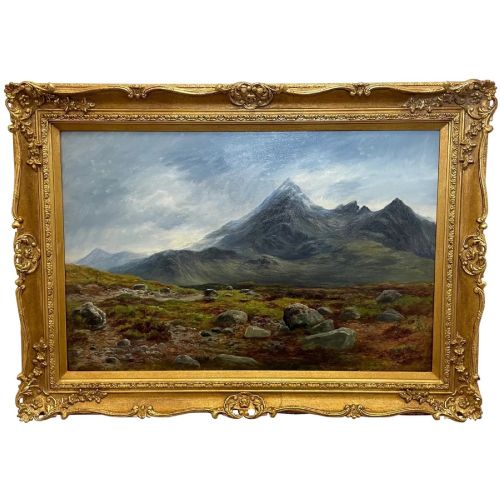
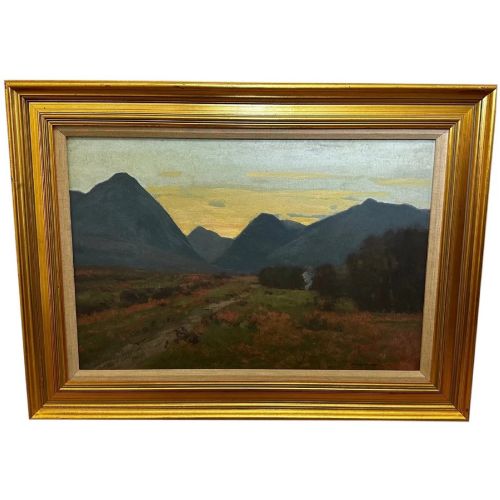
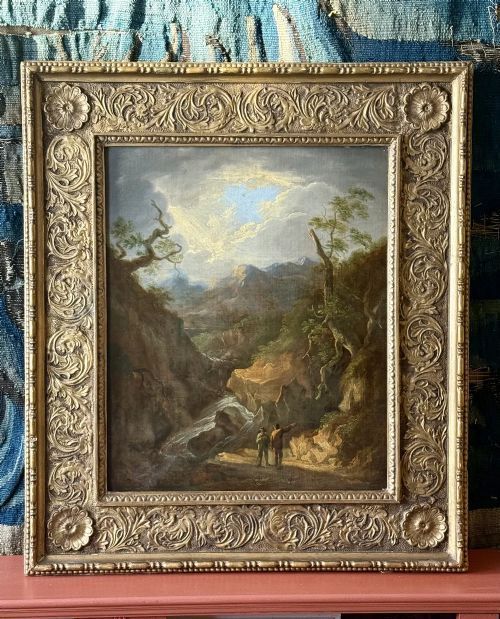
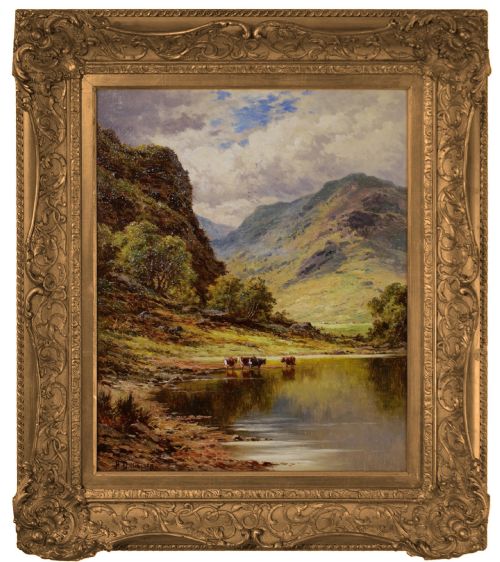
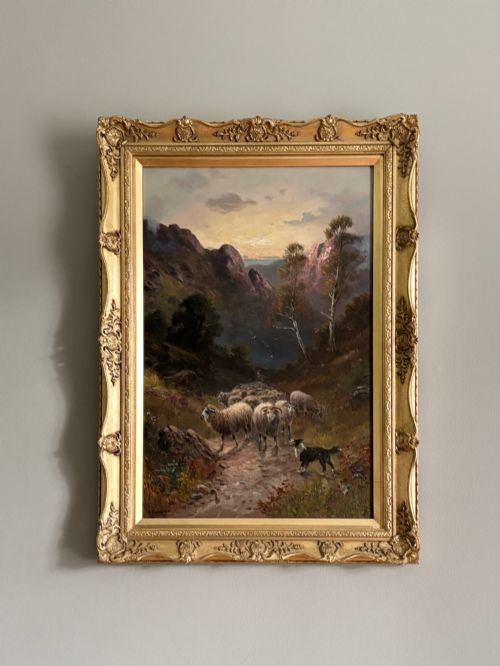
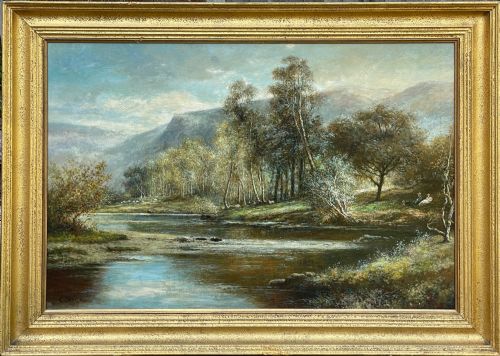
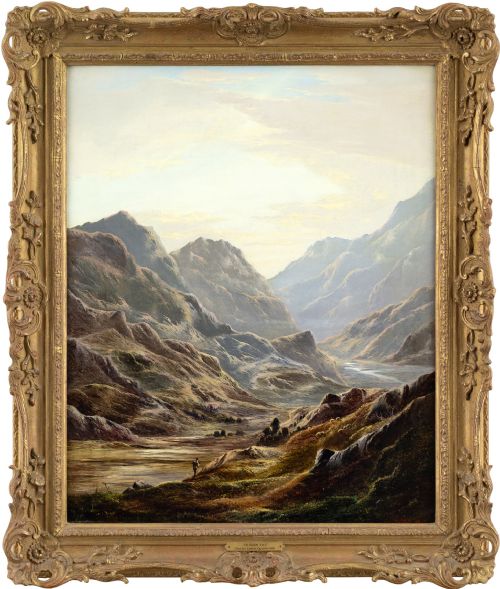
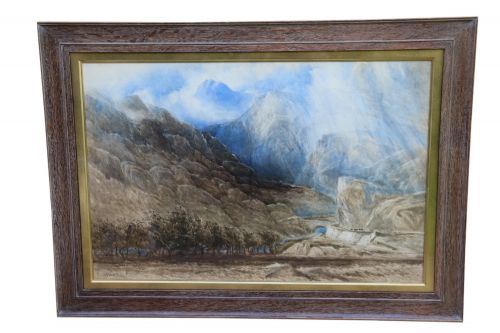
Framed mountain landscape art captures dramatic upland scenery, rugged crags and sweeping valleys through historic paintings and watercolours. These works span the nineteenth century into the mid-twentieth century, recording British, European and international topography.
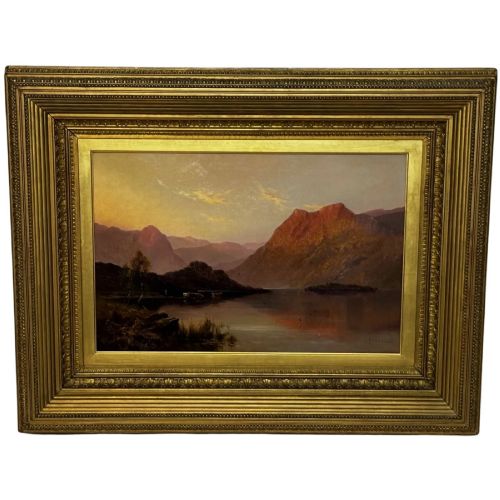
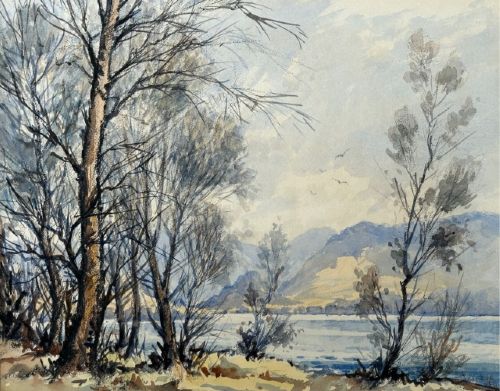
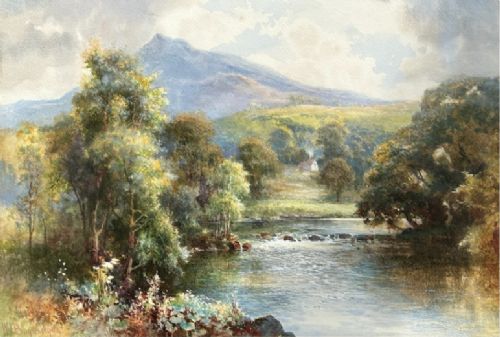
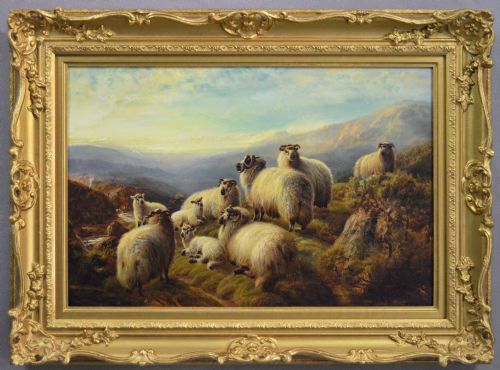
The most common pieces on this page are nineteenth-century and Victorian British works executed in oil on canvas or delicate watercolour on paper. Many feature regional views from Scotland, Wales and the Lake District, often set within period giltwood or gesso frames.
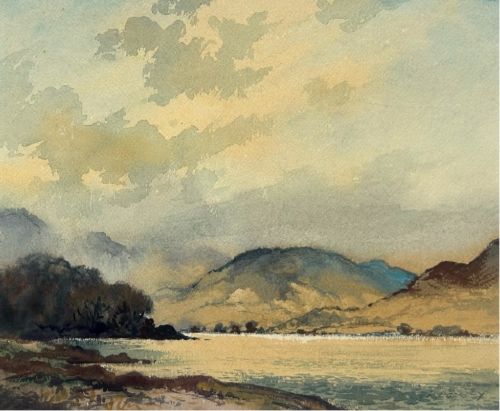
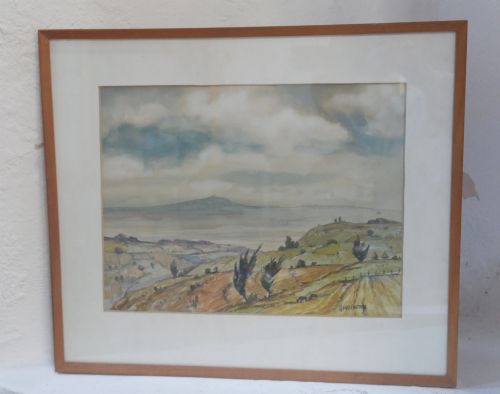
Collectors encounter diverse stylistic approaches, ranging from traditional romanticism and Scottish impressionism to mid-century depictions of distant ranges. Each piece preserves a specific topography through the distinct brushwork and palette of its era.
Materials and construction methods
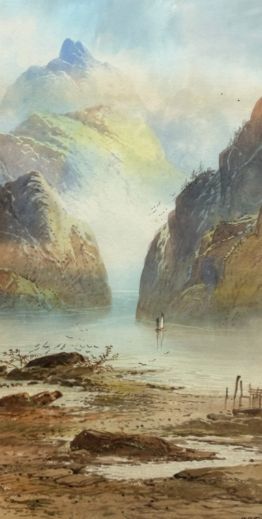
Painters applied oil pigments onto stretched canvas or wooden panels, building rich textures for rock faces and atmospheric skies. Watercolours utilised fine pigments on paper to capture the translucent light of highland lochs and mountain passes.
Original frames combined carved wood with gesso mouldings, frequently finished in gilt leaf to complement the tones within the composition. These surrounds protect the edges of the canvas or paper while defining the visual boundary of the landscape.
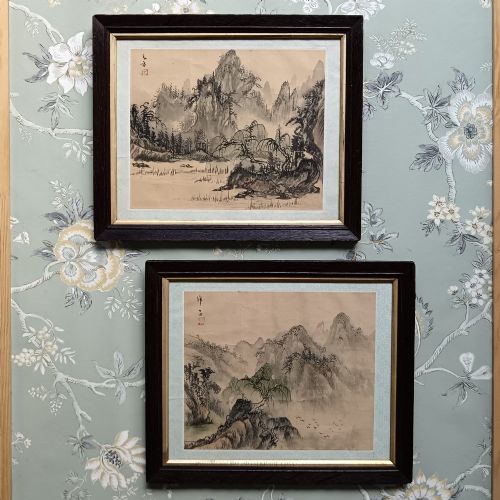
The selection includes regional depictions from Scotland, Wales, the English Lake District, China, and the Austrian Alps.
Distinctions in quality and execution
Superior works demonstrate a confident handling of light and atmospheric depth, where distant peaks recede naturally through subtle tonal shifts rather than harsh outlines. Lesser examples rely on formulaic foliage and repetitive brushstrokes that flatten the composition.
The relationship between the artwork and its original frame alters the integrity of the piece. Surviving period giltwood frames that retain their original surfaces enhance the historical value, whereas unsympathetic later replacements diminish the overall harmony.
William Beattie Brown·William Henry Earp·George Houston·Sidney Richard Percy·Henry Mander
The Framed Mountain Landscape Art Glossary
- Giltwood
- Wood carved and coated with gold leaf or gold paint. This material forms the ornate surface of traditional antique frames.
- Gesso
- A plaster mixture applied to wooden frame mouldings as a base for gilding. It allows craftsmen to carve intricate decorative details.
- Impressionism
- A style of painting emphasising immediate visual impressions through unblended colour and rapid brushwork. Scottish practitioners applied this to highland vistas.
- Provenance
- The documented history of ownership and origin of an artwork. It helps confirm attribution and dates.
Framed Mountain Landscape Art: Frequently Asked Questions
How do I date a mountain painting?
Dating relies on stylistic markers, framing techniques and artist biographical records. Victorian and nineteenth-century works often feature darker, romantic palettes and heavier gilt frames, whereas mid-century pieces show brighter, looser brushwork.
Examining the canvas backing, stretchers and paper supports provides additional clues. Old inscriptions, artists' signatures and gallery labels on the reverse help narrow the period of creation.
Where should I hang these paintings?
These landscapes suit spaces with stable temperature and humidity away from direct sunlight. Traditional gilt frames pair well with period interiors, while simpler settings can anchor eclectic gallery walls.
Consider the scale of the room and the viewpoint of the canvas. Placing pieces at eye level allows the viewer to engage with the depth and atmospheric detail of the peaks.
How do I care for antique watercolours?
Watercolours require protection from direct sunlight to prevent fading of the delicate pigments on paper. Displaying them in rooms with controlled humidity stops moisture damage and foxing.
Ensure framing is sealed properly with conservation-grade materials behind glass. This shields the paper from atmospheric pollutants and physical distortion over time.
What defines Scottish landscape art?
Scottish landscape paintings focus on the dramatic terrain of the Highlands and islands, capturing variable weather over rugged terrain. Artists often emphasised the isolation and romantic scale of mountains like Sgurr nan Gillean.
These works frequently employ muted earth tones alongside luminous skies to convey the distinctive atmosphere of northern regions. They remain sought-after examples of regional British painting.