


Antique Highland Scenery Art
These antique highland scenery art pieces bring the dramatic mountain and loch views of Scotland straight into your room with rich Victorian brushwork.
Antique Highland Scenery Art
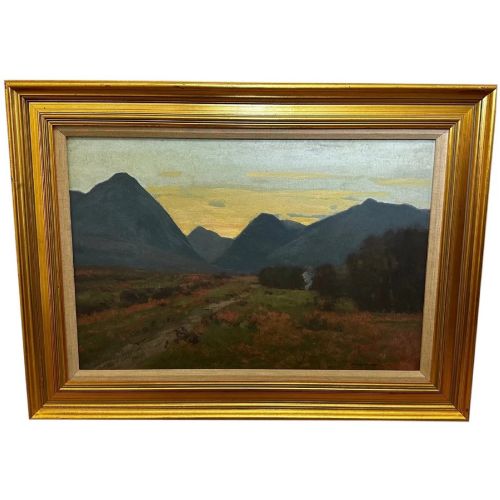
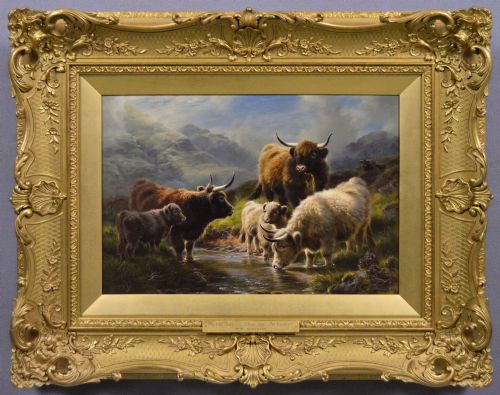
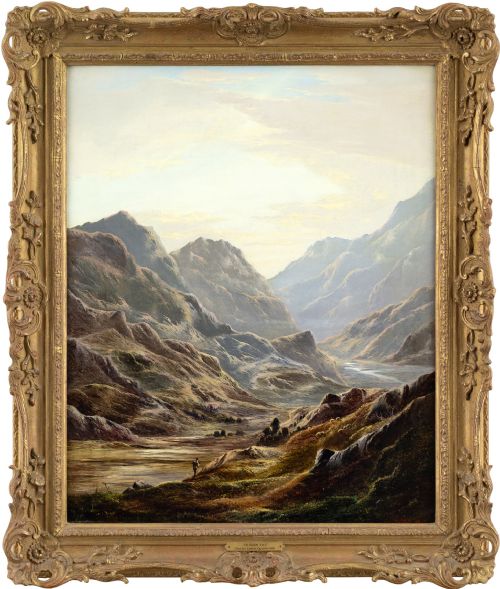
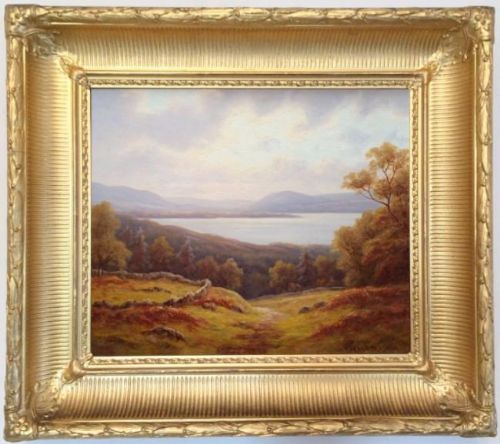
When you search for antique highland scenery art, you encounter oil paintings capturing the rugged beauty of Scottish mountains, lochs, and glens. The pieces gathered here date from the nineteenth century and the early twentieth century, showing pastoral scenes and atmospheric landscapes.
You will most frequently meet works from the Victorian period up to the early nineteen-twenties, often featuring Highland cattle or quiet waterways. These oil paintings on canvas or wood panel reflect the nineteenth-century British realism and Scottish impressionism of their era.
How they were made
Artists painted these works using oil paint applied to canvas or wood panel supports, building up rich textures to depict mountain mist and water. Many works retain their original gilt wood and gesso frames adorned with gold leaf.
The technique relies on careful layering of oil pigments to capture the changing light over Scottish lakes and stone bridges. Framing involved moulded wooden mouldings finished with plaster gesso and gilt layers to complement the paintings.
Highland cattle appear so frequently in these Scottish scenes that you might start naming the shaggy beasts before the mountains.
What varies in quality
The distinction between standard works and finer examples lies in the handling of light and atmospheric depth across the canvas. Stronger compositions render the Scottish terrain with confident brushwork rather than formulaic repetition.
Original frames also influence the overall standard, particularly when the antique gilt wood and gesso retain their original surface without heavy restoration. Named artists with documented exhibition records command greater attention from collectors.
George Houston RSA RSW·William Watson Jnr·Charles Leslie·Everett Watson Mellor·H Wallace·Alfred de Breanski·Alfred de Breanski Snr·John B MacDoanld·John W Morris
The Antique Highland Scenery Art Glossary
- Gesso
- A plaster mixture applied to wooden frames before gilding, providing a smooth base for gold leaf. It cracks with age in a characteristic crazed pattern.
- Gilt Wood
- Timber coated with a thin layer of gold leaf or metallic paint. It frames many nineteenth-century paintings to enhance their visual weight.
- Oil on Canvas
- Pigment mixed with drying oil applied to a stretched woven fabric surface. This combination dominated fine art production through the Victorian era.
- Wood Panel
- A flat wooden board used as a rigid support for oil painting instead of canvas. Panel paintings from this period frequently depict smaller, highly detailed scenes.
- Victorian Pastoral
- An artistic style celebrating idealized rural scenery and agricultural life. It often includes cattle grazing near lochs and rivers.
Antique Highland Scenery Art: Frequently Asked Questions
What subjects appear in highland scenery art?
These paintings depict Scottish mountains, misty lochs, pastoral valleys, and cattle resting near rivers. Artists frequently returned to specific locations such as Loch Lomond, Glen Tilt, and Glen Tay.
Such views reflect the nineteenth-century fascination with untamed British landscapes and romanticized rural isolation.
How do I date an antique oil painting?
Dating relies on the style of the canvas preparation, the framing materials, and the signatures or biographical records of the artists. Nineteenth-century works often use heavy gesso frames and distinct canvas weaves.
Examine the reverse of the panel or stretcher bars for old labels, dealer stamps, and handwritten titles indicating the location.
Where should I hang a Victorian landscape?
Select a wall with stable humidity away from direct sunlight to protect the oil paint and the delicate gilt frame. These works suit traditional rooms or studies where their rich tones can anchor the space.
Ensure the hanging wire and wall fixings safely support the combined weight of the painting and its heavy wooden frame.
How do I clean an antique oil painting?
Dust the canvas very gently with a soft, dry brush without applying pressure to the paint surface. Avoid using water, household cleaners, or damp cloths on the oil layer.
Professional conservators should handle any deeper cleaning or removal of accumulated surface grime to prevent damage to the original pigment.