




Framed Maritime Landscape Art
Framed maritime landscape art brings together coastal views, harbours, and open water through centuries of painting traditions.
Framed Maritime Landscape Art
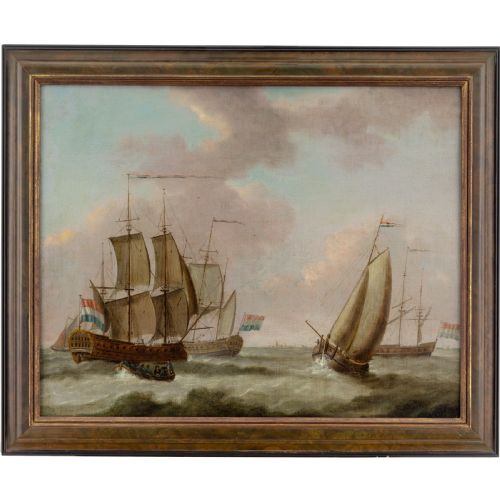
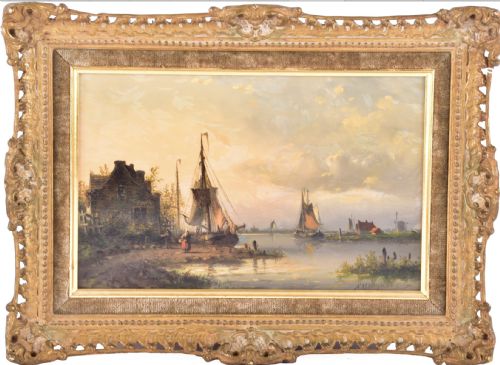
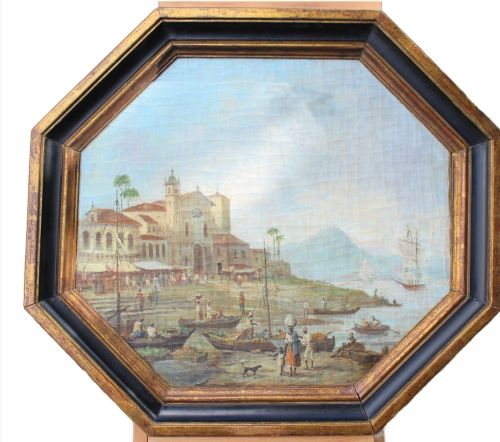
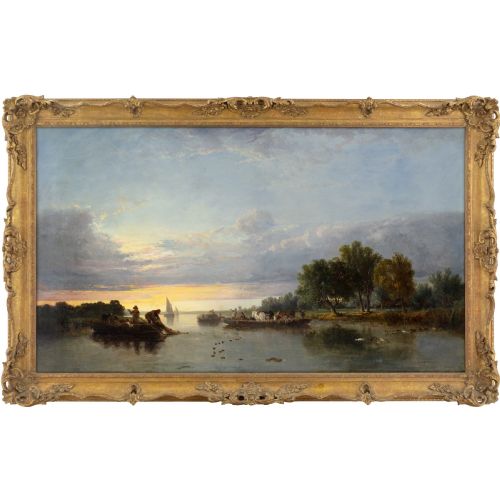
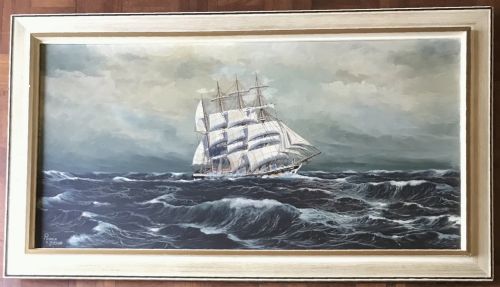
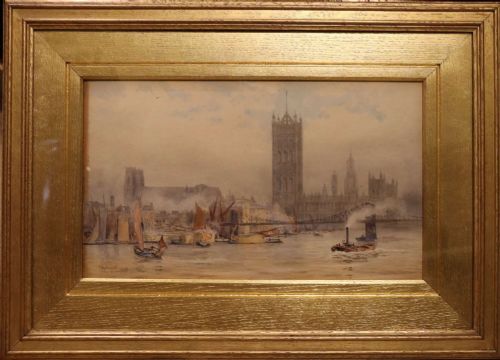
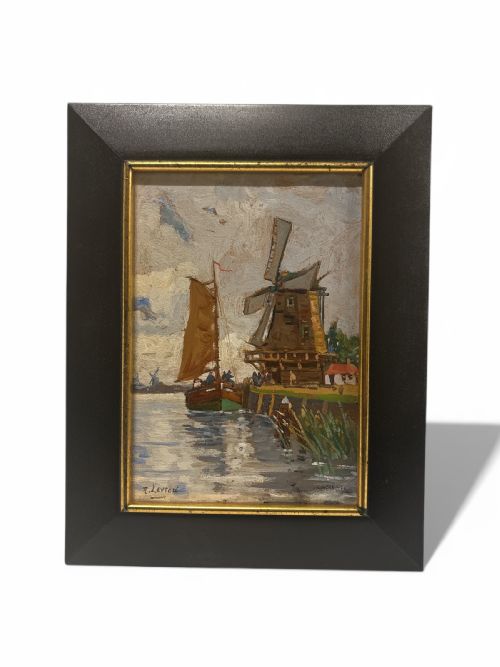
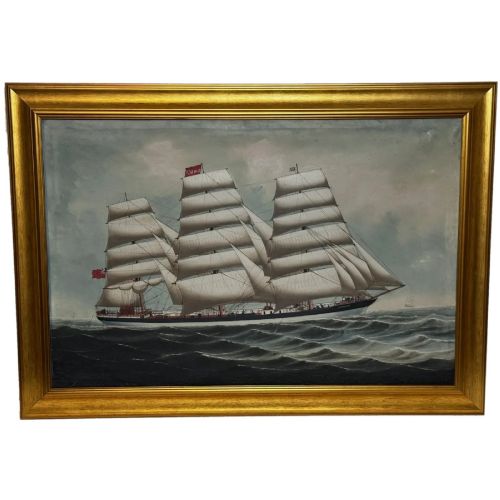
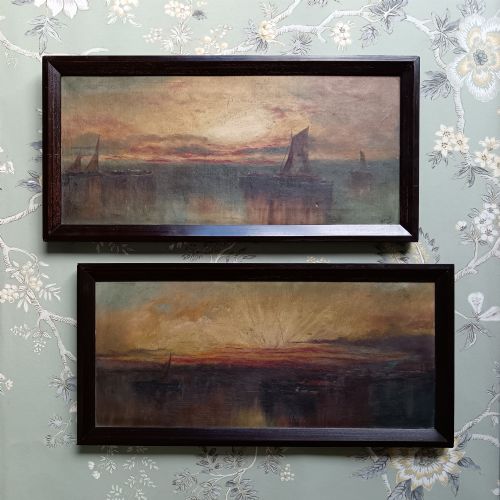
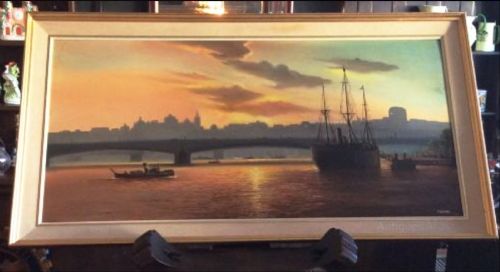
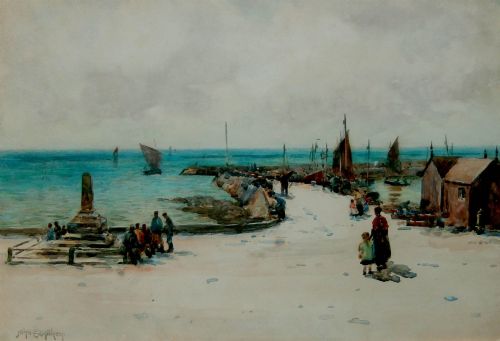
Framed maritime landscape art encompasses oil paintings, watercolours, and works on board depicting coastal scenes, harbours, rivers, and shipping. These works record coastal life, fishing boats, and marine views from the nineteenth century through the mid-twentieth century.
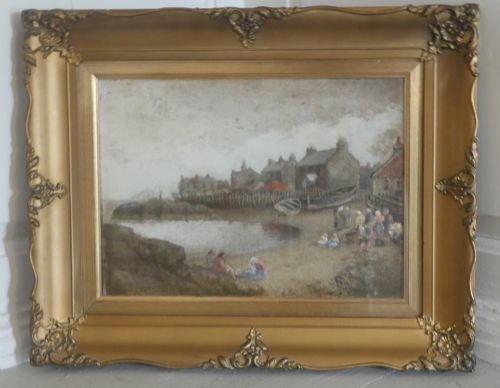
The selections available here focus heavily on nineteenth-century and Edwardian pieces, alongside British Impressionist and Post-Impressionist examples. Buyers encounter framed watercolours and oil paintings featuring British, Dutch, and Venetian coastal settings.
Subjects range from quiet village harbours and estuary views to dramatic night seascapes and bustling river traffic on the Thames. Most pieces arrive within period frames, particularly gilt wood surrounds that complement the canvas or paper surfaces.
Materials and construction methods
Artists relied primarily on oil paint applied to canvas or wood board, alongside watercolours worked on paper. These traditional media provide the varied textures and translucent qualities visible across the selection.
Framing forms an integral part of these works, utilising wood and gilt wood constructions designed to house and protect the painted surface. Many frames date from the same period as the artworks they contain.
The listings span from the nineteenth century through the 1960s, featuring oil paintings, watercolours, and works on canvas.
Factors that define quality
Quality rests upon the artist's handling of light, atmosphere, and spatial depth within the coastal setting. Skilled brushwork captures the movement of water and the play of sunlight on sails or harbour walls with convincing immediacy.
The integrity of the original support, whether canvas, board, or paper, contributes significantly to the standing of a piece. Preservation of the pigment layer and the compatibility of the surrounding period frame further distinguish the finest examples.
James Orrock·Francis Moltino·John Wilson Carmichael·Thomas Creswick·William Henry Williamson
The Framed Maritime Landscape Art Glossary
- Oil on Canvas
- Pigment mixed with drying oil applied to a woven fabric stretched across a wooden frame. This medium allows for rich colour layering and varied surface textures.
- Watercolour
- A paint consisting of colour suspended in a water-soluble binder, traditionally applied to paper. It produces luminous washes and delicate atmospheric effects.
- Gilt Wood
- Wood treated with a thin layer of gold leaf or metallic gilt powder. It is commonly found on traditional frames designed to highlight the artwork.
- Impressionism
- A nineteenth-century painting style characterised by relatively small, thin, yet visible brush strokes and an emphasis on accurate depiction of light.
Framed Maritime Landscape Art: Frequently Asked Questions
How do I date a maritime oil painting?
Dating relies on stylistic clues, framing methods, and the signatures or documentation associated with the artist. Costume details on figures and the type of vessel depicted also offer reliable chronological markers.
Examining the canvas preparation and the materials used on the reverse provides further confirmation of the period.
Where should I hang a marine watercolour?
Watercolours require placement away from direct sunlight to prevent the fading of delicate pigments on paper. Maintaining stable indoor humidity protects both the paper support and the surrounding mount.
Using conservation-grade glass during framing helps shield the artwork from environmental damage over time.
What is the difference between marine and coastal art?
Marine art typically focuses on ships, naval history, and deep-water navigation. Coastal art places greater emphasis on the shore, beaches, cliffs, and harbour life.
Many works in this category blend both elements by showing vessels at anchor near a port or village.
Are period frames original to the paintings?
Many nineteenth-century and Edwardian paintings remain in their original gilt wood frames, matched to the artwork by the framer or dealer of the era. Examining the fit, corner joins, and wear patterns indicates whether the frame belongs to the same period.
A matching period frame enhances the historical context of the piece.