



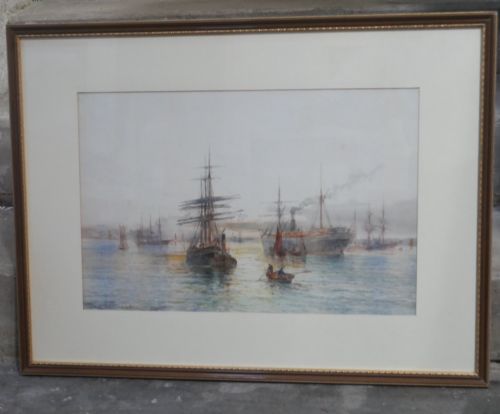
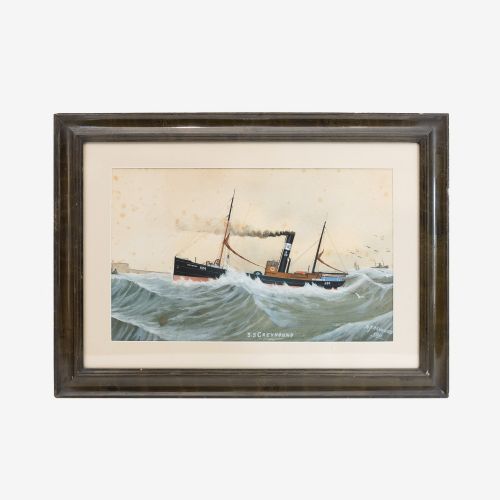
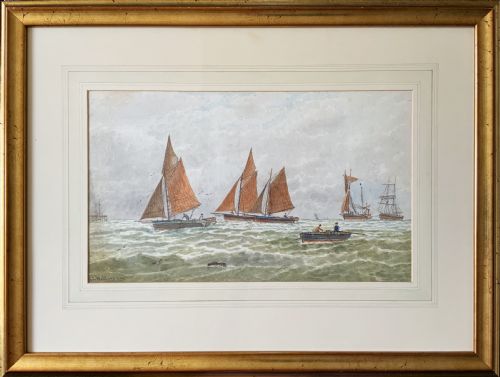
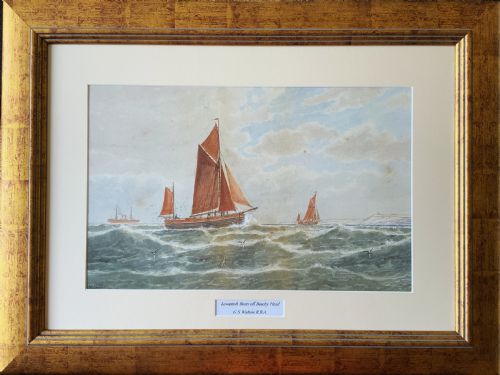
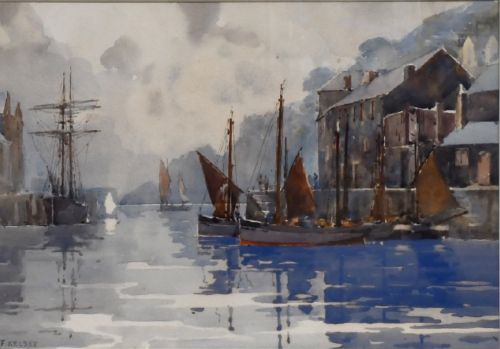
Framed Marine Watercolour Art
Framed marine watercolour art captures coastal harbours, naval vessels and open seas across the nineteenth and twentieth centuries.
Framed Marine Watercolour Art
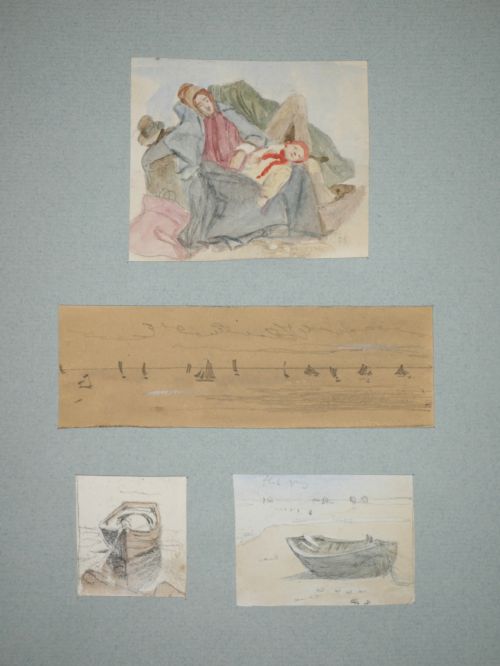
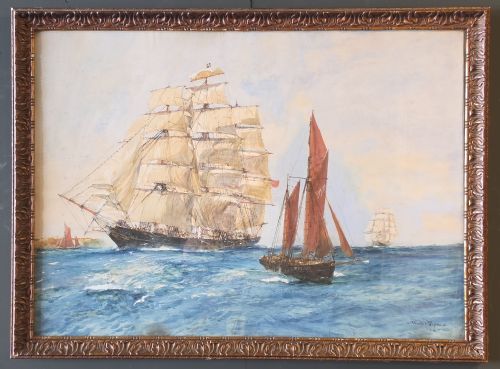
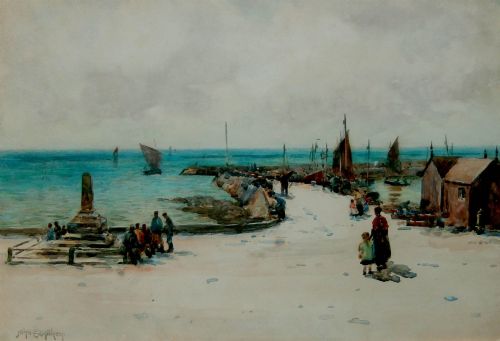
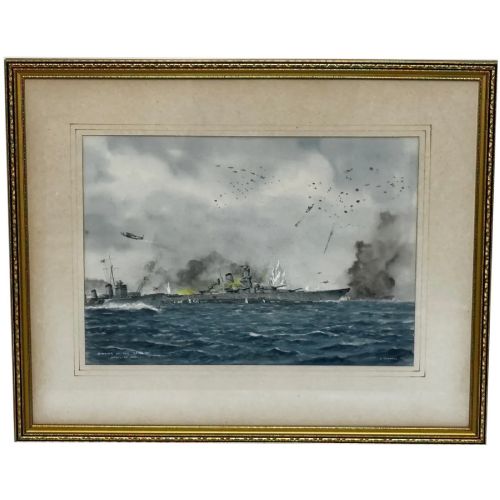
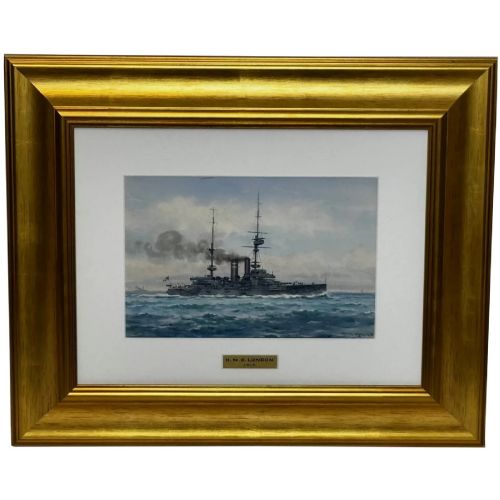
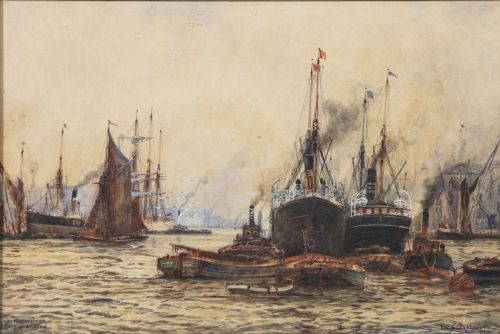
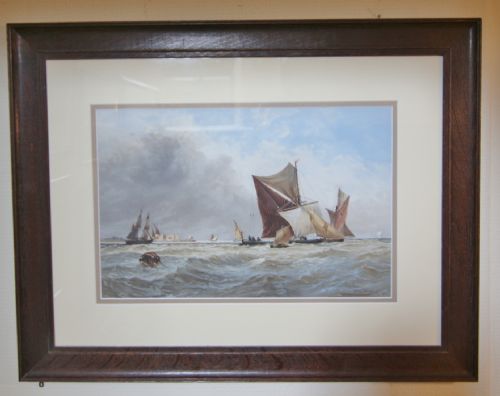
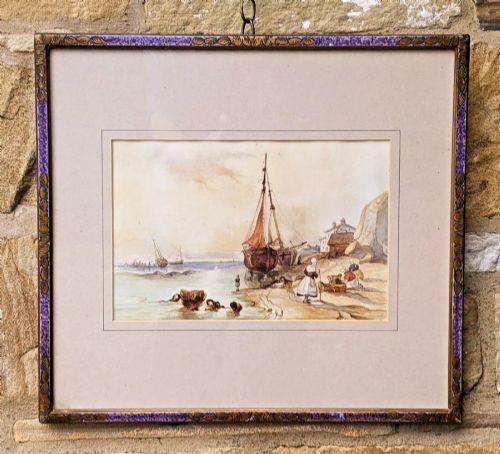
Framed marine watercolour art covers works on paper depicting coastal views, harbour scenes and naval vessels. These paintings record maritime subjects ranging from fishing boats and lighthouses to ironclad battleships.
The selections on this page centre predominantly on nineteenth-century and early twentieth-century examples. Victorian and Edwardian pieces form a large part of the available paintings, alongside mid-century works.
Materials and technique
Artists painted these works on paper using watercolour pigment and occasionally gouache. The papers carry washes and fine line work applied with brushes to create skies, water and sailing vessels.
Protection and presentation rely on glass and wood framing, often including gilt wood moulding. The framing preserves the delicate paper surface from atmospheric moisture and handling.
Listings feature works on paper rendered in watercolour and gouache, set behind glass within wood and gilt wood frames.
Distinctions in quality
Quality rests upon the artist's ability to render light, atmosphere and the movement of water. Skilled handling of pigment creates depth in turbulent seas and clarity in architectural harbour details.
Condition of the paper and vibrancy of the pigments separate works. Works maintained under glass without fading retain the intended contrast between sea and sky.
James Orrock·James Smetham·Charles Edward Dixon·John E Aitken·Eric Tufnell·William Banks Fortescue·Frank Watson Wood·Frank William Scarbrough·TB Hardy·Alexander Harwood·George Stanfield Walters·Frank Kelsey·F A Roylance·John Moxon·Alfred George Morgan·Lionel Horsnell·John Bedloe Goddard·Charles William Adderton·Richard Harry Carter·Vincenzo D Esposito·William Lee Hankey·William Frederick Settle·Fred Lawson·Ernest Dade·William Tuck
The Framed Marine Watercolour Art Glossary
- Watercolour
- A paint consisting of colour suspended in a water-soluble binder used on paper. It allows for transparent washes and fine illustrative detail.
- Gouache
- An opaque water-based paint often combined with watercolour in marine art. It provides solid highlights on sails and cresting waves.
- Seascape
- A painting depicting the sea, coastal views or ships. These subjects form the core of maritime fine art.
- Gilt wood
- Wood framing treated with gold leaf or metallic paint. It surrounds many traditional nineteenth-century frames.
Framed Marine Watercolour Art: Frequently Asked Questions
What periods do these paintings date from?
The listings span from the nineteenth century through the Edwardian era into the mid-twentieth century. Victorian maritime works appear frequently alongside 1930s and 1960s compositions.
Dates often derive from artist signatures, exhibition records or contemporary inscriptions on the reverse of the frames.
How should I hang watercolour art?
Watercolour pigments remain sensitive to ultraviolet light and direct sunlight. Hang these framed works away from windows to prevent fading of the paper and pigments.
Maintain stable indoor humidity levels to protect both the antique paper and the wooden frames from warping.
What subjects appear in these scenes?
Common subjects include British and European fishing harbours, sailing luggers, lighthouses and coastal towns such as Whitby and Scarborough. Naval vessels and merchant steamships also feature prominently.
Many works document specific historical ships, naval battles and maritime operations.
Are these works signed by the artists?
Many pieces feature artist signatures, monograms or contemporary attributions written on the front or back. Signed works often include specific dates and location titles.
Unsigned watercolours also appear, attributed through stylistic comparisons and period framing.