


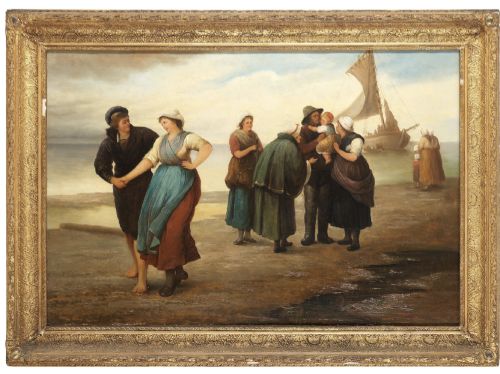
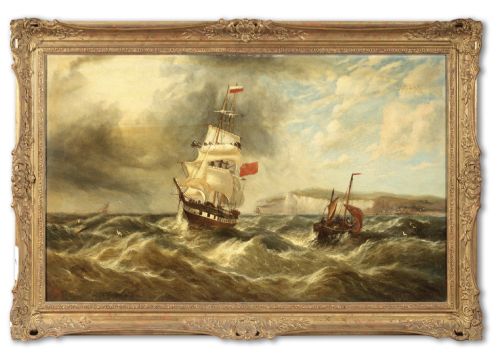
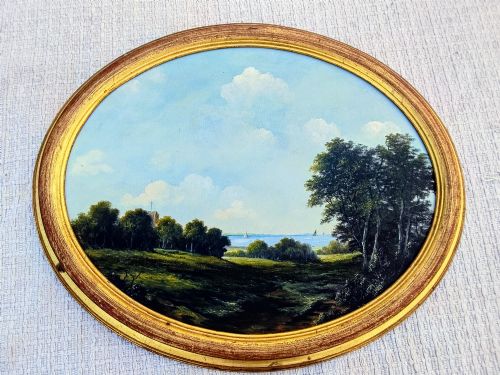
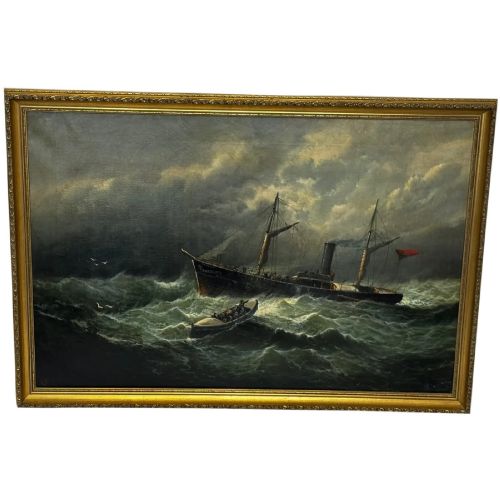
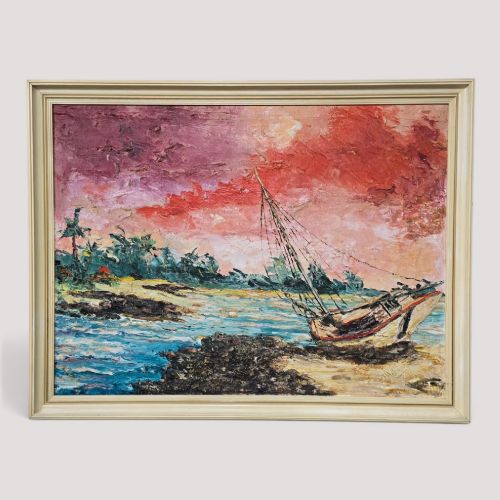
Framed Marine Oil Painting
A framed marine oil painting brings the movement of open water and historical shipping directly onto a wall.
Framed Marine Oil Painting
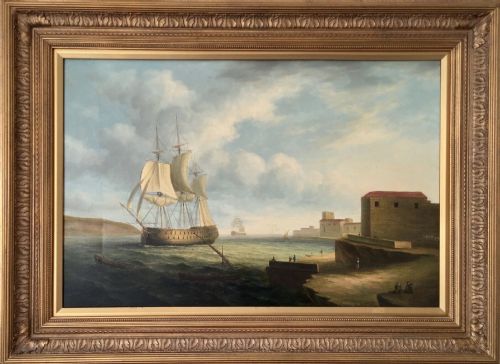
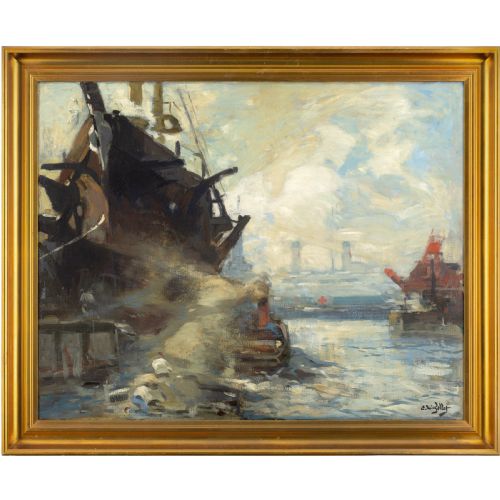
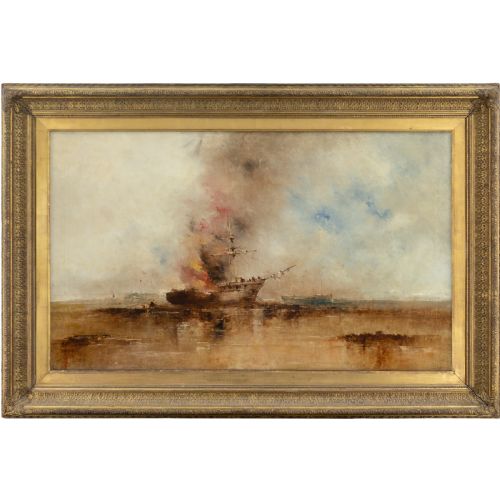
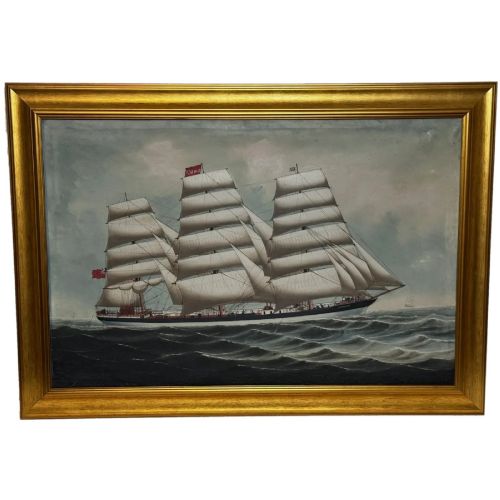
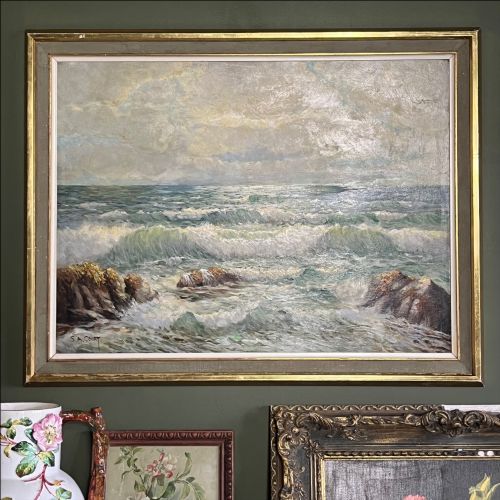
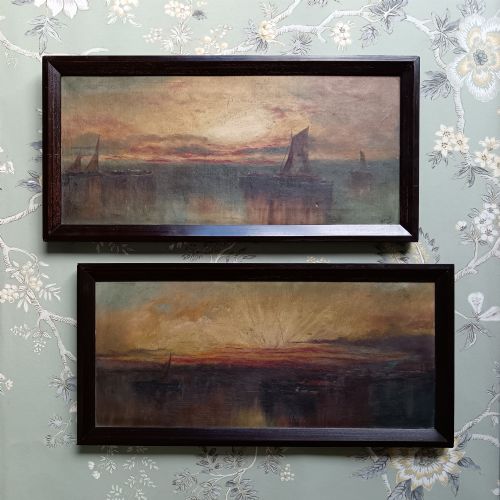
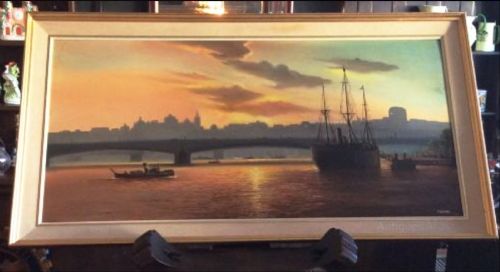
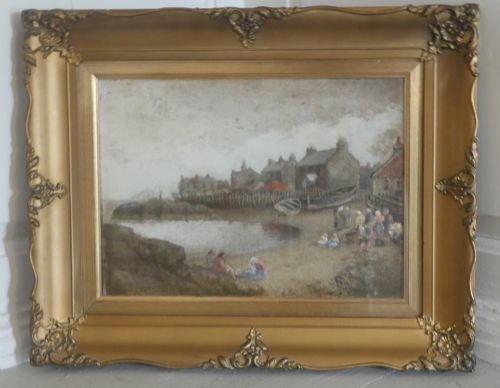
A framed marine oil painting depicts maritime subjects such as coastal scenes, harbour views, naval engagements, and ships navigating open seas. The selection spans nineteenth-century Victorian works through to mid-century modern interpretations, encompassing styles like British Impressionism and Post-Impressionism.
Buyers will encounter works executed on canvas, board, and panel, frequently housed in period gilt or giltwood frames. The subjects range from calm river estuaries and coastal villages to dramatic storms and rescue operations at sea.
Originating from British, French, Dutch, and Australian hands, these paintings document naval vessels, merchant shipping, and local fishing boats across distinct historical eras.
Materials and methods
Artists painted primarily with oil paint on stretched canvas, wooden panels, or rigid boards, sometimes employing en plein air techniques to capture natural light. Brushwork varies from tight academic precision in depicting rigging and hull construction to looser, impressionistic strokes used for water and skies.
Many works incorporate gold leaf or gilt wood frames that complement the tonal qualities of the maritime scenes within. These frames often feature decorative mouldings specific to their Victorian or Edwardian periods of manufacture.
Framed Marine Oil Painting Retail Price Guide 2026
Typical asking prices for framed marine oil painting among the pieces listed under this phrase on Sellingantiques today, from the lower quarter to the upper quarter. They describe what is for sale here now, not the wider market.
Represented geographical origins include British, French, Dutch, and Australian schools recording ships from galleons to WWI steamships.
Assessing quality
Quality rests upon the artist's command of light, atmospheric perspective, and maritime architecture. Superior works accurately render complex rigging, hull forms, and the natural physics of waves without stiffness.
The harmony between the canvas and its original gilt frame significantly influences the overall integrity of the piece. Masterly handling of water, wind, and sky separates competent topographical records from compelling artistic achievements.
Clifford Hanney·William McAlpine·Reginald Arthur Borstel·Sidney A Court·Bernard Gribble·Bonaventura Peeters·Clive Browne·Peter Brannan·Paul Bret·Francis Moltino·Bernard Benedict Hemy·Thomas Creswick·Willem Bos·John Wilson Carmichael·Lai Fong·Joseph Farquharson·John Moore of Ipswich·Nicholas Condy·William Henry Williamson·John Jock Wilson·Frederick J Sang·George F Gregory·Edward Callow·George Webster·H Claessens
The Framed Marine Oil Painting Glossary
- Giltwood
- Wood carved and covered with a thin layer of gold leaf or metallic gilt powder. This finish is typical of traditional frames housing nineteenth-century maritime art.
- En plein air
- The practice of painting outdoors to directly capture the transient effects of light and weather upon coastal landscapes. This technique became prominent during the later nineteenth century.
- Panel
- A rigid flat support made of wood used by artists instead of stretched canvas. Panel paintings often survive from earlier periods or mimic traditional methods.
- Seascape
- A painting depicting the sea, coastal views, or marine shipping. These works focus on the interaction between water, sky, and vessel.
Framed Marine Oil Painting: Frequently Asked Questions
What subjects appear in marine paintings?
These works display three-masted schooners, merchant ships, steamships, naval battles, and quiet coastal harbours. Artists also recorded routine dockside loading, shipwrecks in heavy gales, and serene river scenes.
Such variety allows buyers to choose between dramatic nautical action and calm topographical views of historical ports and bridges.
How do I date a marine oil painting?
Dating relies upon the vessel types depicted, such as steamships or historical warcraft, alongside the painter's documented active years. Costume details on figures and the style of the gilt frame offer further chronological clues.
Signatures, exhibition labels, and historical school attributions help narrow the period from the early nineteenth century to the mid-twentieth century.
Are these paintings supplied with frames?
Most pieces retain their period frames, frequently constructed from gilt or giltwood with decorative mouldings. These surrounds are chosen to complement the artistic style and age of the canvas.
Original frames provide a unified historical presentation, though minor repairs to gilt work are common in antique pieces.
Where were these maritime scenes painted?
Artists recorded coastal views across British shores, Cornish fishing villages, European ports in Malta, Italy, and France, as well as colonial waters. Painters often travelled extensively or worked along local rivers like the Thames.
This geographic spread reflects both local maritime commerce and the international travels of nineteenth-century marine artists.