








Framed Madonna and Child
A framed madonna and child brings centuries of devotion and masterwork composition directly to the wall in oil, canvas, and giltwood.
Framed Madonna and Child
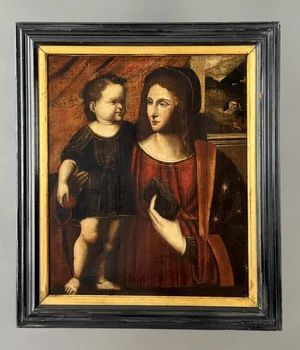
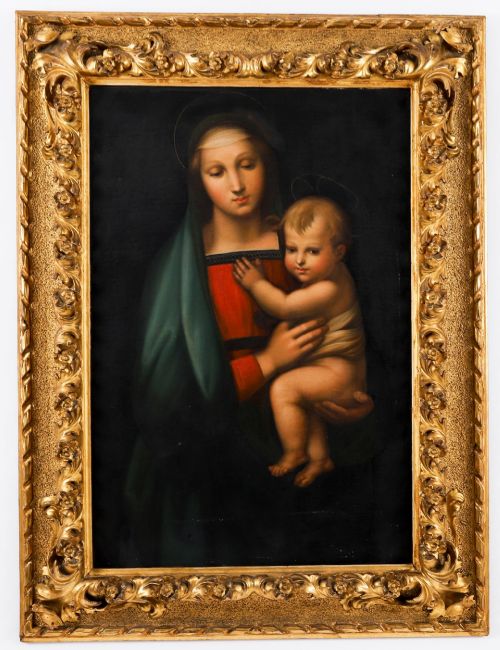
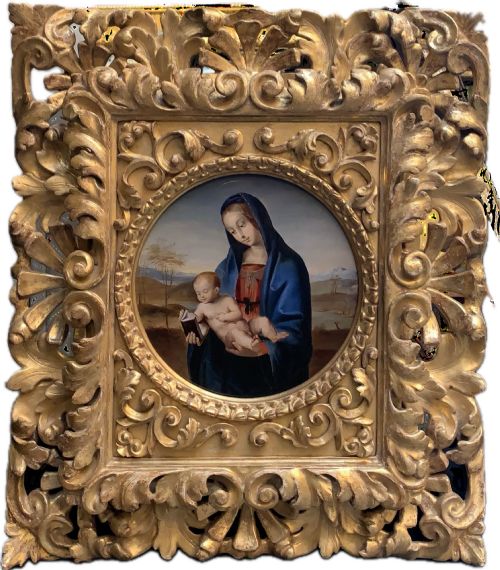
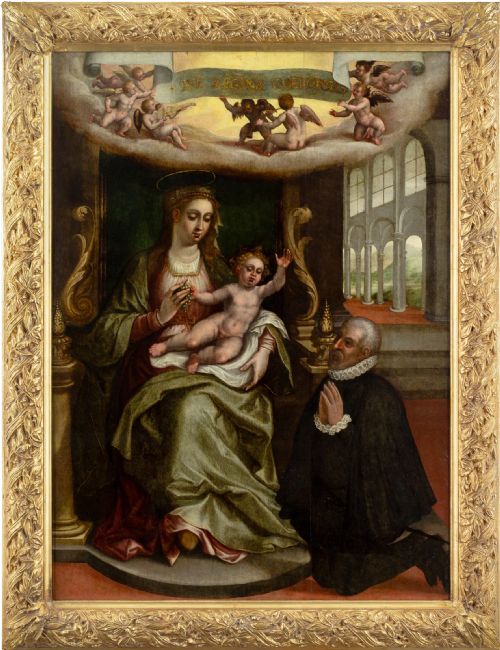
A framed madonna and child represents the foundational Christian subject of the Virgin Mary holding the infant Jesus, rendered across various centuries and traditions. When searching for a framed madonna and child, buyers encounter everything from early oil on canvas originals to later prints and porcelain plaques.
The selections span distinct periods including the 16th, 17th, and 18th centuries, alongside 19th-century revivals and early 20th-century prints. Many pieces interpret compositions by Renaissance masters such as Raphael and Correggio, reflecting centuries of artistic reverence.
Forms range from large oil paintings and wall art to hand-painted porcelain plaques and classical prints. These works are housed in protective surrounds, often featuring giltwood and gold leaf frames that complement the religious subject matter.
Materials and construction
The physical objects rely primarily on wood structures, canvas supports, and paper sheets. Oil on canvas and oil paintings form the backbone of the earlier examples, while later works incorporate printed paper and porcelain.
Finishing techniques emphasise ornamentation through giltwood, gold leaf, and glass. Frames are built from wood to secure the canvas, paper, or panels, often applying gilding to enhance the devotional presence of the imagery.
Framed Madonna and Child Retail Price Guide 2026
Typical asking prices for framed madonna and child among the pieces listed under this phrase on Sellingantiques today, from the lower quarter to the upper quarter. They describe what is for sale here now, not the wider market.
Periods represented reach from the 16th century through the 17th, 18th, and 19th centuries into the 1920s and 1930s.
Quality factors in devotional art
Quality rests in the fidelity and execution of the brushwork or print reproduction. Pieces derived directly from Renaissance workshops or closer to the original period demonstrate superior draughtsmanship in handling facial expressions and drapery.
The supporting materials also dictate grade, where period wood frames utilising genuine gold leaf outrank later commercial replacements. The depth of the pigment in oil paintings or the fineness of detail in hand-painted porcelain plaques separates standard decorative prints from finer collector pieces.
Bernardino Luini·Miguel Barroso·Benvenuto Tisi·Francesco Solimena·Orsola Maddalena Caccia
The Framed Madonna and Child Glossary
- Oil on Canvas
- Pigments bound in a drying oil applied to a woven fabric stretched across a wooden frame. This medium allows for rich colour blending and longevity.
- Giltwood
- Wood that has been coated with a thin layer of gold leaf or gold paint. It provides an ornate, reflective border typical of religious art framing.
- Renaissance Revival
- An artistic movement reviving the forms, styles, and subjects of 15th and 16th-century Italy. Makers in the 19th century frequently copied master compositions under this aesthetic.
- Porcelain Plaque
- A flat ceramic tablet fired with painted or glazed imagery. Hand-painted examples offer miniature detail after famous paintings.
Framed Madonna and Child: Frequently Asked Questions
What is a framed madonna and child?
It is a depiction of the Virgin Mary and the infant Jesus, secured inside a decorative or protective border.
These pieces range from oil paintings on canvas to paper prints and porcelain plaques.
Who painted the original compositions?
Many works on this page are later interpretations or copies after Renaissance masters like Raphael and Correggio.
Artists from the 16th century onward reproduced these iconic devotional scenes.
How do I date a piece?
Dating relies on the materials used, the style of the frame, and the condition of the canvas or paper.
Pieces span from the 16th century up to the early 20th century, including various revival periods.
Where should I hang these artworks?
They suit quiet living spaces, studies, or hallways where traditional wall art commands attention.
Keep them away from direct sunlight to protect the oil paint, paper, and giltwood frames.