



Nineteenth Century Italian Painting
Nineteenth century italian painting brings the luminous light of Venice and Rome directly onto your wall through oils and watercolours.
Nineteenth Century Italian Painting
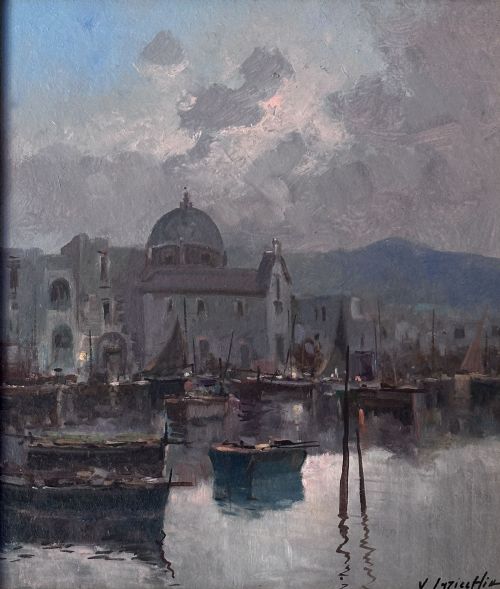
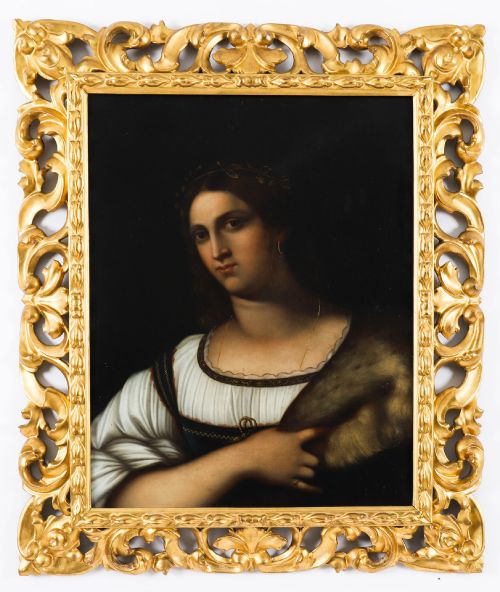
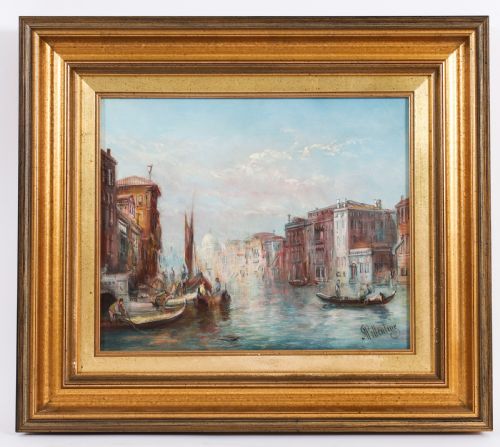
A nineteenth century italian painting captures the landscapes, figures and architecture favoured by travellers on the Grand Tour and collectors of the era. Buyers seeking these works encounter coastal views of Venice, romantic pastoral scenes and detailed portraits executed with traditional skill.
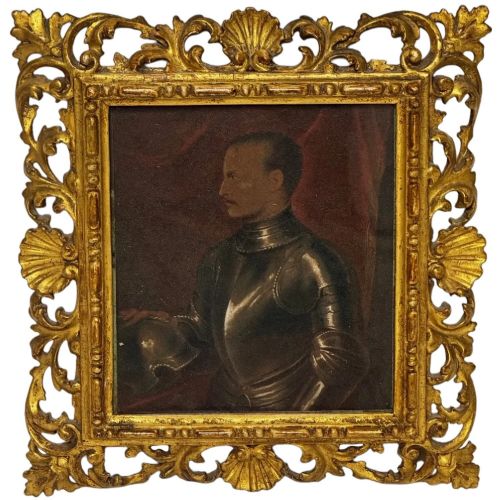
The selections span watercolours on paper and oil paintings on canvas, often housed within period frames of gilded wood. Subjects range from the Venetian lagoons and historic Roman steps to religious studies and genre scenes painted by documented artists of the period.
Materials and Technique
Artists relied primarily on oil on canvas and watercolour on paper, applying pigments to capture the distinct light of the Italian landscape. Canvases are stretched over wooden frames, while watercolours are protected beneath glass and frequently framed in elaborately carved giltwood.
Support materials such as paper and canvas dictate the immediate preservation of each piece, requiring stable environmental conditions to protect the delicate mediums. Gilded wood frames provide both structural enclosure and ornamental depth characteristic of the period.
Nineteenth Century Italian Painting Retail Price Guide 2026
Typical asking prices for nineteenth century italian painting among the pieces listed under this phrase on Sellingantiques today, from the lower quarter to the upper quarter. They describe what is for sale here now, not the wider market.
Listings feature both oil on canvas and watercolour mediums, capturing nineteenth century Italian scenes across paper and wood supports.
Judging Quality
Quality rests upon the handling of light and perspective, distinguishing works by named painters from anonymous studio output. The depth of the pigment application and the subtlety of colour shifts define the visual strength of an oil canvas.
The integrity of the original frame often elevates the piece, particularly when gilded wood mouldings match the exact period of the artwork. Finer execution in brushwork reveals the hand of trained masters operating within established Italian schools.
Alfred Pollentine·Icilio Federico Joni·Giulio Cecchini·Jane Vivian·Vittore Zanetti Zilla·Ettore Ascenzi·Carlo Ferranti·Belisario Gioja
The Nineteenth Century Italian Painting Glossary
- Oil on canvas
- Pigments bound in a drying oil applied to a stretched woven fabric support. This medium allowed artists to build rich layers of colour and texture.
- Watercolour
- A paint consisting of colour suspended in a water-soluble vehicle, typically applied to paper. It delivers transparent washes of light suitable for architectural and landscape studies.
- Giltwood
- Wood carved and treated with a thin layer of gold leaf. It defines the ornate frames commonly paired with fine art from this century.
- Grand Tour
- A traditional trip of Europe undertaken by upper-class European young men of the middle class and above. It generated high demand for localized paintings and watercolours.
Nineteenth Century Italian Painting: Frequently Asked Questions
How do I care for a watercolour painting?
Keep watercolours away from direct sunlight to prevent the pigments and paper from fading over time.
Ensure they hang in a room with stable humidity to protect the paper and glass framing from moisture damage.
Where were these paintings displayed originally?
These works hung primarily in British and European drawing rooms, collected by travellers returning from continental journeys.
They served as conversational centrepieces that commemorated specific sights in Venice, Rome and surrounding landscapes.
Are original frames important for these artworks?
Original giltwood frames contribute significantly to the historical integrity and visual harmony of the piece.
Craftsmen matched the ornamental weight of the frame directly to the artistic style of the canvas or paper within.
How do I distinguish watercolours from oil paintings?
Watercolours are painted on paper under glass, offering a transparent and luminous finish with visible paper grain.
Oil paintings utilise a textured canvas support with heavier pigment build-up that does not require protective glass.