



Antique Italian Watercolour
When you collect an antique italian watercolour, you acquire a hand-painted window into nineteenth-century southern light and classical architecture.
Antique Italian Watercolour
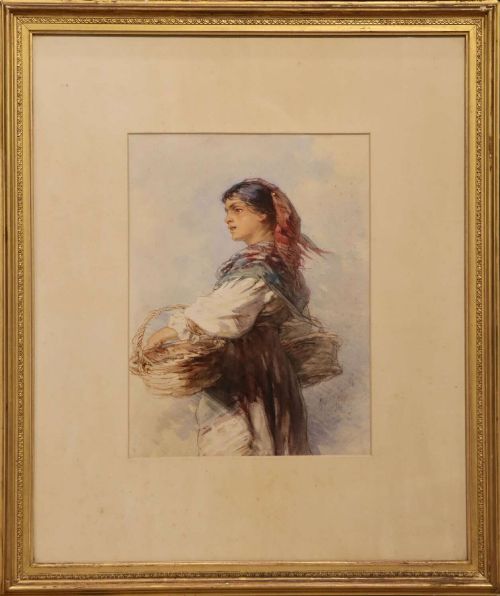
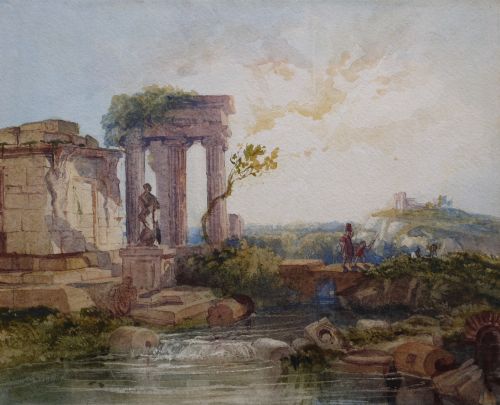
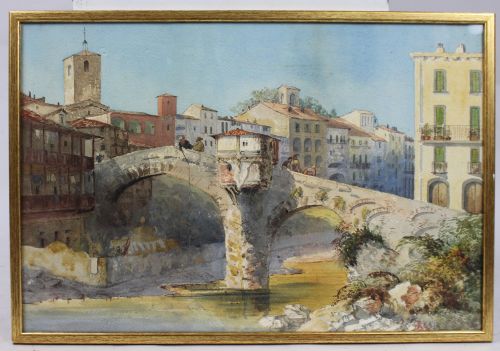
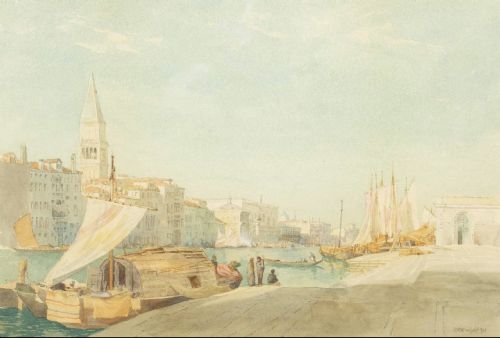
An antique italian watercolour captures the landscape, cities and classical ruins of the peninsula through nineteenth-century and early twentieth-century eyes. Buyers encounter depictions of Venetian canals, Roman monuments, and genre scenes of peasant life created during the height of foreign travel and artistic exploration.
The format ranges from intimate architectural studies and topographical records to large framed gallery works depicting the Grand Canal or the Roman Campagna. Most examples on this page date from the Victorian and Edwardian periods, reflecting the heavy British presence in Italy during those decades.
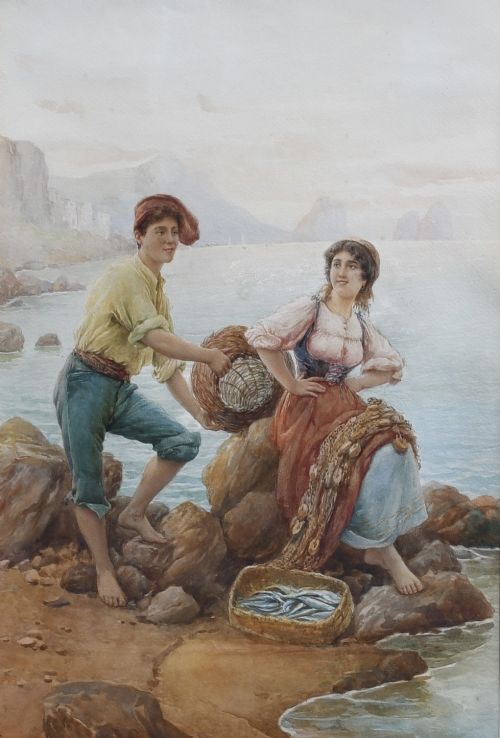
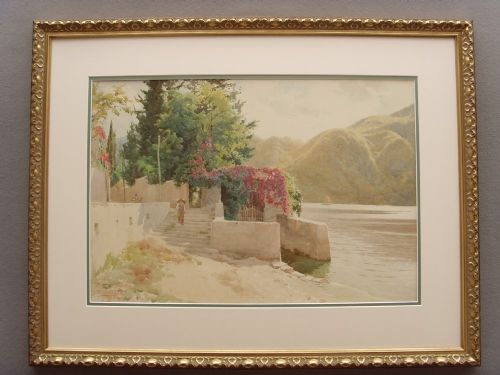
Subjects divide broadly between picturesque landscapes, architectural precision, and figurative interior or street scenes. These paintings served as portable records for travellers or finished gallery pieces intended for domestic display in northern homes.
Materials and Technique
Artists painted primarily with water-soluble pigment on paper, occasionally utilising embossed card or prepared sheets. The vehicle relies on water to thin the pigment, allowing translucent washes to build up luminosity across sky and water.
Finishing touches frequently incorporated heavier bodycolour or gum arabic to add highlights to architecture, water ripples, and figures. Surviving pieces are commonly protected beneath glass and housed within gilt wood frames or gold leaf mouldings appropriate to the period.
Several artists clearly battled damp Italian air and stubborn donkeys to capture these sun-drenched Venetian canals and Roman ruins.
Evaluating Quality
Quality rests upon the sureness of the draftsmanship, the control of atmospheric perspective, and the handling of southern light. A superior sheet commands attention through confident brushwork and precise architectural perspective rather than mere photographic replication.
The preservation of the paper support and the vibrancy of the pigment determine desirability, as fugitive watercolours fade significantly under harsh light. Original period framing, particularly ornate gilt wood surrounds matching the date of the artwork, elevates the overall integrity of the piece.
Guido Bach·Richard Principal Leitch·Thomas Ellison·Richard Henry Wright·Carlo Ferranti·Robert George Talbot Kelly·Filipo Indoni·Franz Knebel·Vittore Zanetti Zilla·Benedetto Salviati·Hercules Brabazon Brabazon·Pio Panfili·Leonardo Morello·Charles H Poingdestre·Arturo Orselli·David Law·Wilfred Knox·Ettore Ascenzi·Henry Wimbush·Belisario Gioja·John D Walker·T Williams·Arthur Severn·Helen Donald-Smith·Thomas Brabazon Aylmer
The Antique Italian Watercolour Glossary
- Grand Tour
- A traditional cultural trip of Europe undertaken by upper-class young European young men of means and other affluent individuals, flourishing in the 18th and 19th centuries. Watercolours purchased along the route documented classical sites and Italian landscapes.
- Watercolour pigment
- Colouring material ground into a fine powder and mixed with a water-soluble binder for painting. In these works, the pigments capture the bright light of Venice and Naples.
- Gilt wood
- Wood coated with a thin layer of gold leaf or metallic powder for decoration. Period frames utilise this technique to enhance the visual weight of the paintings.
- Genre scene
- A pictorial representation of everyday life and ordinary people engaged in common activities. Italian examples frequently depict fisherfolk, peasants, or market traders.
- Bodycolour
- Watercolour paint mixed with a white pigment to make it opaque. Artists used this method to create highlights on water and stonework.
Antique Italian Watercolour: Frequently Asked Questions
How should I hang an antique watercolour?
Keep watercolours away from direct sunlight to prevent the pigments from fading over time. Maintain stable room humidity to protect both the paper support and the historic frame.
Ensure backing boards are acid-free if you ever need to have the work conserved. Proper placement in a hall or drawing room preserves the delicate washes for decades.
What is a Grand Tour watercolour?
A Grand Tour watercolour is a topographical view purchased by travellers visiting Italy during the nineteenth century. These paintings recorded famous ruins, ancient architecture, and scenic vistas along the route.
They functioned as elevated souvenirs before the widespread availability of travel photography. Collectors prize them today for documenting the historic appearance of Rome, Venice, and Naples.
How do I identify a Victorian Italian watercolour?
Look for subjects focusing on sunlit Venetian canals, Roman aqueducts, or Neapolitan fisherfolk painted with transparent washes. Signatures, dates, and stylistic markers often point to British artists working in Italy during the nineteenth century.
Examine the framing and paper characteristics to confirm the period. Victorian works frequently feature distinct paper watermarks and period gilt surrounds.
Were these painted on location?
Artists typically executed rapid plein-air sketches and watercolour studies directly in front of the subject. These on-the-spot observations frequently served as the basis for larger finished compositions completed in studio.
This working method preserves a lively sense of light and atmosphere. The varied handling of brushwork often distinguishes a rapid field study from a formal studio piece.