
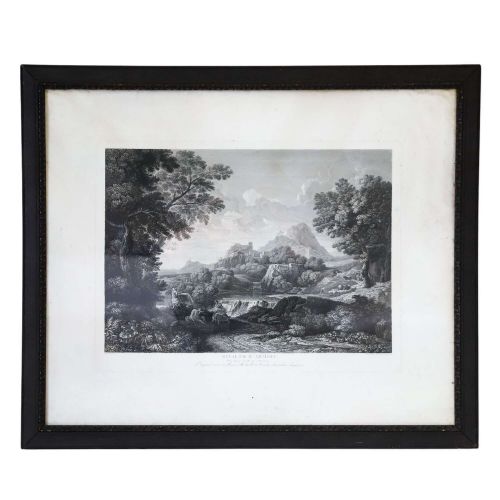


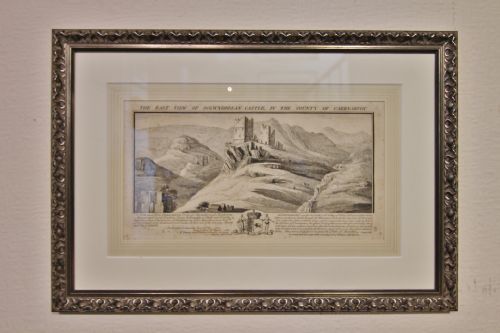


Framed Landscape Etchings
Framed landscape etchings bring open skies and quiet rural views indoors, offering centuries of printed artistry ready to hang on your walls.
Framed Landscape Etchings
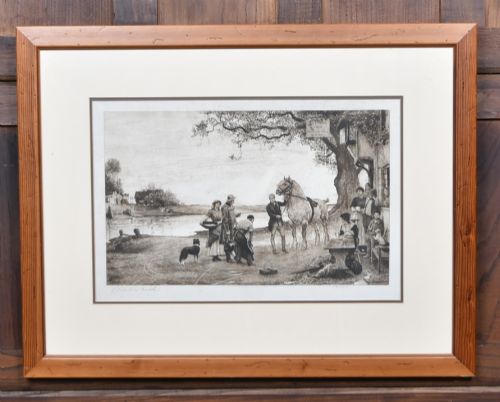
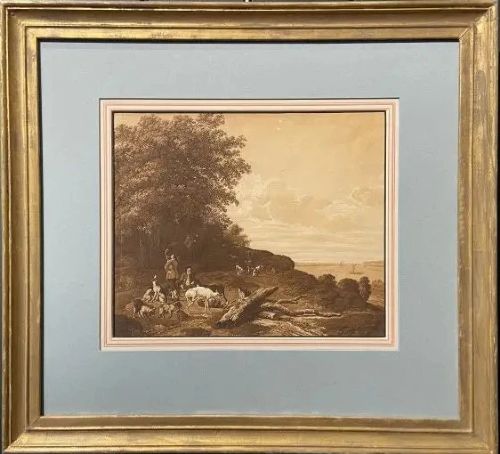
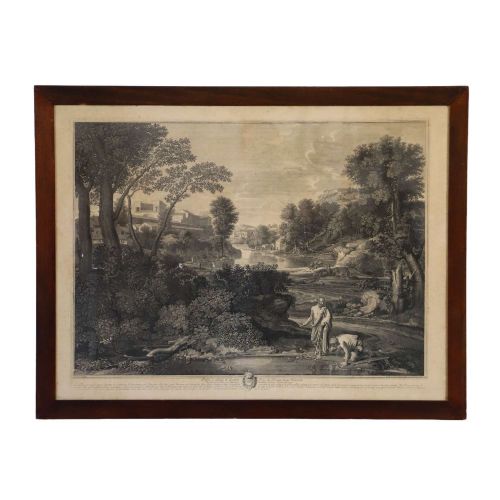
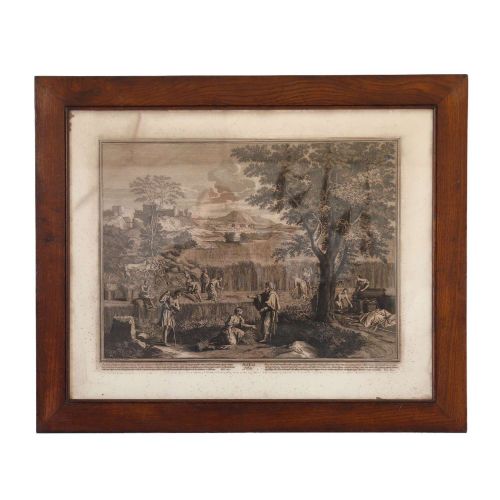
When you search for framed landscape etchings, you are looking at wall art spanning several centuries, capturing rural scenes, coastal views and classical compositions. The pieces on this page draw from the 17th, 18th, 19th and early 20th centuries, presenting works framed behind glass in wood, gold leaf and gilt wood.
You will encounter various formats among these listings, ranging from single framed etchings and engravings to sets of architectural prints and decorative works. Subjects stretch from Dutch Golden Age hunting returns and Welsh castles to Thames views from Greenwich Park and Guernsey seaweeding scenes.
Origins span British, French and Dutch traditions, reflecting the periods of Georgian, Victorian, Regency and Edwardian taste. Most examples arrive complete with their period frames, retaining the paper, ink and occasional hand-coloured highlights applied by artists and printmakers of the past.
How they were made
These works rely on paper as the primary support, marked by ink through etching, engraving, lithography or aquatint techniques. Artisans often enhanced the printed lines using watercolour or hand-coloured ink tints.
Enclosing these works required wood, gold leaf and gilt wood frames fitted with protective glass. Original frames frequently accompany the older sheets, preserving the paper alongside the structural timber.
One unexpected view captures seaweeding off Guernsey, proving that 19th-century printmakers found artistry in local coastal labour.
What varies in quality
Quality rests upon the crispness of the plate impression and the subtlety of any hand-applied colour. Stronger impressions reveal finer details in the lines of trees, buildings and figures, whereas worn plates yield softer, muddier results.
The integrity of the original framing and the condition of the paper surface also define the standard. Well-preserved sheets retain their original tones without heavy staining, housed within period mouldings that complement the era of the art.
Robert W. Macbeth·Johannes Lingelbach·Étienne Baudet·Herbert Dicksee·T.A Prior·Joseph Constantime Stadler·Claude Lorrain·John Boydell·CB Prescott·Edward Burrows·Victor Valery
The Framed Landscape Etchings Glossary
- Etching
- A printmaking process where acid bites lines into a metal plate to hold ink. This technique allows for fine, fluid lines resembling hand-drawn sketches.
- Engraving
- A method of cutting design lines directly into a metal plate with a sharp tool called a burin. The resulting prints exhibit precise, clean lines.
- Aquatint
- A printmaking variation that achieves tonal areas resembling watercolours through acid-resisting resin grains. It frequently appears in Georgian topographical and landscape works.
- Lithography
- A planographic printing process based on the chemical repulsion of oil and water. It produces smooth tonal gradations found in later 18th and 19th century prints.
- Gilt wood
- Wood coated with a thin layer of gold leaf or metallic paint. It forms the decorative framing often seen around period landscape prints.
Framed Landscape Etchings: Frequently Asked Questions
How do I care for framed paper art?
Keep framed paper prints away from direct sunlight to prevent the ink and any watercolour tints from fading over time. Maintain stable room humidity to protect both the historic paper and the wooden frames.
Avoid hanging these pieces in damp spaces such as bathrooms. Dust the glass gently with a dry microfiber cloth rather than spraying cleaners directly onto the frame edge.
Are these frames original to the pieces?
Many listings specify original frames, particularly those housing 17th and 18th century French and British engravings. These early mouldings often show period joinery and patinated gilt surfaces.
Later works may retain their Victorian or Edwardian frames, which reflect the framing styles popular at the time of publication.
What is the difference between an etching and an engraving?
Etchings are created using acid to bite lines into a metal plate, producing a softer, more fluid line quality. Engravings are carved directly into the metal using a sharp tool, resulting in crisp, precise lines.
Both techniques were widely used for landscape reproduction across the Georgian and Victorian eras.
Can I find matching sets of prints?
The selection occasionally includes paired or grouped works, such as sets of architectural scenes, sepia prints or multi-part neoclassical compositions. These groupings were often published together as series.
Checking individual listings will reveal whether prints are offered individually or as part of a matched series.