





Antique Framed Art Gallery
These antique framed art gallery pieces bring historical depth and character to a room through centuries of prints, paintings, and silhouettes.
Antique Framed Art Gallery
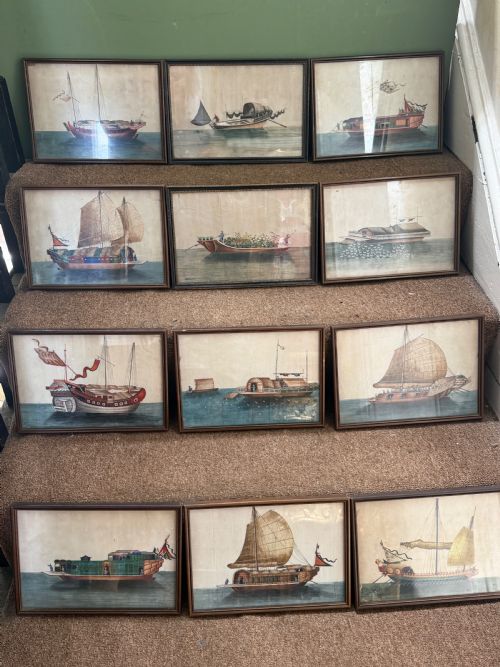
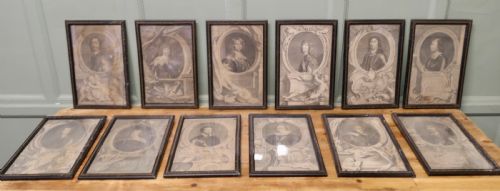
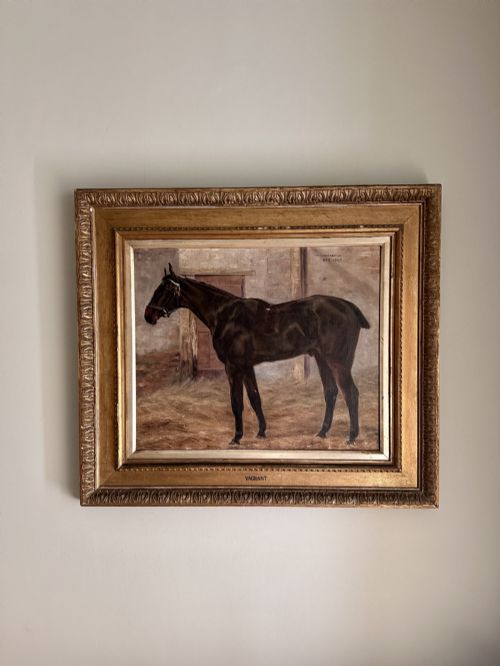
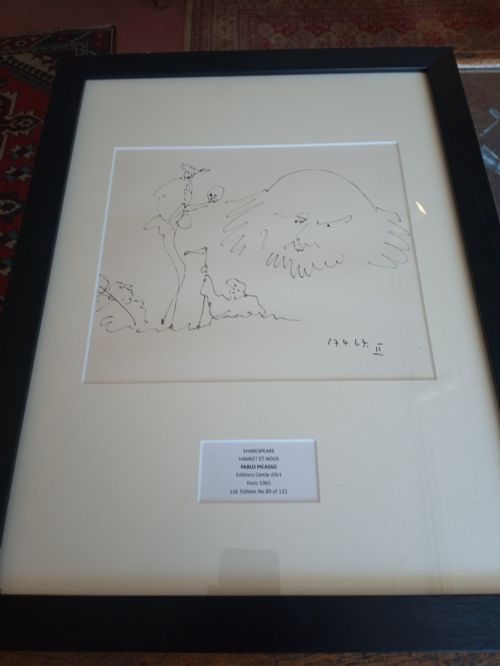
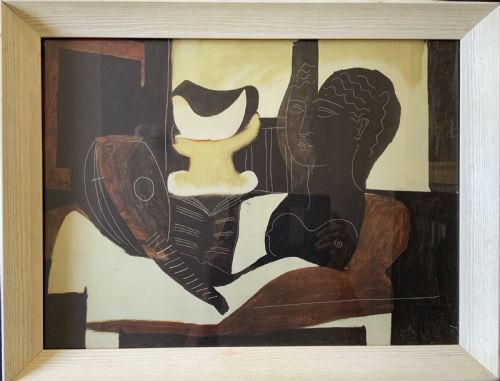
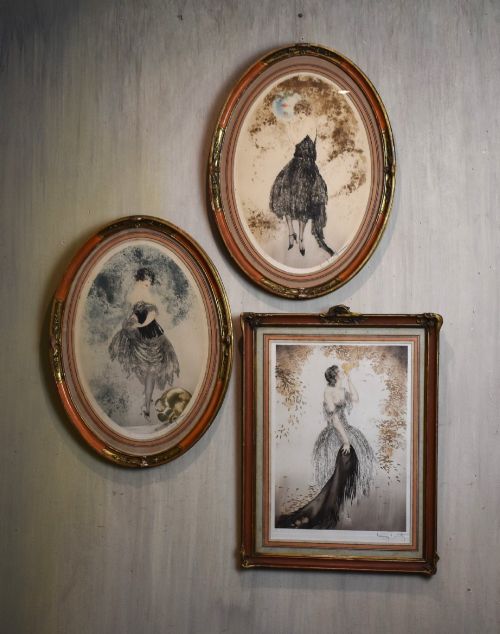
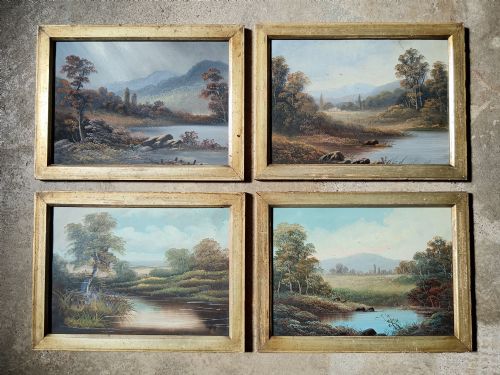
This selection of antique framed art gallery pieces brings together framed paintings, prints, and silhouettes spanning several centuries. Buyers encounter diverse forms, including botanical studies, portraits, and landscape scenes housed behind glass within period frames.
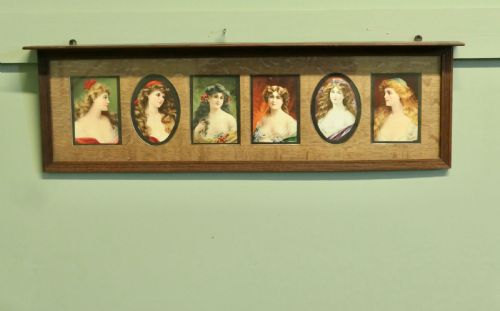
The selection ranges from eighteenth-century engravings to early twentieth-century decorative works and photographic prints. Many examples survive in matched sets or series, such as botanical plates and sporting prints, preserved in gilt wood and timber frames.
Materials and construction
Makers utilised traditional mediums including watercolour, ink, gouache, and oil paint applied to paper or canvas. Printmakers employed engraving and mezzotint techniques on paper, frequently finishing works with hand tinting.
Mounting relied on timber frames, often highlighted with gold leaf or constructed from gilt wood. Glazing protected delicate paper works, watercolours, and silhouettes from environmental damage.
Listings feature paper, glass, wood, and gold leaf alongside watercolour, ink, and gouache across eighteenth and nineteenth-century periods.
Distinctions in quality
Execution and detail separate standard decorative works from superior examples. Skilled draughtsmanship in silhouette cutting, botanical illustration, and portraiture distinguishes the finer items in the range.
The integrity of the original framing, whether gilt wood or plain timber, influences the overall character. Completeness within multi-part sets and preservation of the paper or paint surface determine the standing of each piece.
William James Hubard·Fred Fitzpatrick·Louis Icart·Thomas G Appleton·Edward Stodart·Simon François Ravenet·A.J Rowley·John Curtis·Edward Lear·John Phillip·George Cattermole
The Antique Framed Art Gallery Glossary
- Mezzotint
- A printmaking process of the intaglio family where the plate is roughened to produce tones and dark fields. This technique allows for subtle gradations of light and shade.
- Gouache
- An opaque method of watercolour painting using water-soluble pigments bound in glue. It yields a dense, matte surface finish.
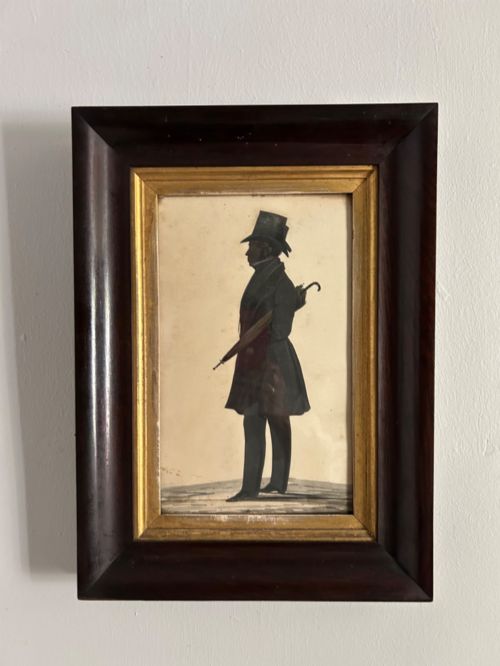
- Silhouette
- A portrait profile cut from paper or painted in solid dark tones, popular in the eighteenth and nineteenth centuries. They often depict notable figures or family groups.
- Engraving
- A print technique where an image is incised into a metal plate with a sharp tool. Ink is then pressed into the grooves to transfer the design onto paper.
- Gilt wood
- Wood coated with a thin layer of gold leaf or metal powder. It provides a reflective decorative border to frames.
Antique Framed Art Gallery: Frequently Asked Questions
How should I hang framed antique art?
Mount works securely using appropriate wall fixings that match the weight of the timber and gilt wood frames. Position pieces away from direct sunlight to protect delicate watercolours, prints, and paper from fading.
Maintain stable room temperatures to prevent timber frames and paper supports from warping over time.
What defines a silhouette portrait?
A silhouette is a profile portrait cut from black paper or rendered in dark pigment against a pale background. These works gained popularity during the eighteenth and nineteenth centuries.
Artists working in galleries produced both individual likenesses and conversational groupings.
Are multi-part print sets common?
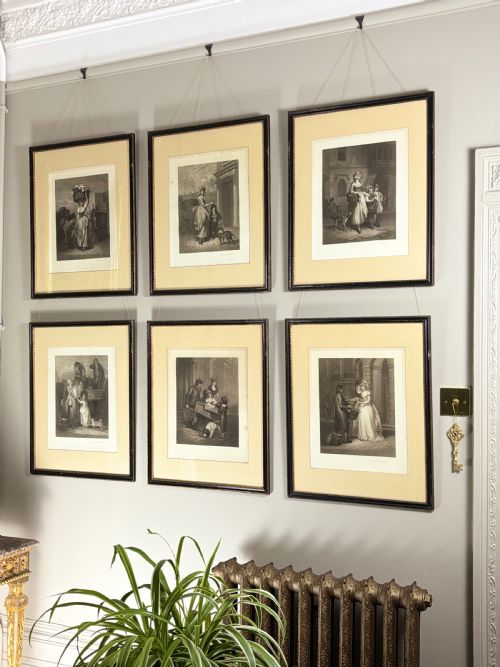
Makers frequently produced works in series, particularly for botanical studies, sporting subjects, and topographical views. These sets allowed collectors to display cohesive themes across multiple frames.
Preserving a full series intact remains desirable for historical display.
How do I identify eighteenth-century prints?
Examine the paper quality, ink texture, and plate marks left by the printing press. Eighteenth-century engravings and mezzotints often display watermarked paper stocks characteristic of the period.
Typography and framing styles provide additional clues to the era of production.