





Framed Heraldic Painting
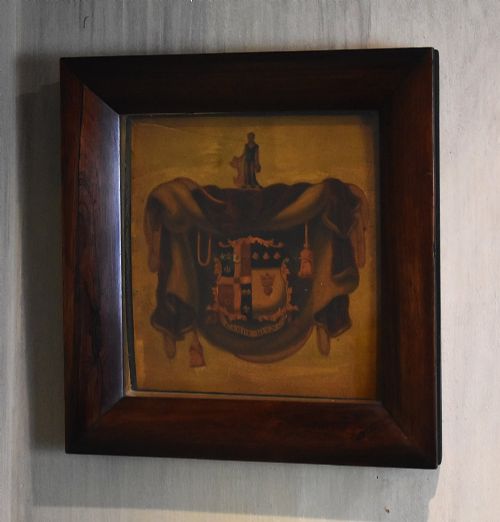
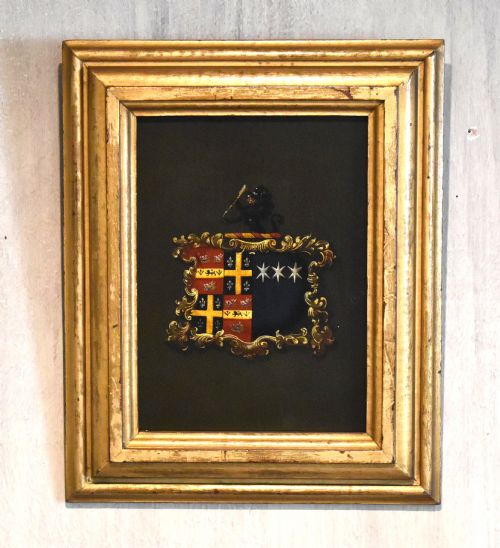
A framed heraldic painting brings centuries of lineage and craft to a wall, offering rich coats of arms rendered in oil, gouache or watercolour.
Framed Heraldic Painting
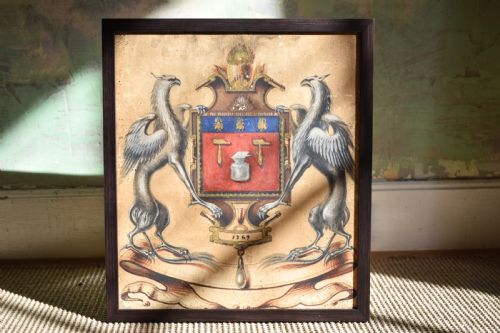
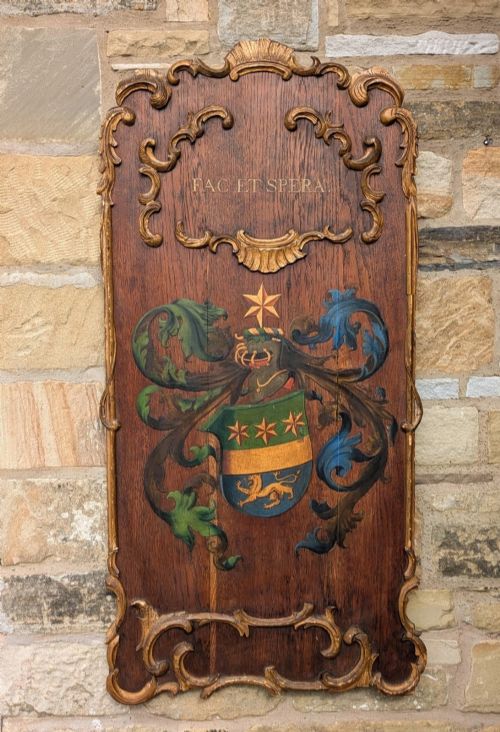
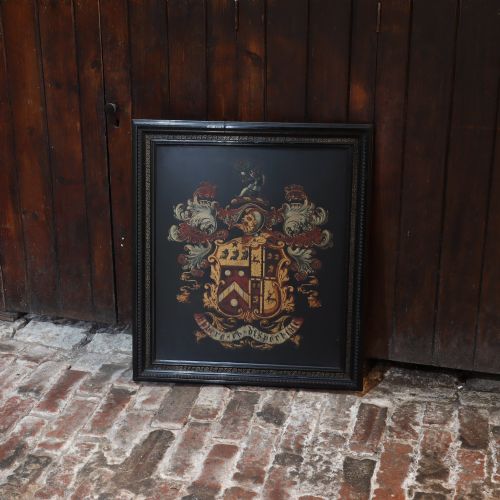
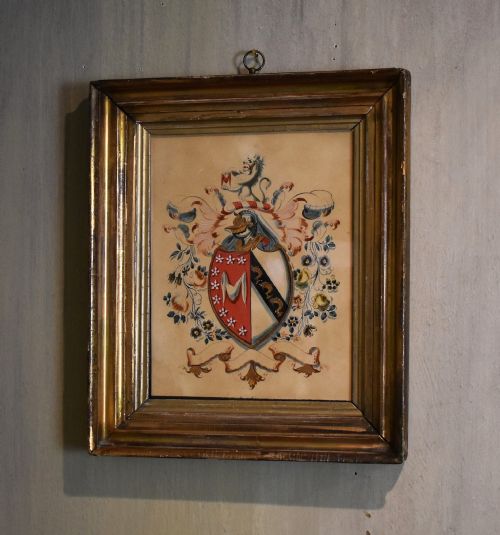
A framed heraldic painting encompasses armorial crests, coaching panels, and decorative heraldic devices produced across the eighteenth and nineteenth centuries. These works record family lineages, institutional identities, and civic pride through traditional heraldic iconography.
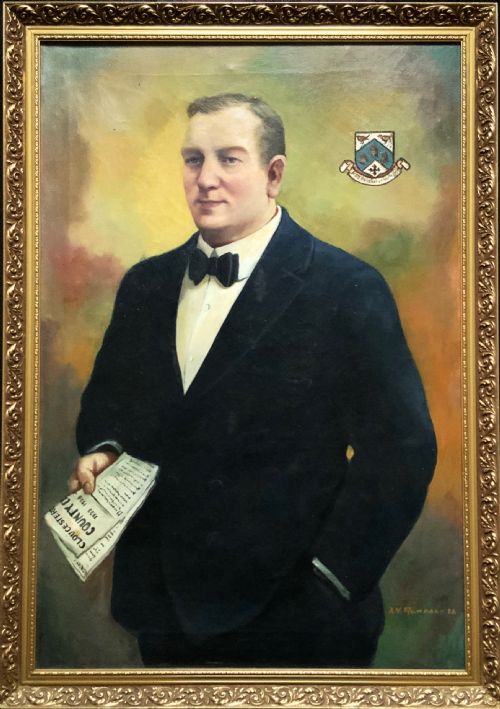
Buyers exploring this selection encounter oil paintings on canvas and panel, delicate watercolours on parchment, and painted glass panels. Examples range from Regency and Georgian coaching panels to Victorian commemorative armorials and revivalist pieces.
The objects serve primarily as striking wall art and decorative panels, often housed in period wooden or giltwood frames that complement the painted armorial design. Each piece reflects the distinct aesthetic of its era, from Dutch Rococo touches to Neo-Renaissance revivals.
Materials and Technique
Makers utilised traditional supports including wood panels, prepared canvas, parchment, and glass, applying oil paint, gouache, or watercolour to render precise heraldic details. The meticulous brushwork required steady hands to delineate complex armorial bearings, charges, and tinctures accurately.
Gilded wood and standard wood frames enclose many of these works, serving both to protect the delicate painted surfaces and to enhance the visual weight of the armorial display. Stained glass techniques also appear, fusing colour and lead lines to construct translucent heraldic panels.
Framed Heraldic Painting Retail Price Guide 2026
Typical asking prices for framed heraldic painting among the pieces listed under this phrase on Sellingantiques today, from the lower quarter to the upper quarter. They describe what is for sale here now, not the wider market.
Listings feature works spanning the eighteenth century through the early twentieth century, utilising oil paint, gouache, watercolour, and glass.
Assessing Quality
Quality in a framed heraldic painting rests on the precision of the heraldic drawing, the handling of pigment, and the sophistication of the surrounding frame. Finer works display crisp lines in the blazon and confident brushwork that brings depth to the crest and mantling.
The integration between the painted surface and its period housing dictates much of the visual success, particularly where giltwood or moulded wood frames are contemporary to the artwork. Well-preserved surfaces on parchment, canvas, or glass retain their original colour saturation without excessive restoration.
Nanninga Uitterdyke·Icilio Federico Joni·Sir John Gilbert
The Framed Heraldic Painting Glossary
- Armorial
- Relating to heraldry or a coat of arms. It defines items decorated with authentic or symbolic family bearings.
- Coach panel
- A painted wooden panel originally mounted on the side of a carriage or coach to display a family crest. These were frequently removed and framed later.
- Giltwood
- Wood that has been coated with gold leaf or a gold-coloured substance. This material is common in period frames surrounding formal artwork.
- Gouache
- An opaque watercolour paint consisting of pigment mixed with a water-binding agent. It provides solid, flat areas of colour suited to heraldic design.
- Tincture
- The traditional colours, metals, and furs used in heraldry. These include specific shades of red, blue, gold, and silver.
Framed Heraldic Painting: Frequently Asked Questions
What is a framed heraldic painting?
A framed heraldic painting is an artwork depicting coats of arms, crests, or armorial bearings, presented within a protective wooden or giltwood frame for display.
These pieces originate from various historical periods, capturing genealogical history through traditional heraldic symbolism and fine painting techniques.
How were coaching panels used?
Coaching panels were originally painted with family coats of arms and affixed to the doors of private horse-drawn carriages to denote social standing.
When vehicles fell out of use, these painted wooden sections were frequently salvaged and framed to preserve the heraldic artwork.
Where should I hang one?
These works suit studies, libraries, or living spaces where traditional decor allows the rich colours and historical subject matter to stand out.
Keep them away from direct sunlight to protect sensitive mediums like watercolour, gouache, and parchment from fading.
How do I identify the period?
Dating relies on stylistic clues in the framing, the type of support material used, and the artistic conventions of the painting itself.
Georgian and Regency pieces often feature specific coach panel formats, whereas Victorian works lean towards revivalist aesthetics.