

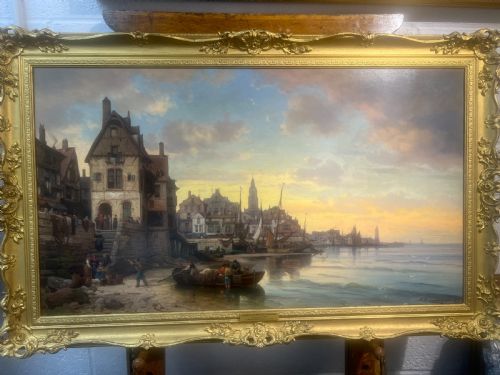
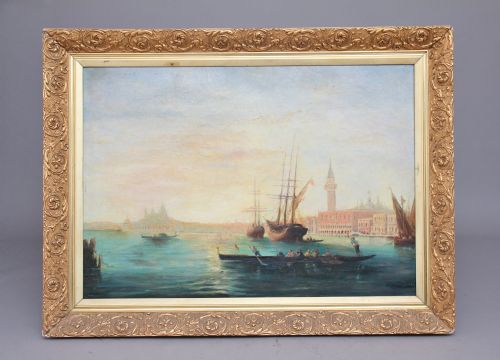
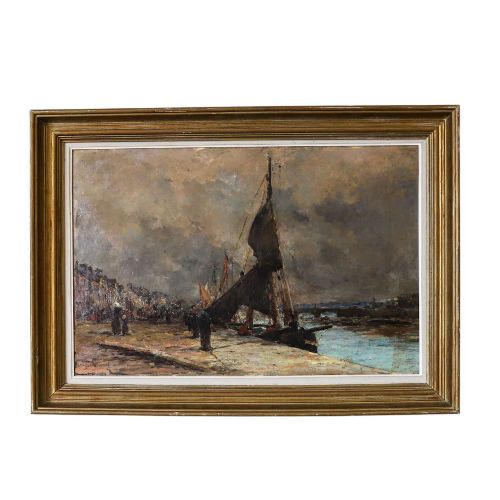
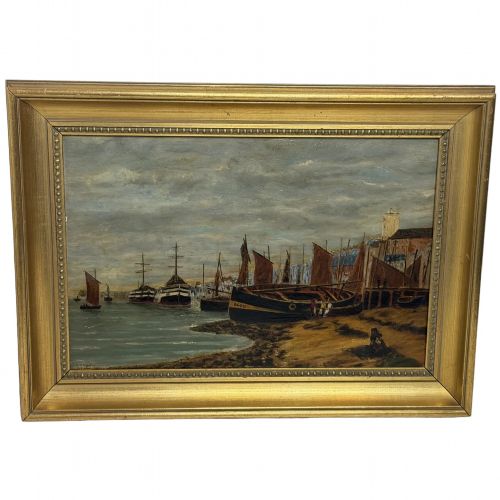
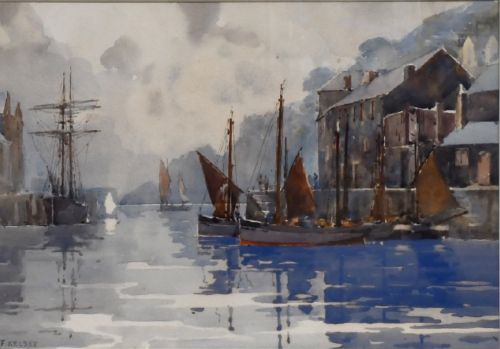
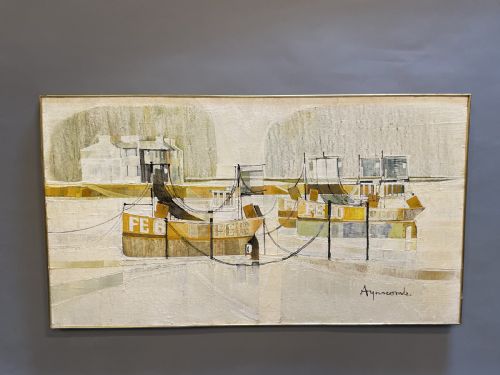

Framed Harbour Scene
When you search for a framed harbour scene, you encounter coastal views captured in oil and watercolour across the nineteenth and twentieth centuries.
Framed Harbour Scene
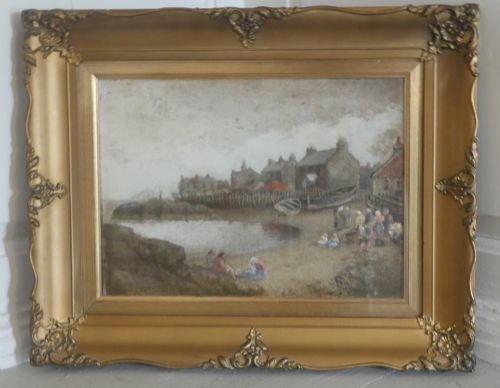
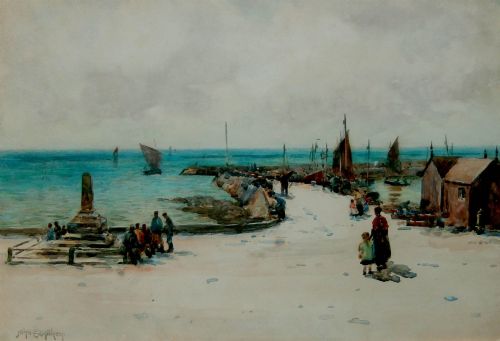
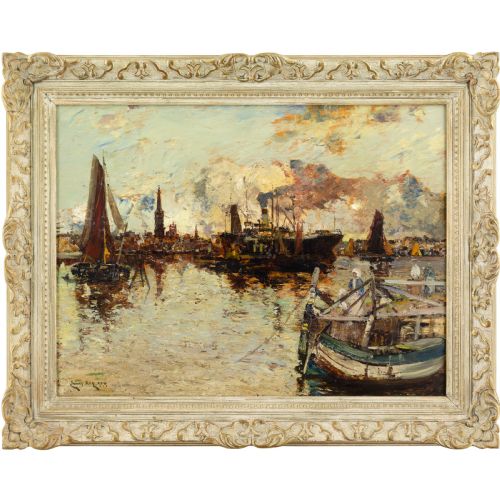
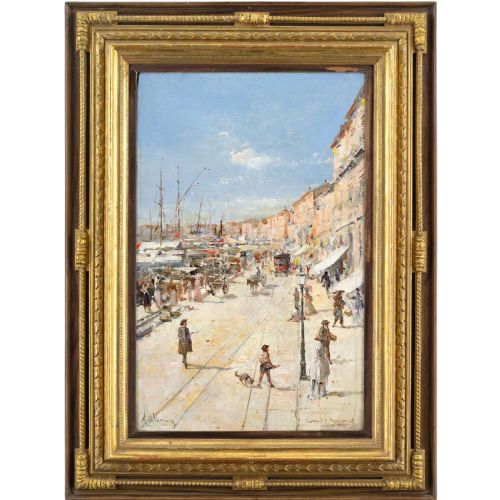
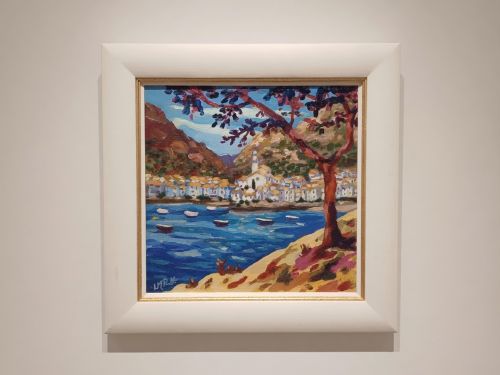
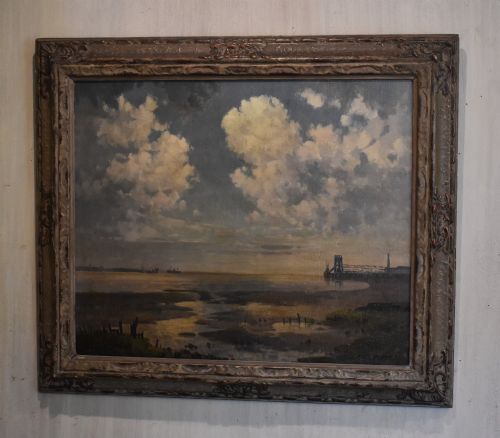
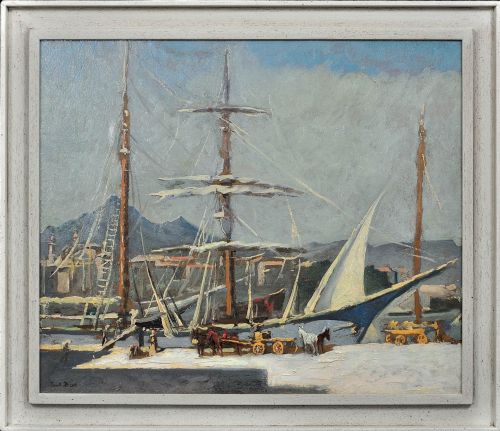
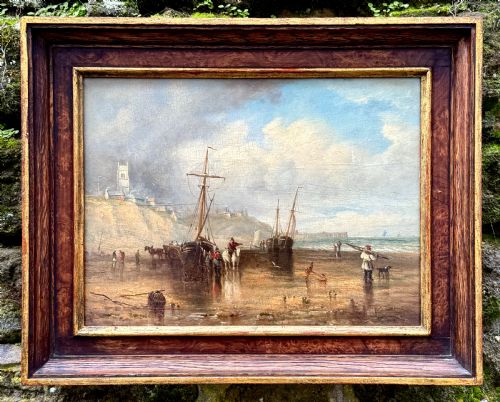
A framed harbour scene depicts maritime life, coastal architecture and shipping activity across British and European ports. These works record the changing light on waters ranging from Cornish fishing havens to Venetian lagoons and Mediterranean ports.
The pieces on this page span the nineteenth century, the Edwardian era and mid-century modern periods, reflecting styles from traditional maritime painting to British impressionism. Oil paintings on canvas and panel sit alongside delicate watercolours on paper.
Subjects include local luggers in Cornish harbours, bustling mercantile quays and quiet North Sea havens. Many works capture specific moments of coastal trade, departure and return.
Materials and methods
Artists painted these scenes using oil paint or watercolour applied to canvas, panel or paper supports. Oil paints provided rich depth and texture for rendering choppy seas and atmospheric skies, while watercolours offered luminous transparency for coastal light.
Several artists captured the exact moment the tide went out on Cornish luggers.
Distinctions in quality
The strength of a framed harbour scene lies in the artist's handling of light, atmosphere and maritime perspective. Superior works demonstrate confident brushwork and accurate observation of water, rigging and coastal architecture.
Compositional balance and the vitality of the brushwork separate accomplished paintings from formulaic topographical views. The integration of the artwork with its original or period frame also influences the overall character of the piece.
Edward Mills·John E. Aitken·James Kay·Augusto Alberici·Lucy Pratt·Clive Browne·Paul Bret·Thomas Creswick·Charles Euphraisie Kuasseg·Frank Kelsey·Paul Delvaux·William Edward Webb·Richard Harry Carter·Gyrth Russell·Raymond Picque·William Lee Hankey·George Turland Goosey·Fred Lawson·James Kyd·Adrian Van Porten·William Tuck·Donald McIntyre·T.S. Wallis·Pauwels·John Bell
The Framed Harbour Scene Glossary
- Oil on Canvas
- Pigment mixed with drying oil applied to stretched fabric. This medium allows for thick impasto and deep colour saturation.
- Watercolour
- Pigment suspended in a water-soluble vehicle applied to paper. It relies on the white of the paper to create luminosity.
- Gilt Wood
- Timber carved or moulded and coated with gold leaf or metallic paint. This finish was commonly used to frame nineteenth-century and Edwardian paintings.
- Lugger
- A small two- or three-masted fishing vessel rigged with lug sails. These boats appear frequently in coastal scenes from Cornwall and the North Sea.
Framed Harbour Scene: Frequently Asked Questions
What periods do these paintings date from?
The works span from the nineteenth century through the Edwardian era into the mid-twentieth century. Many examples reflect Victorian and post-impressionist movements.
Dates range from early nineteenth-century studies to abstract impressionist works from the nineteen-sixties.
Where do these coastal scenes originate?
The selection includes depictions of British harbours in Cornwall, Yorkshire and Scotland alongside continental locations. Artists recorded scenes from French ports, Italian lagoons and the Mediterranean.
Local fishing ports and major trading quays both feature prominently in the artwork.
How should I display a watercolour harbour scene?
Watercolours require protection from direct sunlight to prevent fading of the pigments on paper. They are best hung on interior walls away from moisture and temperature extremes.
Glazing with appropriate framing preserves the delicate paper support over time.
Are these paintings signed by the artists?
Many of the listed works feature signatures or attributions to named painters. Some pieces include historical labels or gallery stamps on the reverse.
Unsigned works are attributed based on style, technique and period characteristics.