
Framed French Landscape
When you search for a framed french landscape, you open a window to rural rivers, chateaux, and provincial coastlines captured across centuries.
Framed French Landscape
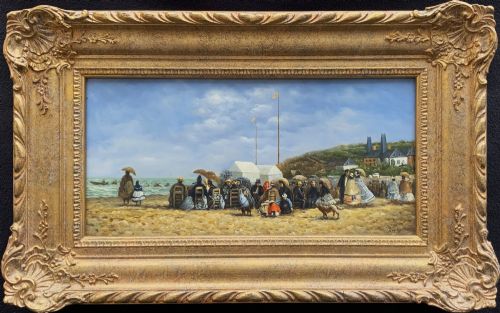
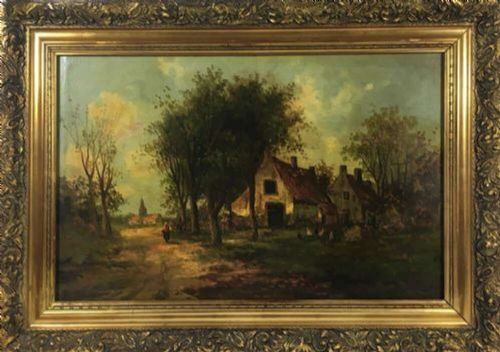
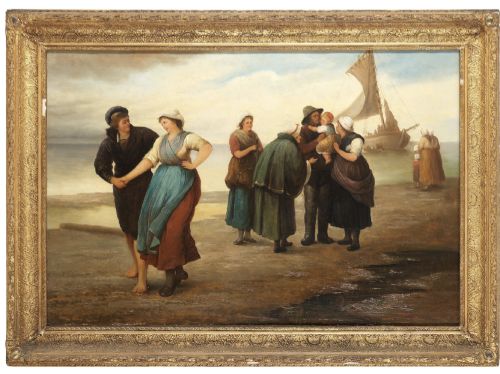
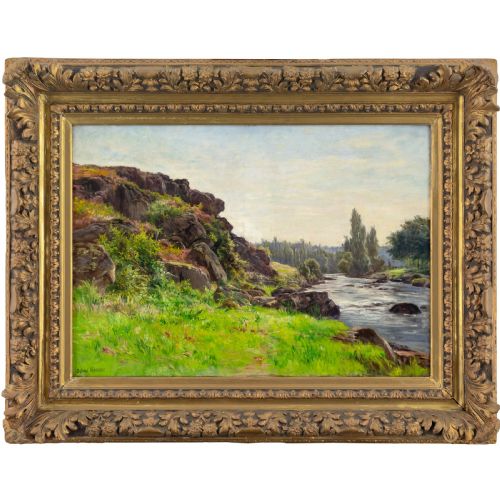
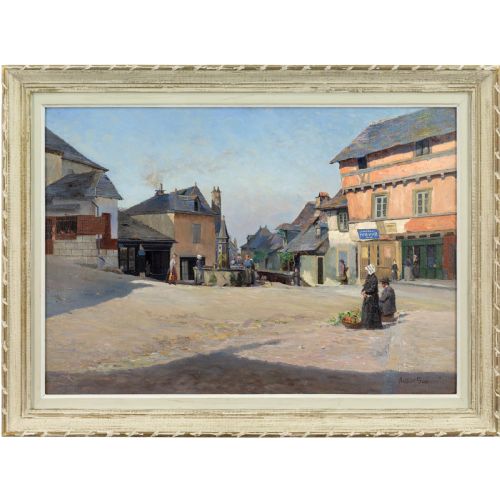
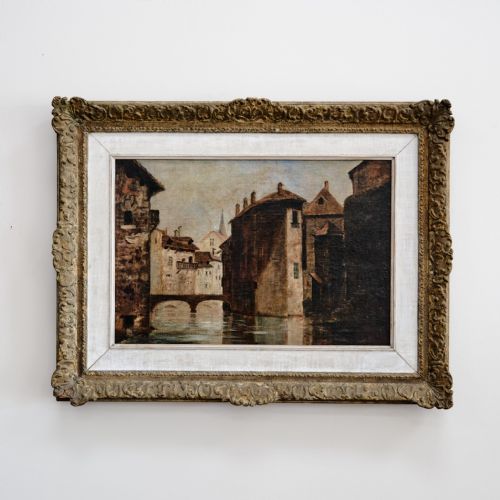
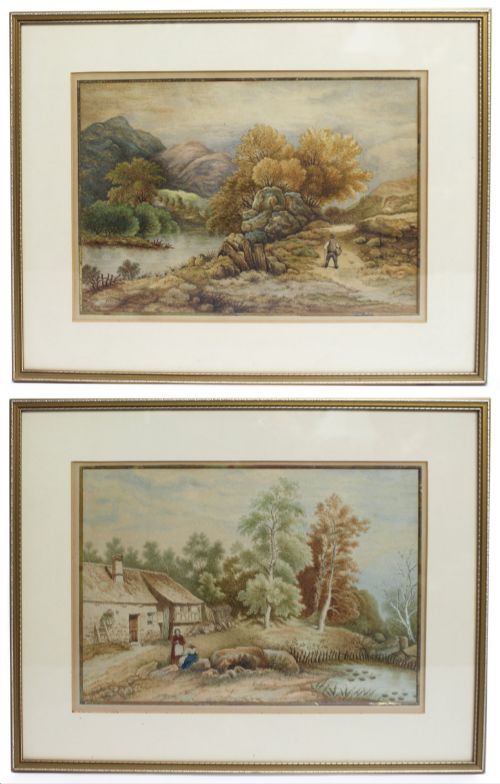
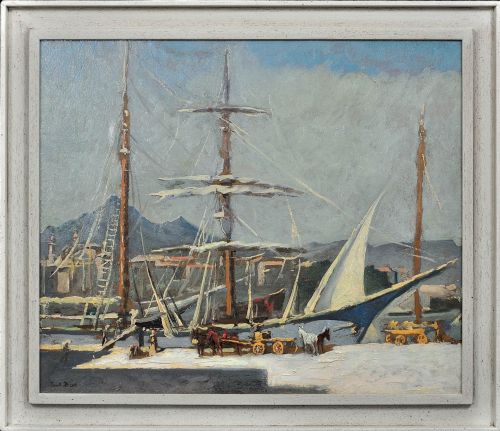
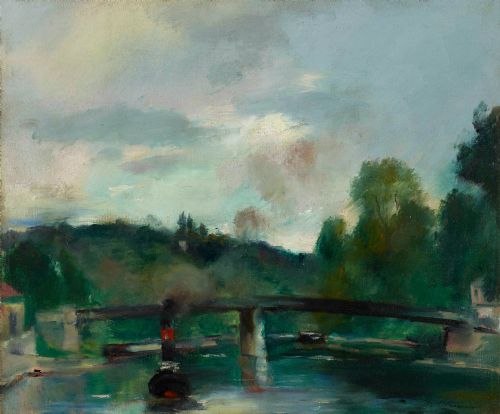
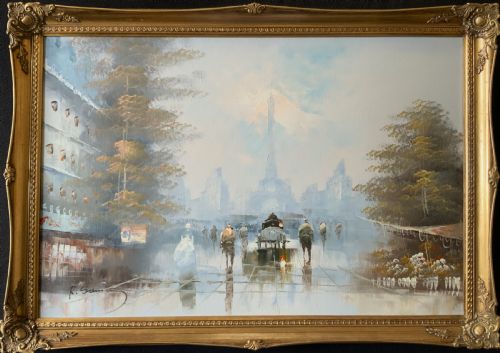
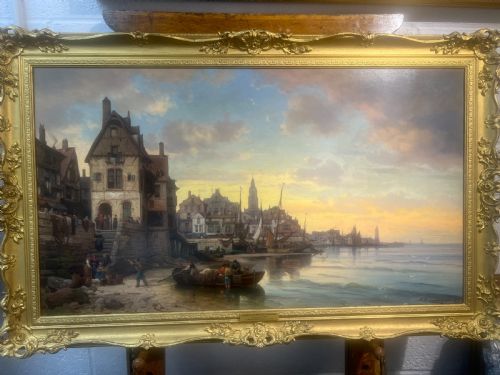
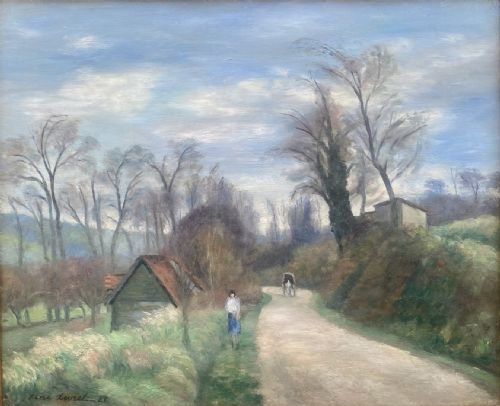
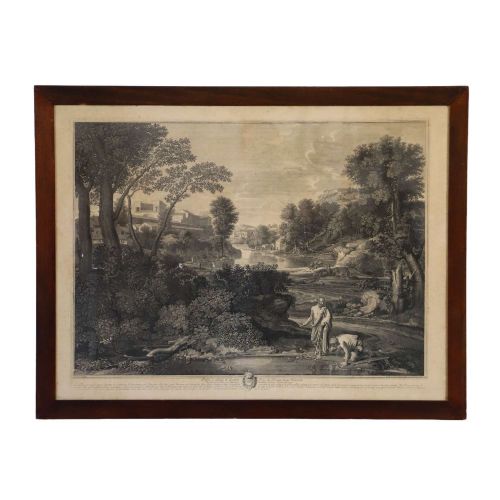
A framed french landscape covers oil paintings, watercolours, and engravings depicting rural scenery, rivers, and coastal views originating from France. The items on this page range from nineteenth-century Barbizon school canvases to mid-century impressionist cityscapes and coastal scenes.
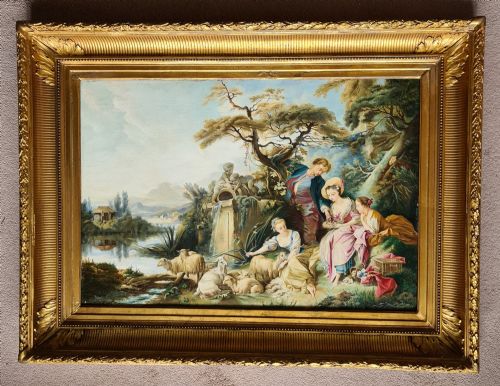
Buyers will encounter diverse formats, from small provincial panels to large panoramic canvases housed in period gilt wood frames. The visual styles shift from realistic nineteenth-century academic works to freer post-impressionist and mid-century interpretations.
The subjects extend from quiet Normandy pastures and Brittany cliffs to Parisian street scenes and Mediterranean ports. Most selections are complete with their original or period frames, preserving the presentation intended by the maker.
Materials and Techniques
The physical build relies heavily on oil paint applied to stretched canvas or wooden panels, supported by traditional ground layers. Watercolours on paper and engraved prints also appear, often protected beneath glass.
Framing forms an integral part of the construction, utilising carved wood, moulded gesso, and applied gilt finishes. These frames range from ornate nineteenth-century gilt designs to simpler mid-century wooden mouldings.
Several works capture mundane daily rituals, including gathering winter fuel, working horses at troughs, and peaceful strolls by provincial riverbanks.
Assessing Quality
Quality rests in the handling of light, brushwork confidence, and the compositional balance achieved by the artist. Stronger examples display deliberate tonal control and assured mark-making that define the movement or school.
The integrity and age of the enclosing frame heavily influence the overall standard of the piece. Original gilt wood frames that complement the specific period of the artwork elevate the complete presentation.
Gabriel Mathieu·Arthur Gué·Paul Bret·Henri Ottmann·Charles Euphraisie Kuasseg·Rene Levrel·Étienne Baudet·Erich Mercker·Paul Désiré Trouillebert·Henry de Waroquier·Lilian Colbourn·Paul-Élie Gernez·Caroline Burnett·Charles Clair·Paul-Jean Anderbouhr·Gaston Cornil·Raymond Moritz·Alexandre Le Bihan·Louis Suire·Gustave Vidal·Jean-Baptiste Olive·Raymond Picque·William Lee Hankey·Raimond Louis Lecourt·Kevin Platt
The Framed French Landscape Glossary
- Barbizon School
- A nineteenth-century French art movement rooted in realistic landscape painting inspired by nature. Practitioners focused on direct observation of rural topography and atmospheric light.
- Gesso
- A plaster-like mixture applied to wood frames as a base for gilding or painting. It provides a smooth surface for intricate decorative moulding.
- Post-Impressionism
- A French art movement that extended impressionist ideals while rejecting its limitations. Artists emphasised symbolic content, expressive brushwork, and distinct colour palettes.
- Engraving
- A printmaking technique where an image is incised onto a metal plate holding ink. The resulting impressions capture fine linear detail on paper.
Framed French Landscape: Frequently Asked Questions
How do I date a French landscape painting?
Dating relies on stylistic markers, framing techniques, and recorded signatures or dates left by the artist on the canvas or reverse. Examining the preparation layers and stretcher construction offers further clues regarding the era of creation.
Historical context within the subject matter, such as architectural details or costume, also helps narrow the period of execution.
Are these paintings on canvas or panel?
The works utilise both traditional stretched canvas and rigid wooden panels as a foundation for oil paint. Watercolours and mixed media pieces typically employ heavy paper supports.
Each material responds differently to environmental conditions, making proper framing and backing essential for long-term preservation.
Should I keep the original frame?
Original or period frames maintain the historical integrity and aesthetic harmony intended for the artwork. They reflect the framing fashions of their respective eras, from ornate gilt designs to simple mid-century profiles.
Retaining the period housing ensures the piece remains in its complete historical state.
How do I clean an antique oil painting?
Surface dust should be gently removed using a soft, dry brush by someone experienced in textile or art care. Chemical cleaners and moisture must be avoided to prevent damage to the pigment and ground layers.
Significant conservation work requires professional restoration rather than home intervention.