
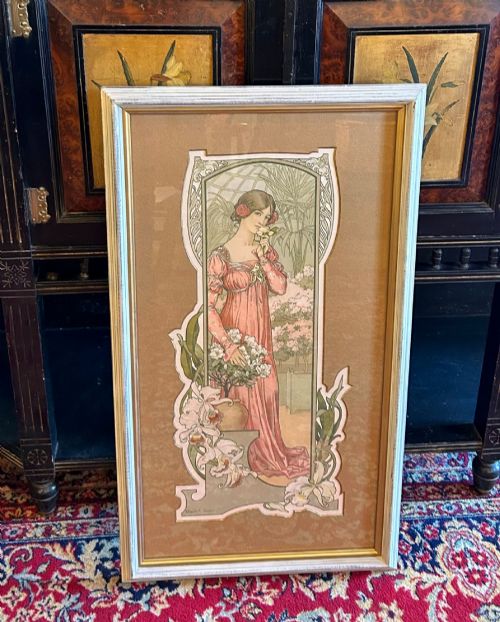
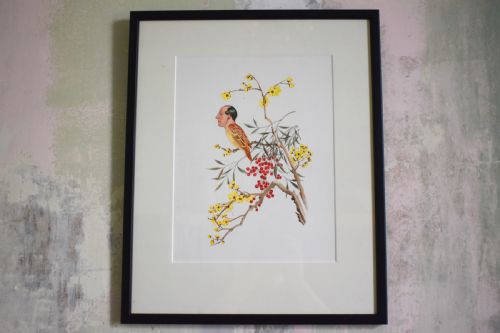


Framed Floral Paper Art
Framed floral paper art gathers botanical studies, delicate watercolours, and cut paper creations preserved behind glass across the centuries.
Framed Floral Paper Art
When you search for framed floral paper art, you encounter a diverse range of botanical studies, still life compositions, and delicate illustrations executed primarily on paper or silk. These pieces span from the Regency era and Victorian period through to the mid-twentieth century, capturing blossoms, garden scenes, and detailed plant studies.
Materials and construction techniques
The foundation of these works relies on various grades of paper, occasionally silk or card, upon which artists applied watercolour pigment, ink, gouache, or pastel. Cut paper techniques also appear, creating layered botanical silhouettes that demonstrate precise handwork.
Protective glass shields the delicate pigments, secured within wooden frames that range from simple moulded profiles to decorative antique surrounds. Hand-coloured engravings and lithographs introduce printed elements enhanced by subsequent brushwork.
Several botanical plates proudly share space with the insects and plants that crawled across them during the nineteenth century.
Qualities that distinguish individual pieces
The distinction between standard works and exceptional examples rests upon the surety of the brushwork and the botanical accuracy shown by the artist. Masterly composition, subtle colour blending, and the preservation of the paper support elevate certain paintings above routine decorative studies.
The integrity of the original framing, the clarity of the paper without excessive foxing, and the presence of artist signatures or documented provenances further define the upper tier of these works.
Elisabeth Sonrel·James Tower·Alice Anne Renshaw·Henrietta Creswell·William Edward Fox·Theresa Stannard·Kershaw Schofield·Lilian Stannard·William Hough·Rowland Henry Hill·Grace Hastie·Phyllis I Hibbert·Lena M Alexander·Marian Chase·Jabez Bligh·Owen Bowen·Charlotte Isa James·Alice Macallan Swan·John Curtis·Marion Broom·Edith Alice Andrews·Jane Utley·Theresa Sylvester Stannard·Beatrice Parsons·Minnie Smythe
The Framed Floral Paper Art Glossary
- Gouache
- An opaque water-based paint that provides solid, matte areas of colour. It is frequently combined with transparent watercolour in floral studies to create highlights.
- Lithograph
- A printmaking method based on the repulsion of oil and water on a limestone or metal plate. This technique allowed artists to reproduce subtle tonal gradations in botanical illustrations.
- Foxing
- Brown spots and discolouration that develop on antique paper over time due to chemical reactions in the pulp. Mild foxing is common in nineteenth-century works.
- Engraving
- A print produced by cutting lines into a metal plate to hold ink before pressing onto paper. Hand-coloured examples received their pigment by brush after printing.
Framed Floral Paper Art: Frequently Asked Questions
How do I care for framed floral paper art?
Keep these pieces away from direct sunlight to prevent the watercolour pigments and paper from fading over time.
Display them in rooms with stable humidity levels to protect both the delicate paper support and the antique wooden frames.
Are these works original paintings or prints?
The selection includes both original hand-painted watercolours and gouaches alongside antique lithographs and hand-coloured botanical engravings.
Individual listings specify the exact medium used, distinguishing unique artworks from period printed plates.
How can I tell the period of a piece?
Stylistic cues, mounting methods, and the type of paper or frame help determine the age of an artwork. Victorian and Edwardian pieces often display specific botanical naming conventions and mounting styles.
Dates provided in the titles reflect the active period of the artist or the publication year of the printed plates.
Can I reframe antique paper art?
Original period frames should be retained whenever possible to preserve the historical integrity and character of the artwork.
If reframing becomes necessary, ensure that conservation-grade materials and acid-free mounts are utilised to protect the paper.