
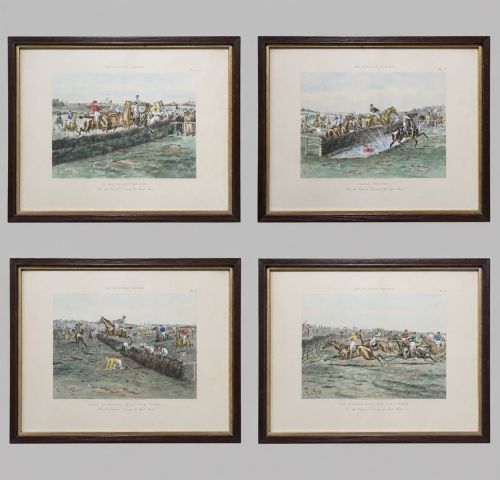
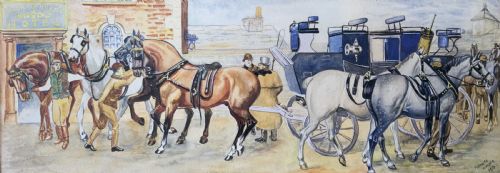
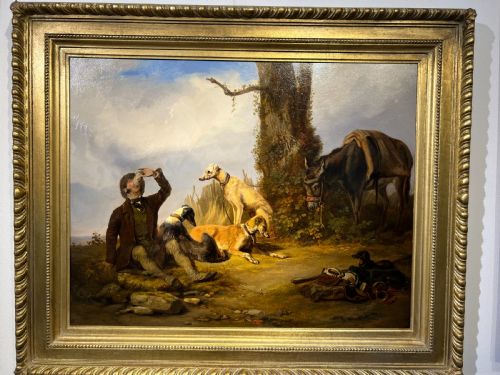
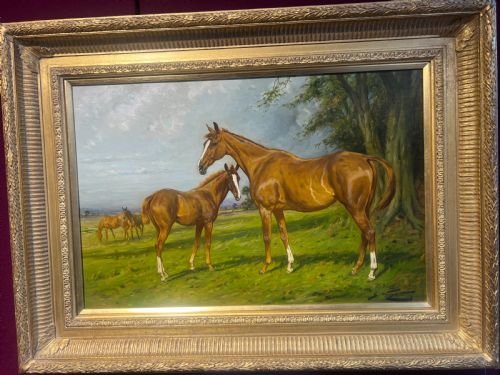
Framed Equestrian and Sporting Art
Framed equestrian and sporting art brings the energy of the field, the turf, and the stable directly onto the wall through historic paintings, drawings, and prints.
Framed Equestrian and Sporting Art
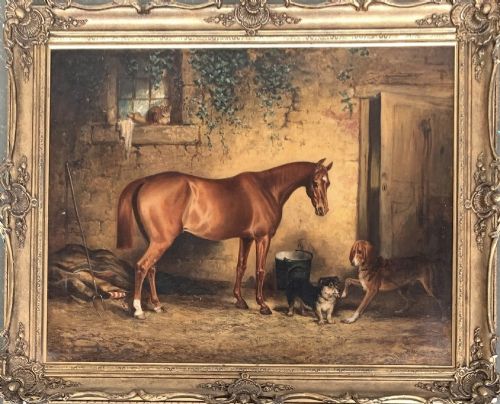
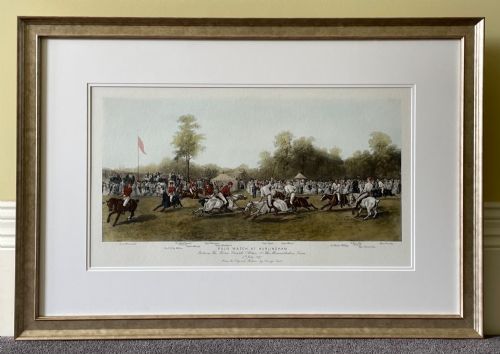
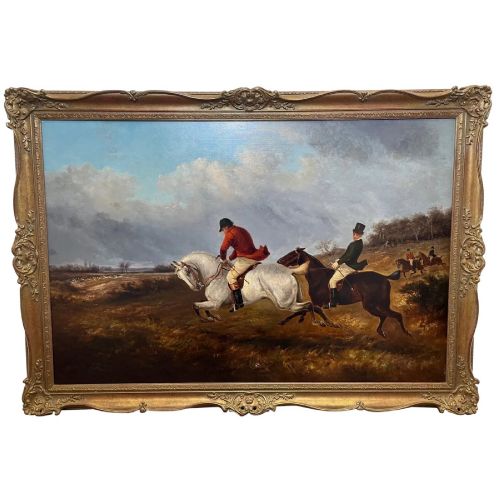
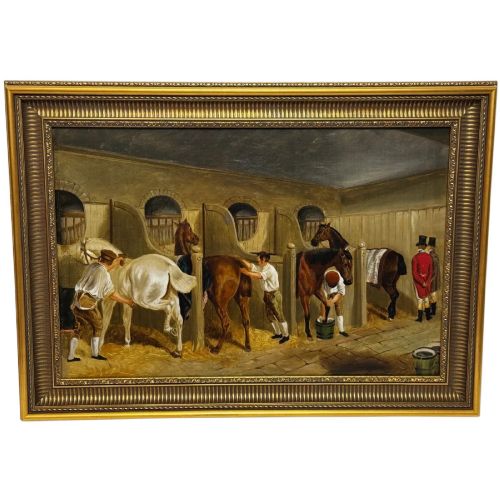
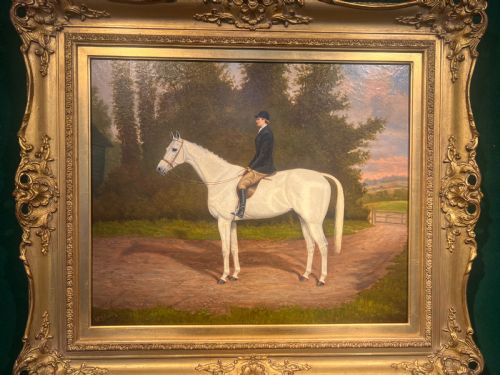
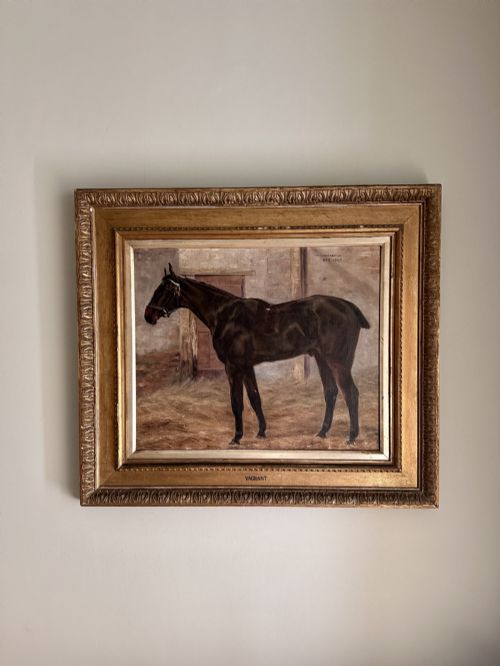
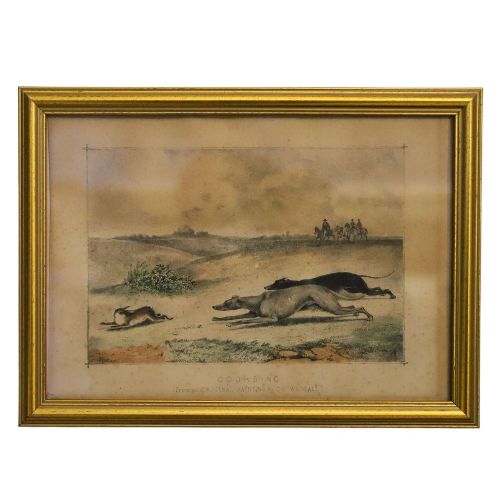
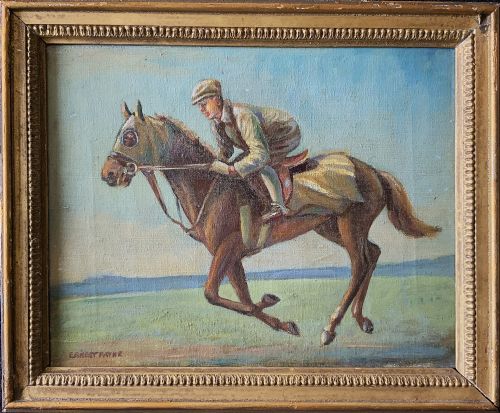
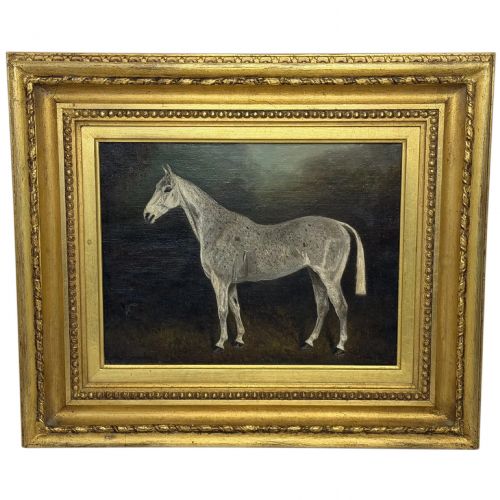
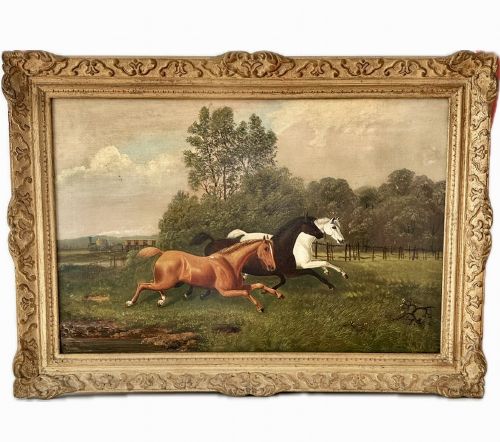
Buyers seeking framed equestrian and sporting art will find an array of works capturing horse racing, fox hunting, polo, and coaching scenes. These pieces range from detailed nineteenth-century oil paintings on canvas and pine panels to hand-coloured engravings, lithographs, and aquatints produced across the Victorian and Edwardian eras.
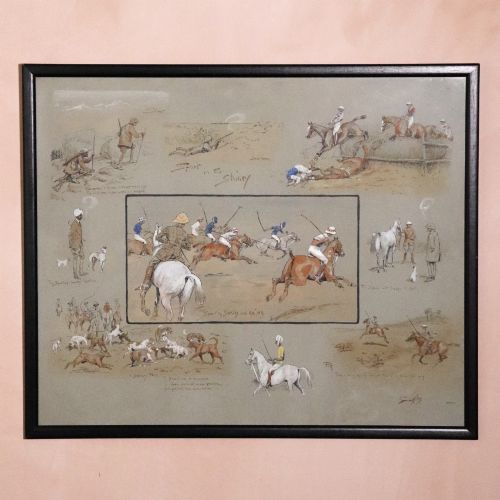
The selection on this page leans heavily toward Victorian and early twentieth-century depictions of horses in landscapes, racing paddocks, and hunt gatherings. Alongside original oils, visitors encounter works on paper executed in watercolour, chalk, pastel, and gouache, preserving the dynamic movement of horses and hounds.
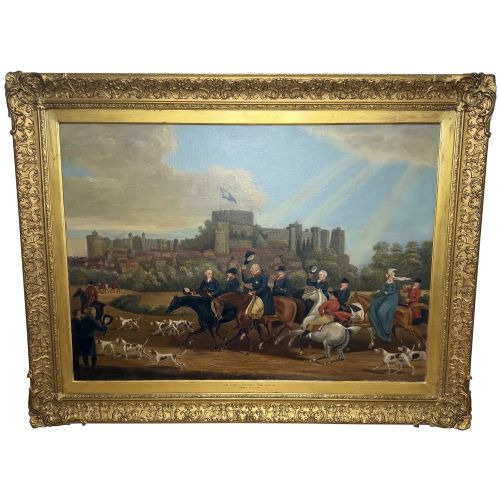
Origins stretch from regional British scenes, such as Cheshire and Nantwich, to works reflecting royal patronage and notable estates. Whether looking for a bold coaching pair or a solitary racehorse portrait, the offerings capture the enduring appeal of equine subjects across different centuries.
Materials and construction
Artists relied primarily on oil paint applied to canvas or wood panels for major portraits and narrative scenes, utilising rich pigments to render the musculature and coats of hunters and racehorses. Works on paper typically involved watercolour, gouache, or pastel, often finished with hand-colouring on early engravings and lithographs.
Framing forms an integral part of these pieces, utilising traditional materials such as carved giltwood, plain walnut, and oak to complement the period aesthetic. Protective glass frequently shields works executed on paper, ensuring the preservation of delicate watercolours and printed inks.
Materials represented include oil on canvas and pine panel, alongside works on paper using watercolour, gouache, pastel, and lithography.
Assessing quality and execution
Quality in these works rests upon the artist's command of equine anatomy, perspective, and the kinetic energy of the animal in motion. Superior pieces demonstrate a confident handling of light across a horse's coat and a convincing integration of the subject within its landscape or architectural setting.
The sophistication of the secondary medium, whether the depth of a gilt wood frame or the crispness of a nineteenth-century lithographic impression, elevates the overall presentation. Signed works and those with documented provenance to specific estates or galleries command distinct scholarly and visual interest.
Thomas Smythe·Sir Edwin Henry Landseer·George Wright·William Albert Clarke·Fred Fitzpatrick·C. H. Weigall·Ernest Payne·Edward Priestley·Snaffles·Philip Rideout·Aiken·Thomas Walker Bretland·John Frederick Herring Snr·John Ferneley Senior·Alfred Munnings·John Rattenbury Skeaping·Cecil Charles Windsor Aldin·John Arthur Lomax·Albert Clark·Anne Goldthwaite·George Wright·Basil Nightingale·William Williams·Abraham Cooper
The Framed Equestrian and Sporting Art Glossary
- Aquatint
- A printmaking technique that produces tonal effects resembling watercolour washes. It was frequently employed to reproduce sporting watercolours for collectors.
- Lithograph
- A planographic printing method using stone or metal plates to create multiple impressions. Many nineteenth-century field sports scenes were distributed through this medium.
- Giltwood
- Wood carved and covered with a thin layer of gold leaf. It is commonly found on traditional frames encasing Victorian oil paintings.
- Gouache
- An opaque watercolour paint containing a white pigment to increase opacity. Artists utilised it to achieve flat, vibrant areas of colour in sporting drawings.
- Eglomise
- A technique involving the application of gold or silver leaf to glass, then painted or etched. It appears in reproduction works associated with historic racing subjects.
Framed Equestrian and Sporting Art: Frequently Asked Questions
What subjects are typical in sporting art?
These works primarily focus on horses, hounds, and field sports such as fox hunting, horse racing, polo, and coaching. Scenes often place the animals within detailed rural landscapes, stable interiors, or racing tracks.
Artists aimed to capture the specific character of named racehorses and hunters, alongside the social atmosphere of nineteenth-century hunt gatherings and race meetings.
How do you distinguish prints from original paintings?
Original oil paintings feature visible brushwork, texture in the paint layers, and are executed directly onto canvas or wooden panels. Prints, including lithographs and aquatints, show a flat surface under magnification with ink dots or uniform printing lines.
Watercolours and drawings on paper will display paper fibres and hand-applied pigment, though many are historic reproductions rather than unique compositions.
How should framed sporting art be displayed?
These pieces suit traditional study rooms, hallways, and living spaces where period frames can complement wood panelling or neutral walls. Works on paper require placement away from direct sunlight to prevent the fading of watercolours and coloured inks.
Maintaining stable indoor humidity protects both the historic wooden frames and the canvas or paper supports from warping over time.
How can you tell the age of a piece?
Dating relies on stylistic clues in the clothing, carriage design, and tack, alongside the framing materials and paper types used. Many works bear artist signatures, dates, or publisher publication lines from the nineteenth and early twentieth centuries.
Archival provenance notes and inscriptions on the reverse of canvases or panels often provide further confirmation of a piece's creation period.