


Framed Cut Paper Profile
A framed cut paper profile captures a likeness in sharp silhouette, offering intimate glimpses of past lives through delicate papercraft.
Framed Cut Paper Profile
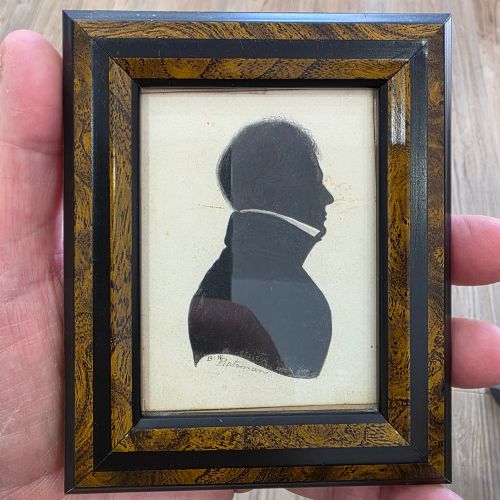
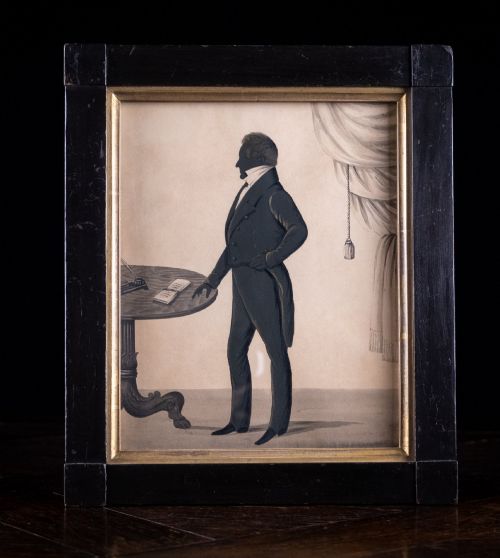
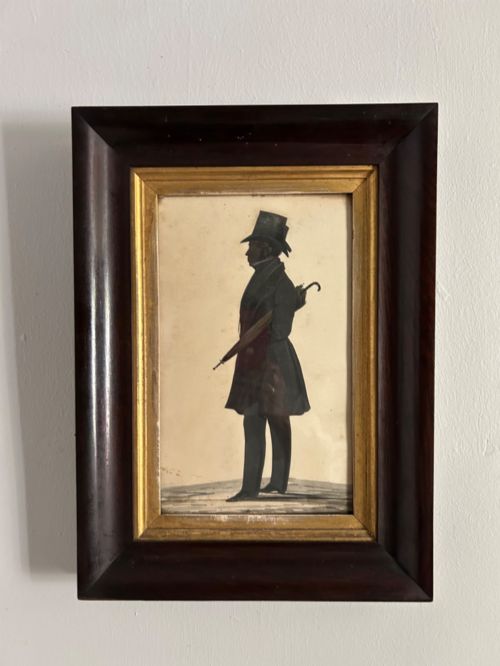
A framed cut paper profile is a portrait created by snipping black or dark paper to form a silhouette, preserved behind glass. These works record the likenesses of gentlemen, ladies, children, and families from the eighteenth century to the early twentieth century.
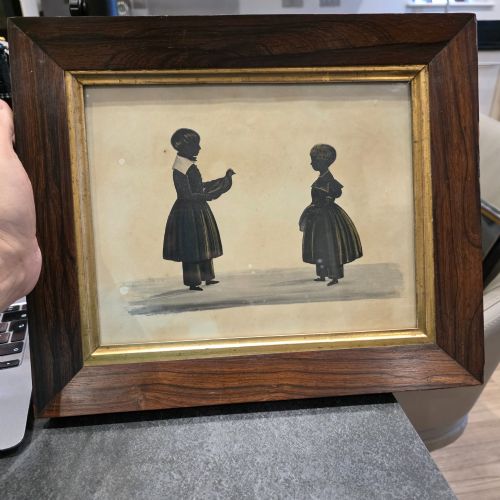
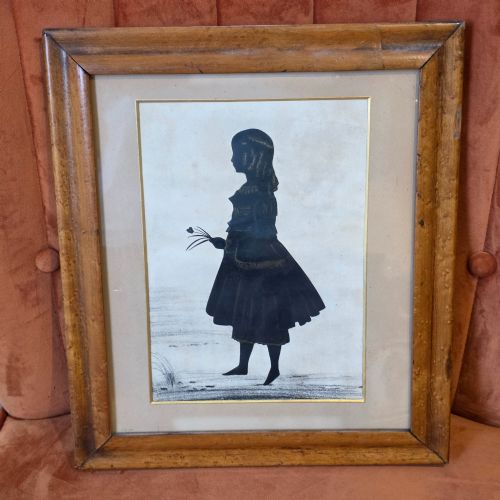
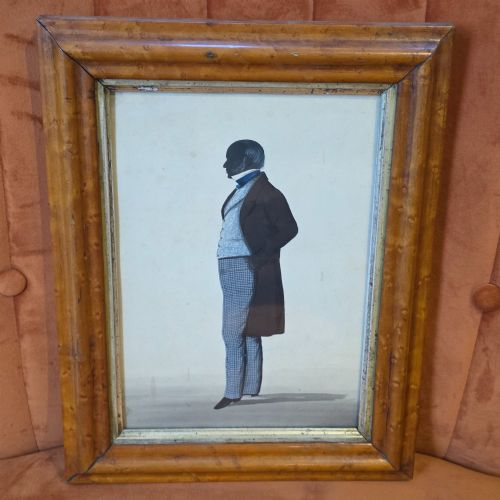
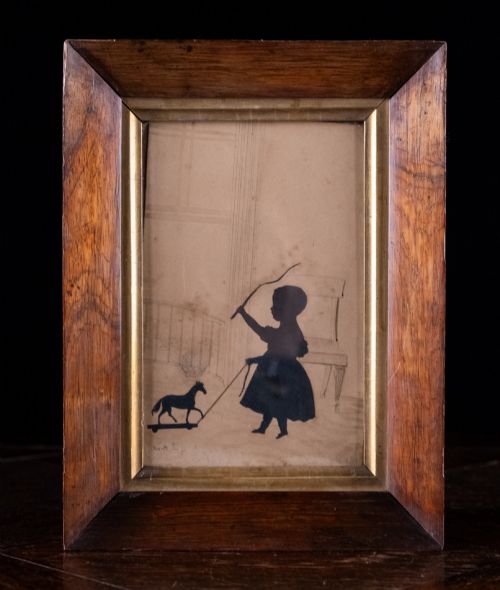
The pieces on this page span Georgian, Regency, and Victorian periods, often appearing as bust portraits, full-length figures, or elaborate conversation pieces involving multiple subjects and animals.
Makers housed these fragile paper works in various enclosures, ranging from simple maple wood frames to ebony surrounds adorned with brass and gold leaf details.
Materials and construction
Protective framing relies on glass held within surrounds of wood such as maple, or ebony, occasionally enhanced with gold leaf and brass highlights to accent the profile within.
Dogs and horses frequently photobomb these historical portraits, appearing faithfully alongside children and families in intricate cut paper scenes.
Evaluating craftsmanship
Quality rests upon the precision of the paper-cutting and the dexterity shown in rendering minute details like lace collars, hair curls, and expression. Finer examples display crisp, confident edges that capture personality and costume without reliance on heavy ink touch-ups.
The sophistication of the composition also dictates distinction, moving from simple bust portraits to complex conversation pieces depicting family groups, children with pets, or narrative scenes.
Bateman·Augustin Edouart·Hubard Gallery·Frederick Frith·Alfred Darbyshire·Royal Victoria Gallery·Nathaniel Bermingham·Skeolan
The Framed Cut Paper Profile Glossary
- Silhouette
- A portrait rendered as a solid shape, usually black on a pale background, depicting a profile view. The technique gained immense popularity before the widespread adoption of photography.
- Conversation piece
- An artwork depicting a group of people engaged in a conversation or shared activity, often shown in a domestic setting or outdoor scene. These detailed multi-figure cutouts represent ambitious works.
- Gilt
- A thin layer of gold applied to surfaces such as frames or paper highlights to impart a decorative metallic sheen. This finish frequently appears on Regency and Victorian framing.
- Full-length
- A portrait depicting the entire figure from head to toe rather than a standard bust or head-and-shoulders crop. Such pieces demand greater skill in rendering posture and costume accurately.
Framed Cut Paper Profile: Frequently Asked Questions
How do I date a silhouette?
Dating relies heavily on the style of dress, hair, and headwear depicted in the portrait, which closely mirror the fashion trends of periods like the Georgian, Regency, or Victorian eras.
Framing materials and construction techniques also provide clues, as maple frames and specific backing papers often correlate with particular decades.
What is a conversation piece silhouette?
A conversation piece portrays multiple people, often accompanied by children, pets, or domestic objects, interacting within a single framed composition.
These complex cut paper works tell a broader story about a family or scene compared to standard single-subject bust portraits.
Are all silhouettes made of paper?
While the majority of profiles on this page utilise cut paper mounted to a backing, some examples incorporate painted ink, watercolour, or pastel alongside the paper cutout.
Artists occasionally added gold leaf highlights directly onto the paper or glass to accentuate costume details.
How should I care for framed paper profiles?
These works require protection from direct sunlight to prevent the paper and any watercolour pigments from fading over time.
Maintaining stable indoor humidity levels prevents the paper from warping and protects the fragile nineteenth-century frames and glass.