




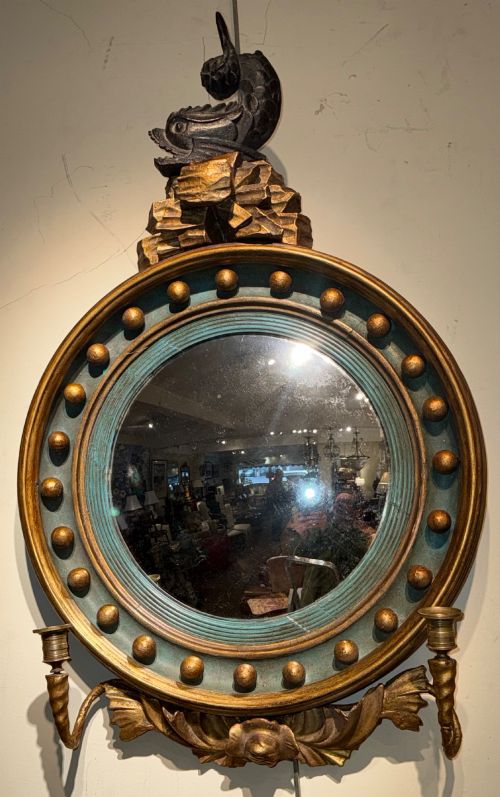


Framed Convex Mirror
A framed convex mirror brings light and distorted perspective into a room, drawing the eye with its curved glass and decorative surround.
Framed Convex Mirror
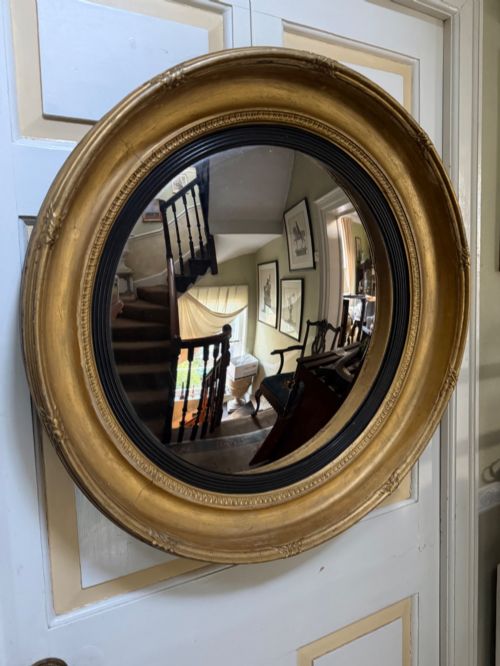
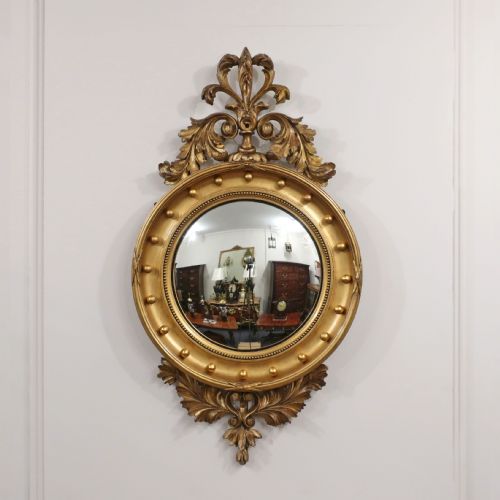
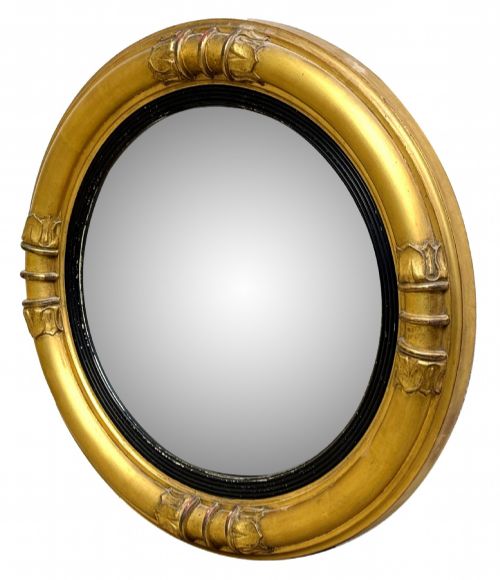
A framed convex mirror is a circular wall glass designed to capture a wide-angle reflection of an interior space. These pieces appear frequently from the Regency and Victorian periods, often taking the form of giltwood frames with circular plates.
The selection ranges from early nineteenth-century grand scale examples with carved details to later Victorian porthole and sorcerer variants. Buyers searching for a framed convex mirror will encounter both original period pieces and later revivals spanning into the twentieth century.
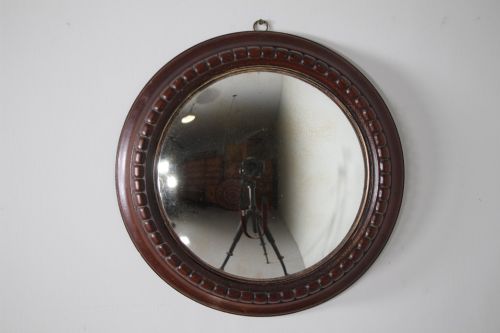
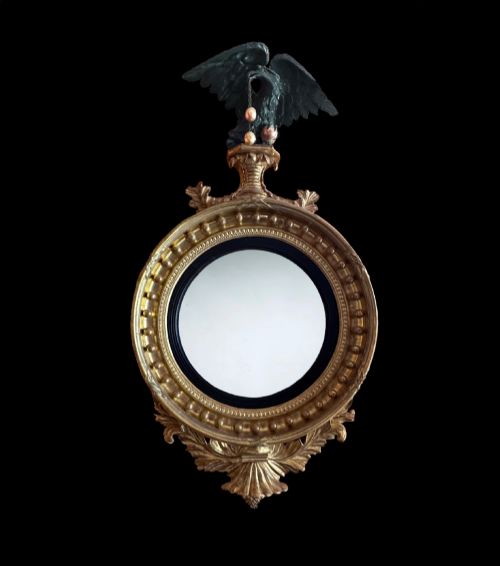
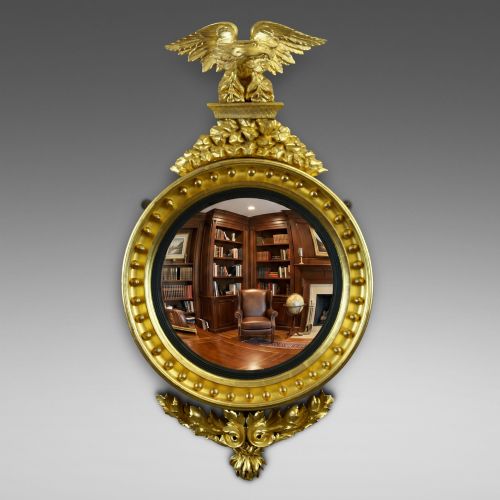
Forms vary from simple circular wooden frames to ornate designs featuring eagles, dragons, or girandole candle branches. Most examples utilise traditional wall mirror formats intended to serve as a focal point in a hall or reception room.
Materials and Construction
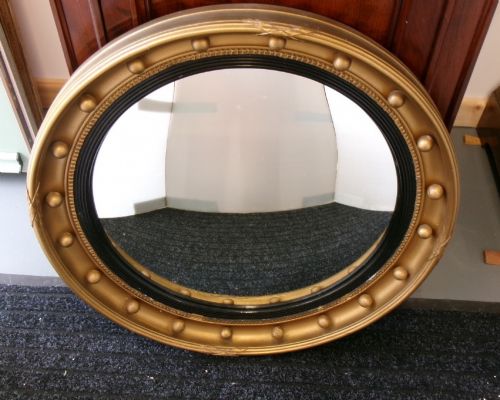
Frames are constructed from wood such as mahogany or oak, frequently coated in gesso and finished with gilding or ebonising. The reflective surface relies on curved mirror plate glass, which produces the characteristic bulging perspective.
Carved elements, plaster mouldings, and applied ornaments are attached to the wooden carcase before gilding or painting. Metal components, including brass and gilt metal, also appear in later examples.
Framed Convex Mirror Retail Price Guide 2026
Typical asking prices for framed convex mirror among the pieces listed under this phrase on Sellingantiques today, from the lower quarter to the upper quarter. They describe what is for sale here now, not the wider market.
Listings span from the early nineteenth century through the Victorian era and into mid-century revivals, utilising materials like giltwood, ebonised wood, and velvet.
Evaluating Quality
Quality rests on the crispness of the carved detail within the frame and the depth of the gilding over the gesso layers. Earlier pieces display finer hand-carved ornamentation, whereas later revivals may use simpler moulded decoration.
The condition of the curved glass plate and the integrity of the original wood structure influence the character of the piece. Substantial scale and well-preserved surface finishes distinguish the finer examples from standard decorative variants.
The Framed Convex Mirror Glossary
- Convex mirror
- A circular glass mirror with an outward-curving surface that reflects a wide, panoramic view of the room. It is sometimes known as a witch's mirror or sorcerer's mirror.
- Giltwood
- Wood that has been coated with a thin layer of gold leaf or gold paint over a prepared gesso ground. This finish provides the bright reflective surface seen on many period frames.
- Gesso
- A plaster-like mixture applied to wood frames to create a smooth surface for carving and gilding. It allows for intricate decorative details and mouldings.
- Ebonised wood
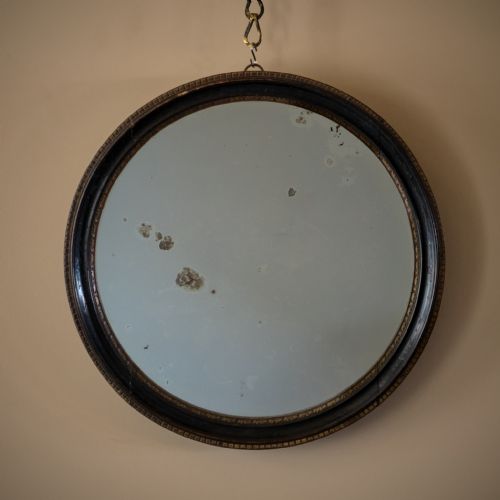
- Timber treated with a chemical stain or black finish to imitate ebony. This dark treatment offers a sharp contrast to gilded details.
- Girandole
- A decorative mirror equipped with attached candle sconces or branches. The arms reflect candle flame alongside the room.
Framed Convex Mirror: Frequently Asked Questions
What is a convex mirror used for?
These mirrors were historically placed in drawing rooms and dining rooms to monitor activity across the space and distribute natural daylight.
The wide-angle reflection allows the viewer to see an entire room from a single vantage point, combining practical utility with a decorative wall display.
How do I hang a heavy convex mirror?
Due to the substantial weight of the wooden frame and thick glass, these pieces require secure wall fixings anchored directly into masonry or heavy studs.
Professional installation is recommended for larger scales to ensure the weight is adequately supported by the wall structure.
Why are they called sorcerer's mirrors?
The curved glass creates a mysterious, distorted field of vision that bends perspective, leading nineteenth-century owners to associate them with optical illusions.
This alternative term highlights the curious, bulging nature of the glass plate compared to flat domestic mirrors.
How can I tell a Regency mirror from a Victorian one?
Regency examples often feature crisper carved wood details, bolder proportions, and specific motifs like eagles or sphere-adorned frames.
Victorian pieces tend to introduce variations such as ebonised finishes, porthole designs, and simpler moulded surrounds without the same depth of early carving.