

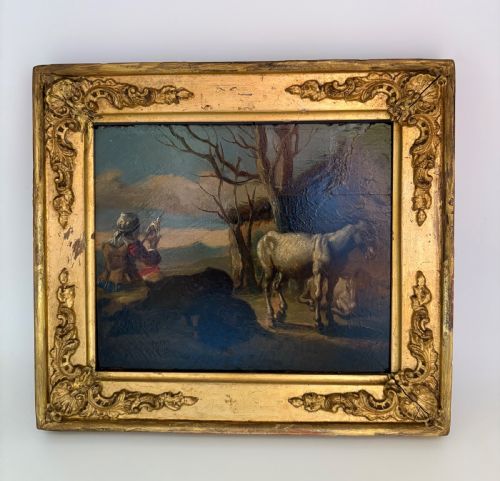


Framed Continental Landscape Art
Framed continental landscape art brings together oil paintings, watercolours and pencil drawings spanning the seventeenth to the twentieth centuries, prized for their atmospheric foreign views.
Framed Continental Landscape Art
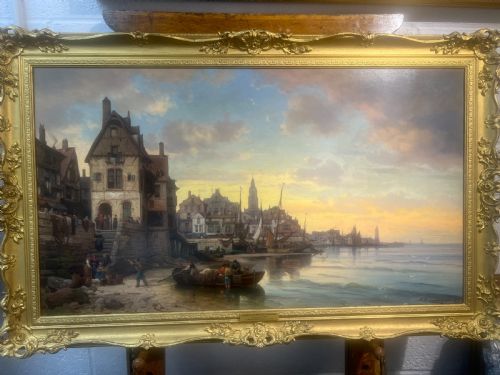
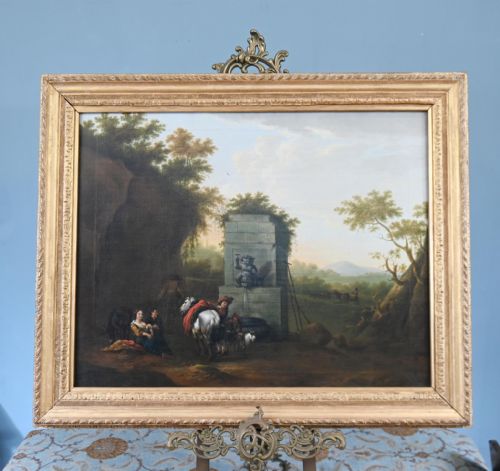
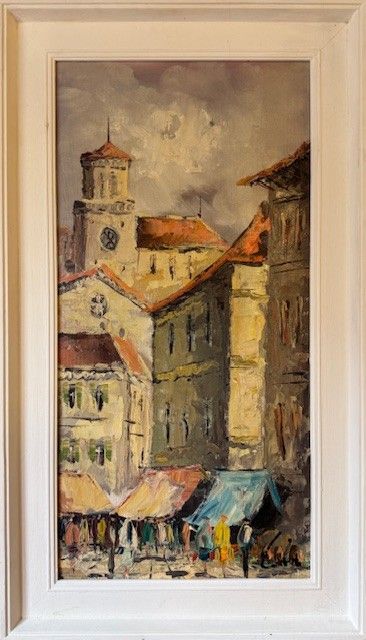
Framed continental landscape art encompasses oil paintings, watercolours and pencil drawings depicting European townscapes, harbours, mountain ranges and rural scenes. Buyers seeking this category encounter works ranging from seventeenth-century Dutch school panels to mid-century impressionism.
The nineteenth century provides the largest share of works on this page, including French market squares, Italian harbours and German mountain views. These pieces typically arrive ready to hang within period giltwood or gesso frames.
Materials and technique
Artists painted primarily with oil paint on canvas, wood panels or boards, while others worked in watercolour and pencil on paper. Oak panels support seventeenth-century compositions, whereas nineteenth- and twentieth-century works lean towards stretched canvas and board.
Frames utilise wood, gesso and gold leaf to create ornate gilded borders that complement the painted scenes. Many works retain their original frames, showing detailed moulding and gilding techniques typical of their respective periods.
Listings span from the seventeenth century through to the mid-twentieth century, featuring oil, watercolour and pencil mediums.
Assessing quality
Quality rests upon the handling of light, brushwork precision and the preservation of the original surface. Works by documented painters demonstrate superior draughtsmanship and compositional depth compared to anonymous school pieces.
The integrity of the framing also influences the piece, with original giltwood surrounds holding greater historic alignment to the artwork than later replacements.
Charles Euphraisie Kuasseg·T Bergman·Jan Miel·Philipp Peter Roos·E A Minardo·J W Hogley·R Palnay·William George Meadows·Lewis J Wood·William Raymond Dommersen·Armand Guillaumin·Karel Frans Philippeau·Ludwig Hermann·Allan Douglass Mainds·Christiaan Pieter Snyders·Henry Schafer
The Framed Continental Landscape Art Glossary
- Continental school
- A term used to describe paintings executed by artists working on mainland Europe, outside of Britain. It frequently denotes French, Dutch, German or Italian origins.
- Grand Tour
- A cultural trip through Europe undertaken by nineteenth-century travellers who collected local landscape paintings and architectural views as mementos.
- Gesso
- A plaster-like mixture applied to wooden frames as a base before gilding with gold leaf. It allows for intricate moulded decoration.
- Oil on panel
- A painting technique where oil paint is applied directly to a wooden support, such as oak, rather than stretched canvas.
Framed Continental Landscape Art: Frequently Asked Questions
How do I date an antique landscape painting?
Dating relies on stylistic clues, framing methods and the materials used for the support, such as oak panels or nineteenth-century canvases. Signatures and archival records further help narrow down the period of creation.
Examining the reverse of the frame or panel often reveals old exhibition labels, stamps or dealer marks that provide additional chronological context.
What is the Dutch school?
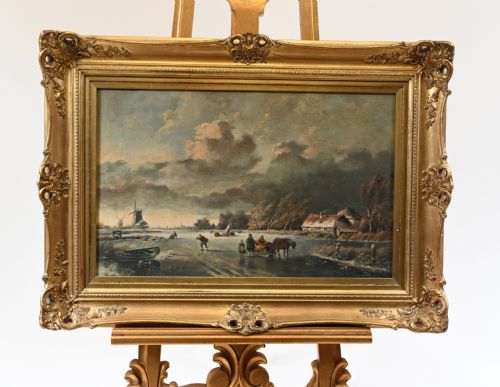
The Dutch school refers to artists working within the artistic traditions and techniques established in the Netherlands. These works frequently focus on atmospheric lighting, rivers and frozen winter scenes.
Collectors prize these pieces for their detailed depictions of rural life and natural landscapes.
Are original frames important?
Original giltwood and gesso frames contribute significantly to the historic integrity and aesthetic appeal of continental landscape art. They are designed to complement the specific palette and period of the painting.
Matching frames demonstrate how the artwork was intended to be displayed by its original owners.
Where should I hang a landscape painting?
Landscape paintings suit walls with stable environmental conditions, away from direct sunlight and excessive moisture. Proper placement protects both the canvas and the delicate gold leaf on antique frames.
Consider eye-level positioning in rooms with neutral lighting to best appreciate the fine brushwork and detail.