

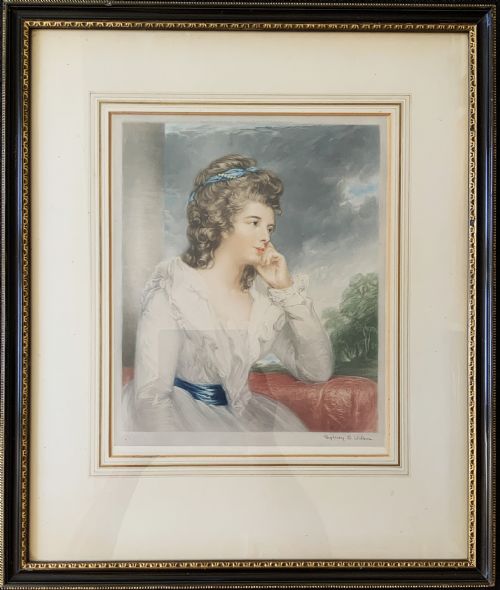
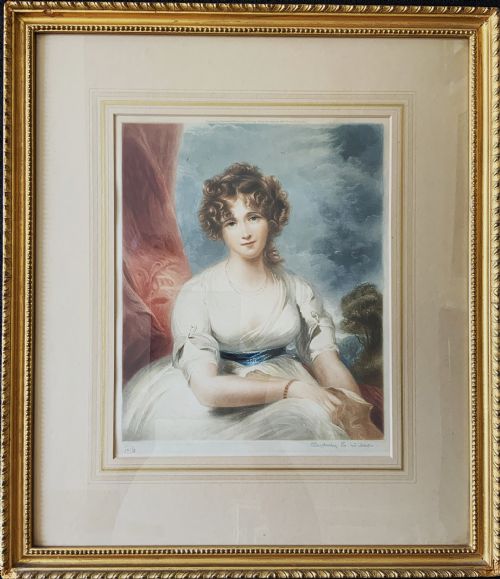


Framed Coloured Mezzotint Print
A framed coloured mezzotint print brings tonal depth and rich pigment to your walls, capturing centuries of portraiture and domestic scenes in wood and glass.
Framed Coloured Mezzotint Print
When you search for a framed coloured mezzotint print, you encounter works spanning the eighteenth century, Regency, Victorian, and Edwardian periods. These pieces include wall art, framed pictures, and engravings housed in wood, giltwood, and glass.
You are most likely to meet portraits of ladies, pairs of prints, and genre scenes after painters such as George Morland and George Romney. The selections range from Georgian reverse glass examples to signed artist proofs from the early twentieth century.
The objects combine historical printmaking techniques with period framing, often utilising Hogarth moulding or gold leaf frames. They function primarily as decorative wall art with distinct historical provenance.
How they were made
Makers produced mezzotints by roughening a copper plate with a rocker to create rich darks, then smoothing areas to generate lighter tones. Printers applied ink and pigment by hand to achieve the coloured effect seen on paper or reverse glass.
Craftsmen encased these works using wood, giltwood, and glass, frequently employing gold leaf for framing. Some pieces incorporate reverse painting techniques on glass rather than standard paper impressions.
Listings feature paper, glass, wood, gold leaf, giltwood, and ink across Victorian, Regency, Edwardian, and Georgian periods.
What varies in quality
The depth of tone and ink saturation on the paper distinguish finer impressions from weaker pulls. Stronger plates display intricate gradations of shade, whereas lesser examples lose definition in the shadows.
The integrity of the original frame and glass pairing dictates the character of the piece. Period frames in giltwood or Hogarth moulding hold greater fidelity to the era of the print than later replacements.
Fletcher·Sebastiaan Vrancx·Sydney Wilson·Robert Sayer·George Romney·George Morland·W Ward·I R Smith·F Petitjean
The Framed Coloured Mezzotint Print Glossary
- Mezzotint
- A printmaking process where the copper plate is roughened evenly and scraped to produce tonal gradations rather than simple lines. This technique allows for rich, velvety darks and subtle highlights.
- Reverse glass print
- An image applied directly to the underside of a glass pane, often sealed and framed for wall display. This method creates a glossy surface finish unique to certain historical periods.
- Hogarth frame
- A narrow, stepped wooden frame profile finished in dark or gilt tones, popular during the Georgian and Regency eras. It provides a distinct understated border for works on paper.
- Artist proof
- An impression taken from a printing plate to test the state of the work before the main edition is run. These are often signed in pencil by the engraver or artist.
- Giltwood
- Wood carved and coated with gold leaf or metallic paint to create a reflective golden surface. It defines the decorative borders of many eighteenth and nineteenth-century frames.
Framed Coloured Mezzotint Print: Frequently Asked Questions
How do I date a mezzotint?
Examine the paper quality, the style of the engraving, and the construction of the frame. Georgian and Regency pieces often feature laid paper and specific framing profiles.
Later Victorian and Edwardian examples show different plate marks and signatures, such as artist proofs from the early twentieth century.
What is reverse glass printing?
Reverse glass printing involves applying the image directly to the back of a glass sheet rather than onto paper. This technique protects the pigments and yields a distinct reflective surface.
These pieces require careful handling to preserve the sealed layers behind the glass.
Where should I hang these prints?
Hang these framed works out of direct sunlight to protect the pigments and paper from fading. Pair them with traditional room settings that complement their period frames.
Ensure wall fixings match the weight of the wood and glass components.
Are these prints hand coloured?
Many historical mezzotints received colour by hand using pigments applied to the plate before printing or directly onto the paper afterwards. This accounts for the tonal variations between different copies of the same subject.
Close inspection under magnification reveals the presence of pigment versus printed ink.