

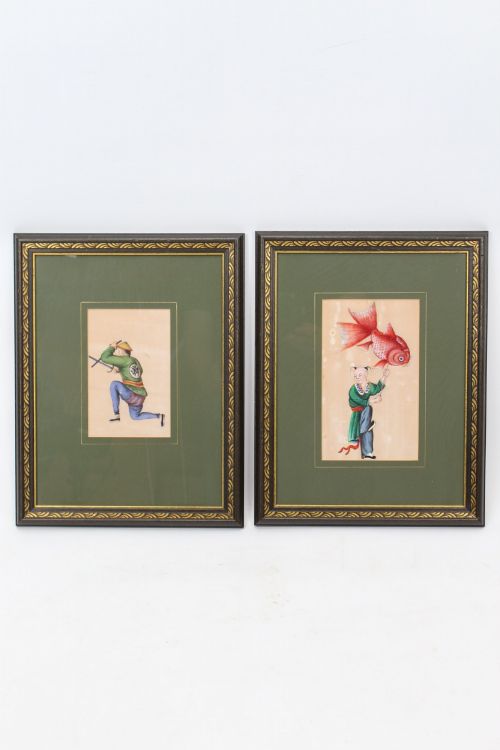


Framed Chinese Watercolour Artwork
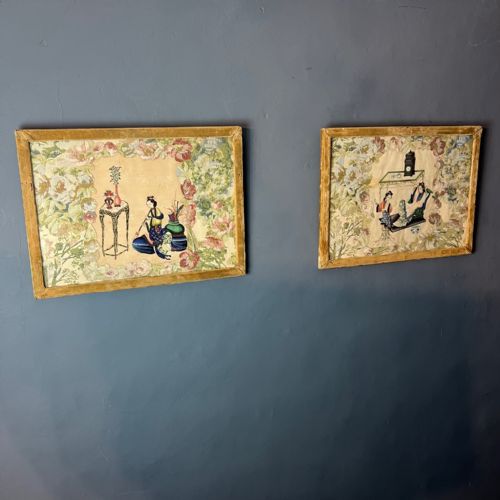
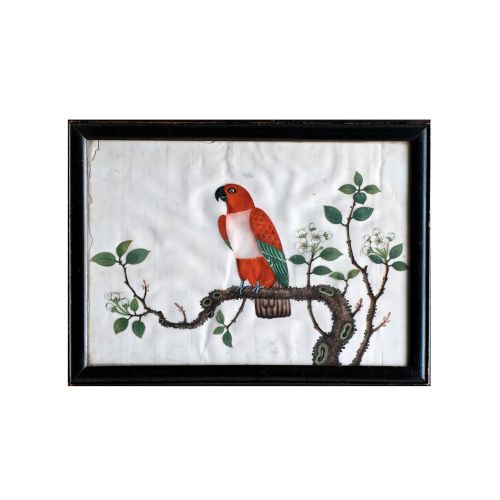
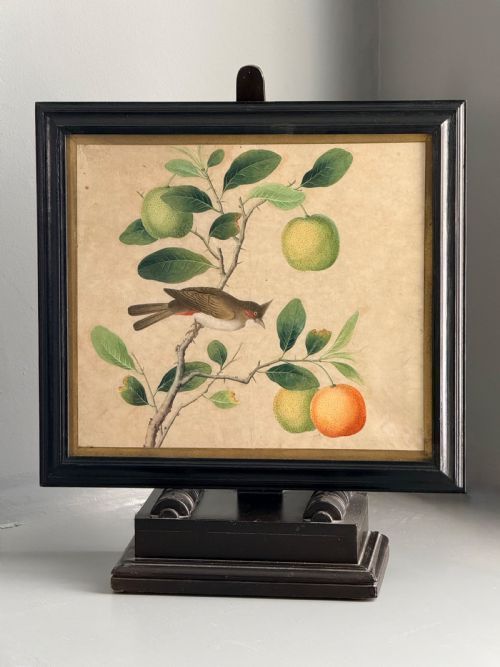
Framed chinese watercolour artwork brings traditional subjects like figural scenes, junks, and birds into view, held behind glass in wooden frames.
Framed Chinese Watercolour Artwork
Framed chinese watercolour artwork brings together traditional painting traditions and export aesthetics, spanning periods from the eighteenth century through to the mid-twentieth century. Buyers searching this phrase meet works rendered on silk, paper, and pith paper, often referred to historically as rice paper.
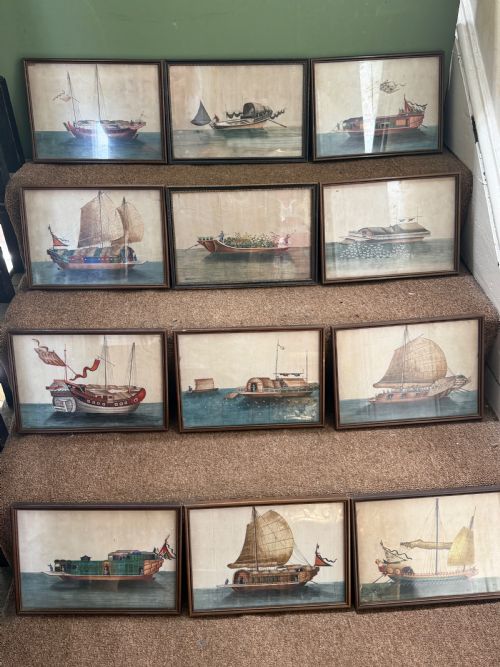
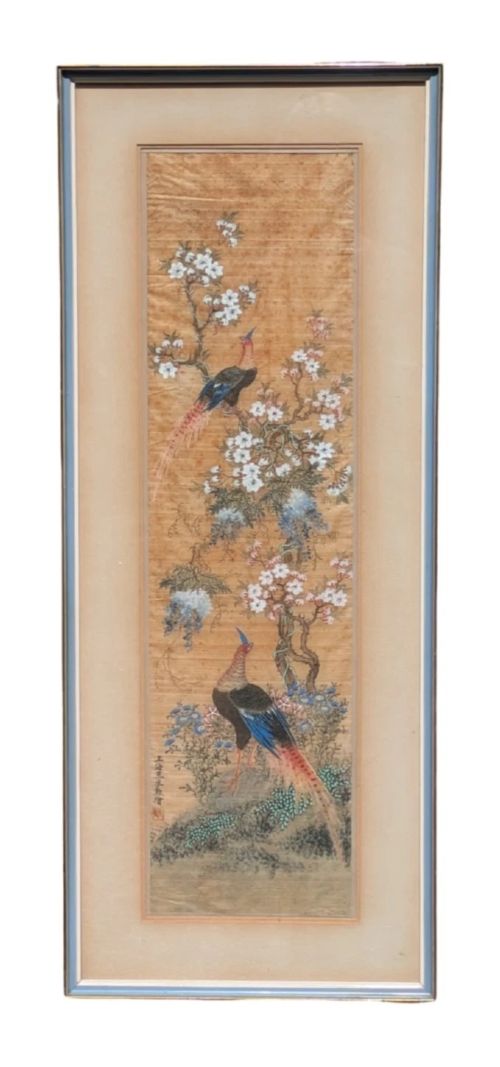
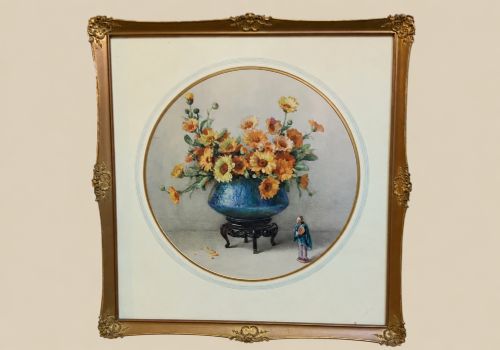
The subjects range from detailed botanical studies of marigolds and plum blossoms to figural groupings, junks, and wild birds. Many pieces are preserved in sets, such as groups of twelve depicting ships or pith paintings detailing insects and butterflies.
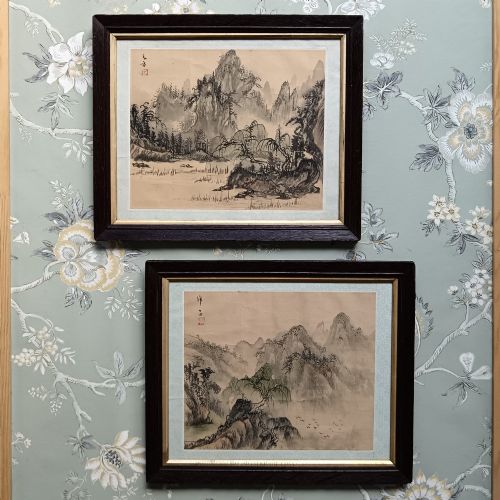
Origins stretch from the Qing dynasty through the Edwardian era and into later twentieth-century interpretations like the Shan shui silk paintings. These framed wall art pieces provide a direct link to historical painting techniques and export markets.
Materials and construction
Watercolour, gouache, ink, and pigment form the primary colouring agents applied to delicate supports such as pith paper and woven silk. Pith paper, prepared from the pith of the Tetrapanax papyrifer plant, absorbs pigment in a distinct manner that gives these historical paintings their characteristic velvet texture.
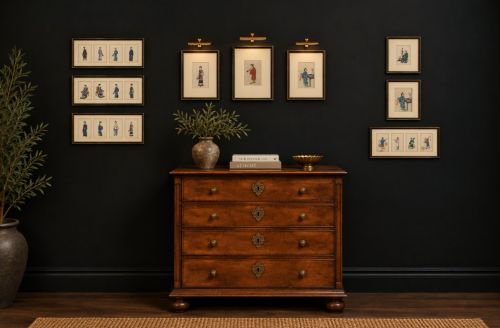
The resulting artworks are housed within wooden frames protected by glass, safeguarding the fragile pigments and organic supports from atmospheric moisture and handling damage.
Framed Chinese Watercolour Artwork Retail Price Guide 2026
Typical asking prices for framed chinese watercolour artwork among the pieces listed under this phrase on Sellingantiques today, from the lower quarter to the upper quarter. They describe what is for sale here now, not the wider market.
Early export artists used pith paper because its spongy texture made butterfly wings look convincingly velvety.
Distinguishing quality across pieces
The refinement of brushwork and the preservation of the delicate pigment layers separate standard decorative items from finer examples. Silk and pith paper present unique conservation histories, where untouched original frames and stable colour pigments elevate the piece.
Cohesion within multi-part sets, such as complete groups of twelve depicting junks or floral studies, dictates the integrity of the offering. Signed and stamped works carry additional weight through visible attribution to the artist's hand.
The Framed Chinese Watercolour Artwork Glossary
- Pith paper
- A delicate, spongy material cut from the pith of the rice-paper plant, commonly used in the nineteenth century for export gouache and watercolour paintings. It possesses a velvety surface that takes pigment vividly.
- Shan shui
- A traditional style of Chinese painting that depicts scenery or natural landscapes, using a brush and ink rather than conventional western oil paints. These works frequently focus on mountains and water.
- Gouache
- An opaque watercolour medium composed of pigment mixed with a water-binding agent and a inert white filler. It provides heavier coverage and brighter opacity than traditional transparent watercolour.
- Qing dynasty
- The final imperial dynasty of China, lasting from 1644 until 1912, encompassing major periods of export art production. Pieces from this era often feature traditional motifs, birds, and figural groupings.
Framed Chinese Watercolour Artwork: Frequently Asked Questions
What is pith paper?
Pith paper is a delicate organic material derived from the pith of the Tetrapanax plant, historically misnamed as rice paper in western markets.
It was widely used in nineteenth-century workshops for export watercolours because its absorbent surface holds gouache and pigment with exceptional velvety depth.
How should I hang these artworks?
These watercolours require placement away from direct sunlight to prevent the fading of delicate pigments on silk and pith paper.
Keeping them behind their original glass in a stable environment protects the fragile organic supports from humidity changes.
Are these works signed?
Some pieces feature artist signatures or red seal stamps, while many export works from the nineteenth century remain unsigned.
Unsigned examples were frequently produced in workshops to fulfil demand from western traders visiting treaty ports.
What subjects are most common?
The subjects range widely across botanical studies, figural groups, birds among plum blossoms, and maritime scenes of junks.
Many listings comprise sets of twelve paintings, reflecting the nineteenth-century export trade in structured series.