


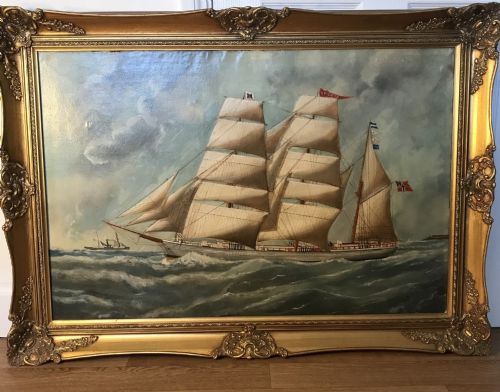
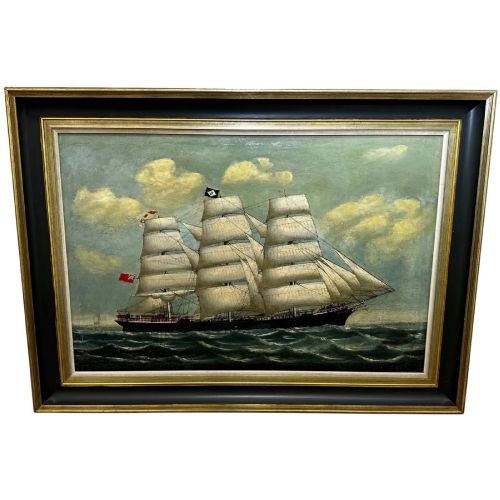
Framed Canvas Ship Art
Framed canvas ship art captures maritime history through oil paintings on canvas spanning the nineteenth and twentieth centuries.
Framed Canvas Ship Art
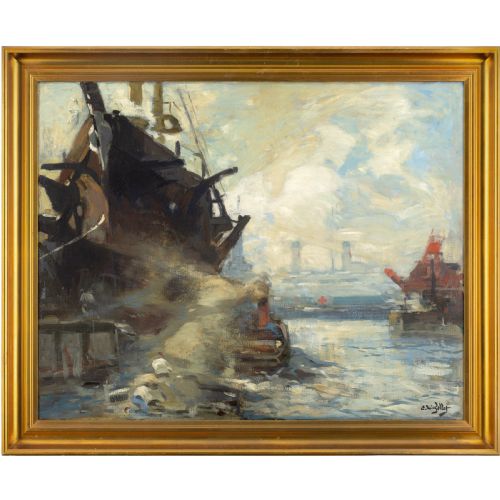
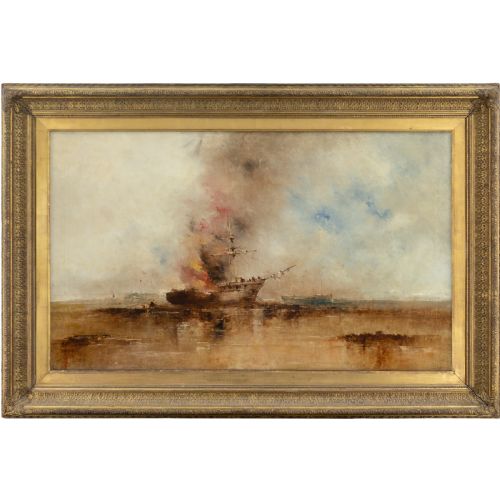
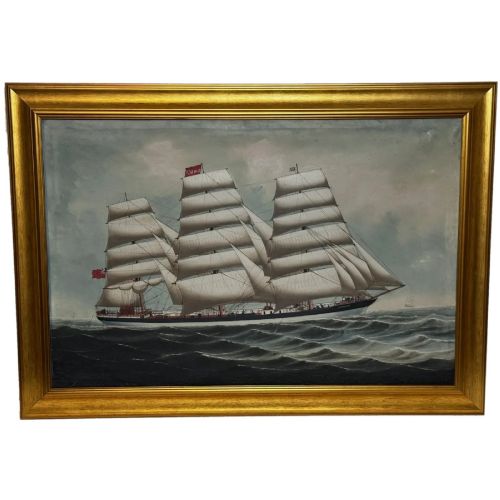
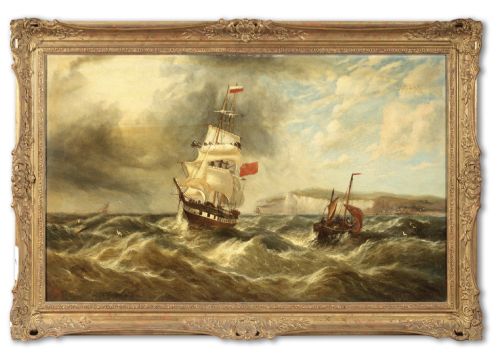
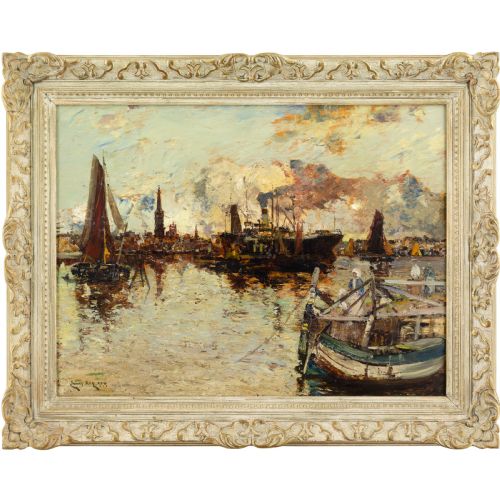
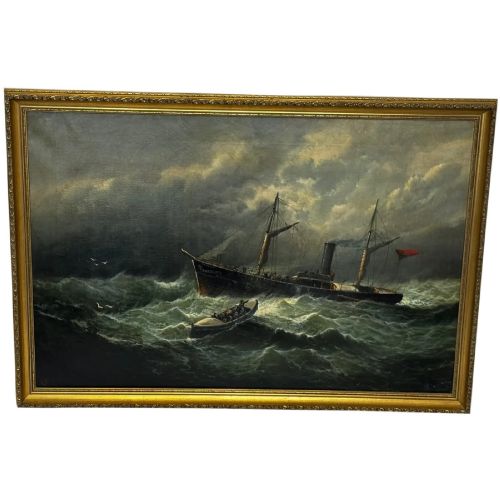
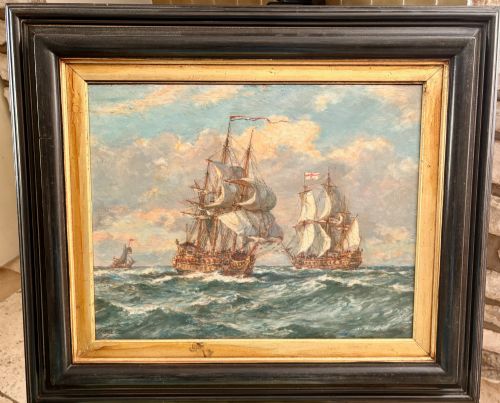
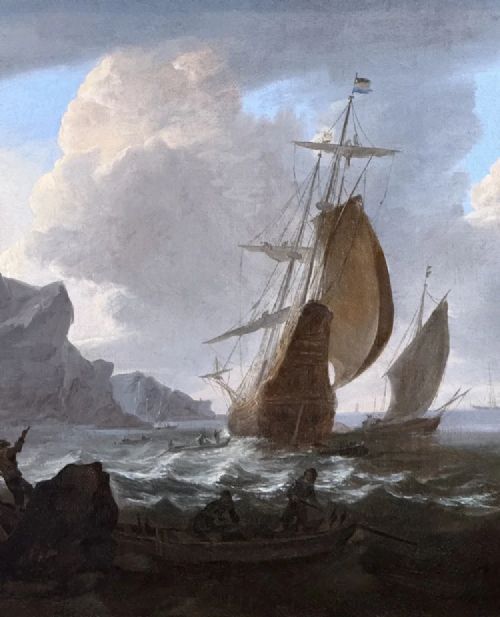
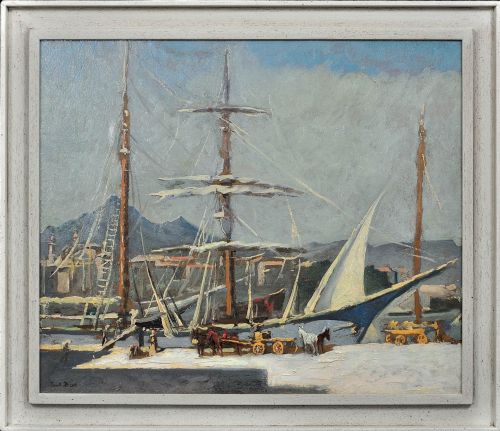
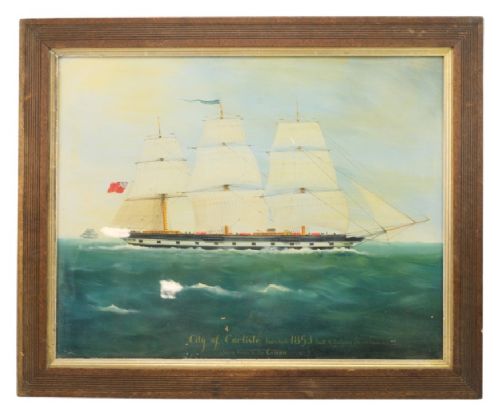
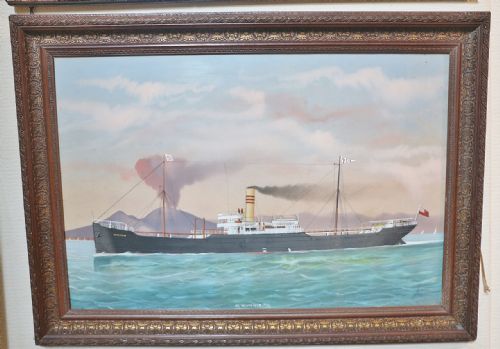
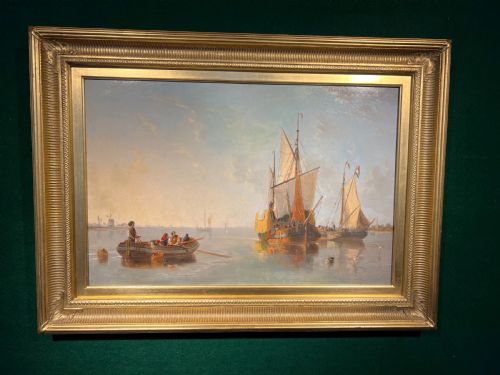
When you search for framed canvas ship art, you encounter oil paintings depicting vessels at sea, harbour scenes, and naval engagements. These works record merchant ships, three-masted schooners, clipper ships, and warships navigating coastal waters or open oceans.
The pieces on this page originate predominantly from the Victorian and Edwardian periods, stretching from the early nineteenth century through to the 1930s. Works vary from serene river scenes on the Thames to dramatic depictions of vessels in heavy gales and stormy seas.
Materials and construction
Artists utilise oil paint applied to woven canvas supports, building up pigment layers to capture the translucency of water and the play of light on sails and hulls. This medium allows for deep tonal gradations, essential for rendering the contrast between dark storm clouds and white cresting waves.
The supporting stretchers and frames are constructed from timber, often utilising wood finished with applied gold leaf or giltwood mouldings. These frames provide both structural rigidity to the canvas and a formal border that defines the maritime scene within.
Listings feature works from the 19th Century, Edwardian period, and 1930s executed in oil paint on canvas with wooden and giltwood frames.
Quality variations in maritime painting
Quality rests primarily in the artist's command of maritime anatomy, rigging detail, and atmospheric perspective. Superior paintings demonstrate a precise understanding of how water interacts with a ship's hull and how light falls upon canvas sails in different weather conditions.
The handling of the painted surface distinguishes standard works from exceptional ones, with finer canvases showing subtle brushwork in the depiction of turbulent seas and distant coastal haze. Original framing also contributes to the integrity of the piece, particularly where period giltwood mouldings complement the age of the canvas.
Eugène-Louis Gillot·William McAlpine·Reginald Arthur Borstel·John Rose Miles·James Kay RSW·William Broome·Bernard Gribble·Bonaventura Peeters·Paul Bret·Bernard Benedict Hemy·John Wilson Carmichael·Lai Fong·Nicholas Condy·Richard B. Spencer·Abraham Hulk I·Charles William Wyllie·Daniel Sherrin·Charles Sim Mottram RBA·Dion Pears
The Framed Canvas Ship Art Glossary
- Barque
- A sailing vessel with three or more masts having the fore- and mainmasts square-rigged and the mizzenmast fore-and-aft rigged. This configuration was common for nineteenth-century cargo carriers.
- Giltwood
- Wood that has been treated with a thin layer of gold leaf or gilt finish. Frames utilise this material to enhance the visual weight of the artwork.
- Clipper
- A very fast nineteenth-century merchant sailing ship with three masts and a square rig. These vessels are frequently depicted in high seas to emphasise speed.
- Pierhead painting
- A specific genre of ship portraiture, often commissioned by captains or owners, showing a vessel clearly outside a named port. These records document specific commercial vessels.
- Seascape
- A work of art depicting the sea, distinct from inland landscapes. Maritime examples focus heavily on human navigation and vessel interaction with water.
Framed Canvas Ship Art: Frequently Asked Questions
What periods do these paintings date from?
The works span from the seventeenth century through to the mid-twentieth century, with a heavy concentration of pieces originating in the nineteenth century and the Edwardian era.
Dates are established through stylistic analysis, artist signatures, and framing characteristics typical of specific decades such as the 1860s or 1910s.
How were these maritime artworks displayed originally?
These paintings were traditionally hung in the parlours, offices, and maritime institutional rooms of shipowners, captains, and merchants. The heavy wooden and gilt frames were designed to project status and permanence.
Today, they function similarly in domestic settings, serving as focal points within studies, living rooms, and hallways.
How do I identify the ship in a painting?
Many canvases include legible lettering on the hull, stern, or flying flags that name the vessel, such as the 'Westfield' or 'Slieve Roe'.
Additionally, pierhead paintings often feature inscriptions on the lower margin or verso detailing the port, captain, and specific commissioning circumstances.
How do I care for an oil painting on canvas?
Keep the canvas away from direct sunlight and fluctuating humidity levels to prevent paint cracking and warping of the wooden stretcher bars.
Dust the surface and frame gently with a soft, dry brush without applying moisture or cleaning solutions directly to the paint layer.