
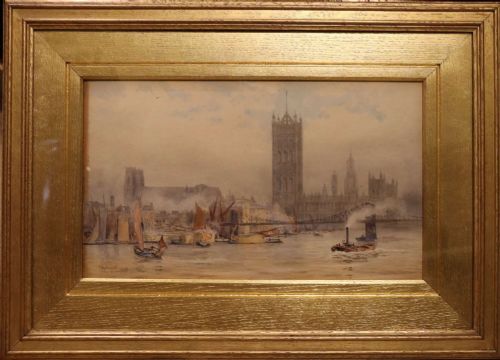
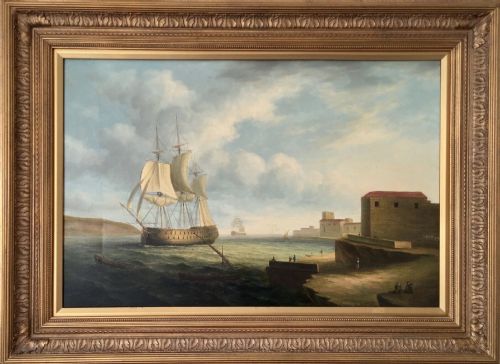
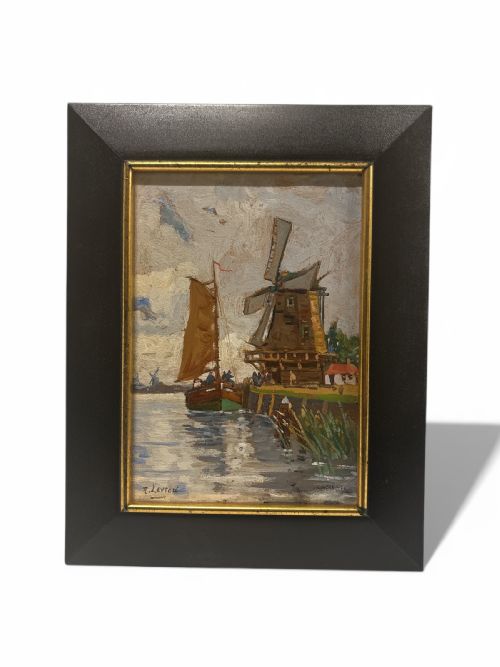


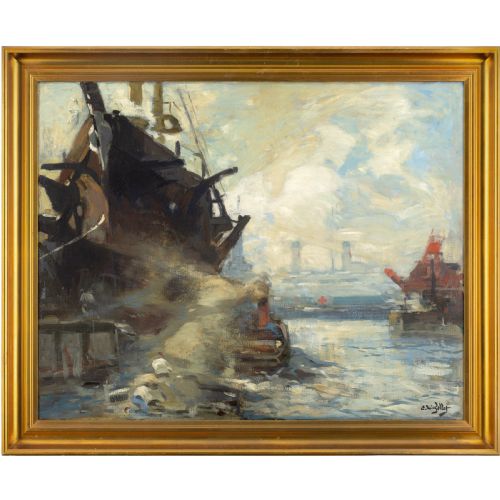
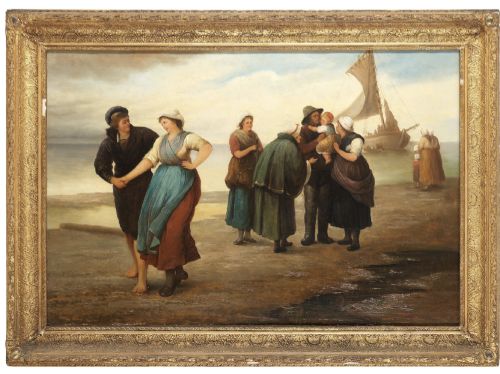
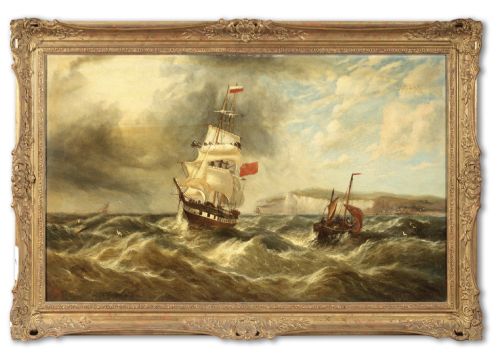
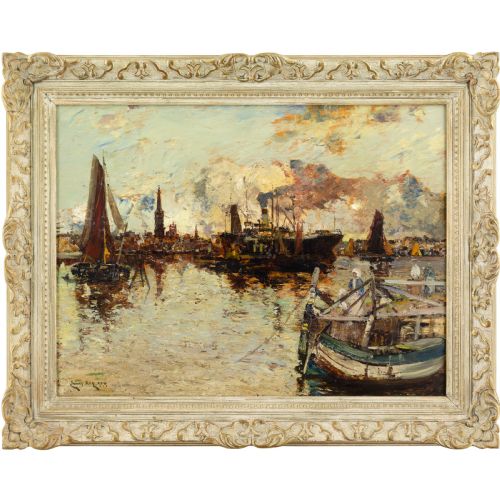
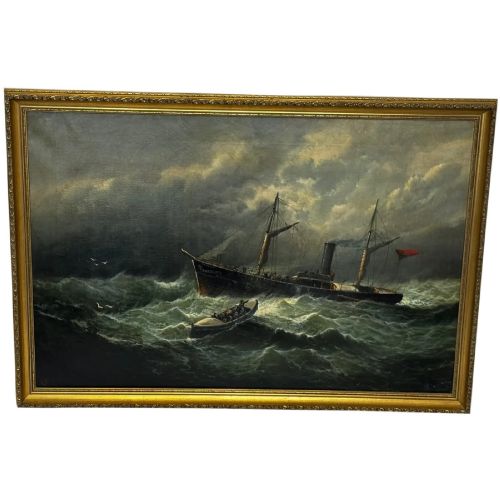
Gilt Framed Nautical Painting
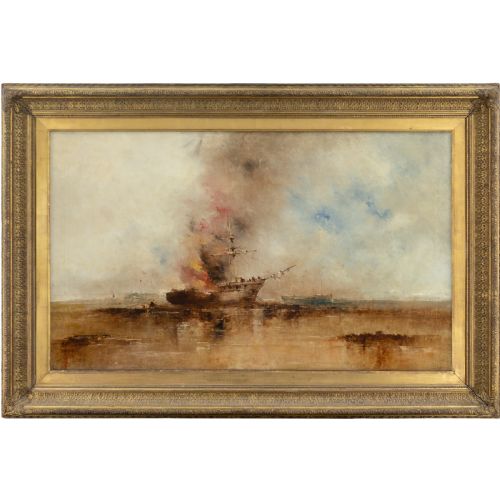
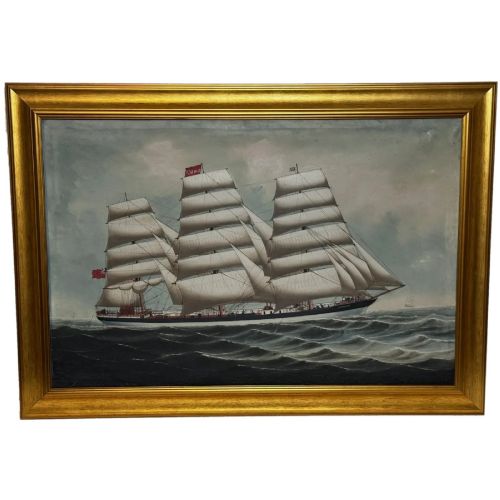
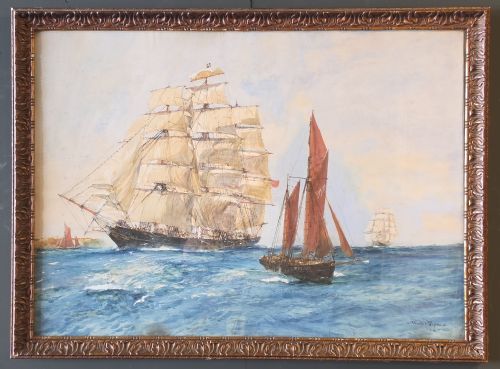
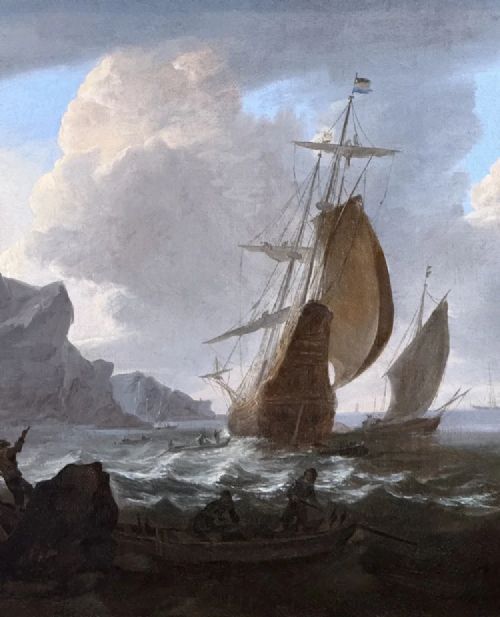
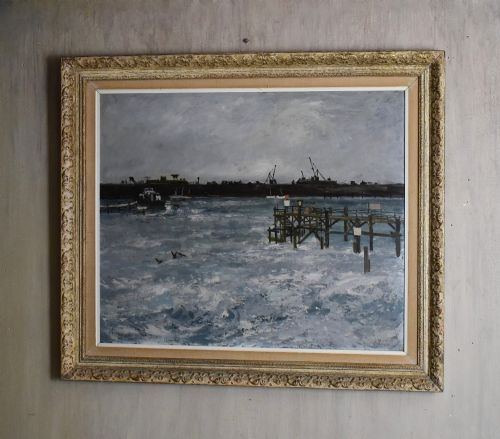
A gilt framed nautical painting captures the motion of the sea, the weight of merchant vessels and the drama of coastal weather within a period gold surround.
Gilt Framed Nautical Painting
A gilt framed nautical painting brings maritime history onto the wall through depictions of galleons, steamships, harbours and heavy seas. Buyers seeking this phrase encounter works dominated by nineteenth-century and Edwardian canvases, alongside occasional watercolours and panel paintings.
The subjects range from tranquil coastal inlets and fishing boats off familiar shores to dramatic storm scenes involving merchant navies and warships. Most pieces present established maritime artists or competent regional painters working within distinct Victorian and Edwardian marine traditions.
How they were made
The works rely upon oil paint applied to canvas or wood panel, as well as watercolour pigments worked onto paper. Canvas grounds provide the tensile strength required for large marine scenes, while wood panels suit smaller, detailed depictions of harbour craft and shipping.
Surrounding mouldings consist of wood finished with gilt layers or applied composition ornament. These frames use gold leaf or metallic paint to reflect ambient light and isolate the cool blues and greys of maritime water from the domestic wall.
Several captains kept calm while their canvas ships battled perpetual gales.
What varies in quality
Quality rests upon the artist's command of maritime architecture, rigging accuracy and the movement of water under changing light. Stronger works convey the heavy swell of the open sea and the precise structural details of three-masted schooners or steamships.
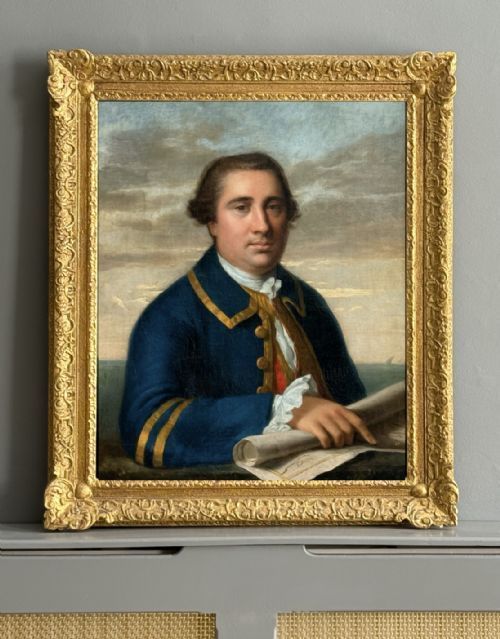
The craftsmanship of the gilt frame contributes significantly to the piece, distinguishing plain wooden mouldings from deep, ornate surrounds with intact gesso enrichments. Original frames that complement the exact period of the canvas elevate the integrity of the work.
H. Medlycott·Eugène-Louis Gillot·William McAlpine·Reginald Arthur Borstel·LEMUEL FRANCIS ABBOTT·Charles Edward Dixon·John Rose Miles·James Kay RSW·William Broome·BONAVENTURA PEETERS·Peter Brannan·Lucy Pratt·Willem Bos·John Wilson Carmichael·Richard B. Spencer·William Henry Williamson·Bernard Benedict Hemy·George Stanfield Walters·Abraham Hulk I·Charles Napier Hemy·Gustave De Bréanski
The Gilt Framed Nautical Painting Glossary
- Gilt wood
- Wood coated with gold leaf, metal powder or foil to create a bright metallic surface. It provides traditional framing for nineteenth-century maritime canvases.
- Oil on canvas
- Pigment bound in drying oil applied to a stretched woven fabric support. This combination allows for rich blending and deep tonal graduation in seascape skies.
- Watercolour
- Paint consisting of water-soluble pigments used on paper supports. It yields transparent washes well-suited to light coastal atmospheres and harbour views.
- Maritime
- Pertaining to the sea, navigation, shipping and marine commerce. This term defines the primary subject matter found across these historical artworks.
- Barque
- A sailing vessel with three or more masts having the fore and main masts square-rigged and the mizzen mast fore-and-aft rigged. It appears frequently in nineteenth-century shipping art.
Gilt Framed Nautical Painting: Frequently Asked Questions
What periods do these paintings date from?
The available selection spans from the eighteenth century through the Victorian era and Edwardian period into the mid-twentieth century.
Most examples originate in the nineteenth century, reflecting the height of maritime trade and marine art production.
Are the frames original to the artworks?
Many pieces retain their period gilt wood frames, which were selected to complement the tone and era of the painting.
Some works are housed in later or replacement frames that match the historical style of the canvas.
What subjects appear most often?
Common subjects include sailing ships in rough waters, merchant vessels off coastal ports, calm river estuaries and rescue scenes.
Artists frequently documented specific historical ships, local harbours and recognizable landmarks along the British and European coasts.
How should these framed works be displayed?
These pieces require stable indoor wall placement away from direct sunlight and excessive moisture to protect the canvas and gilt frame.
Adequate wall spacing allows the reflective gold moulding to frame the depth and palette of the maritime scene effectively.