

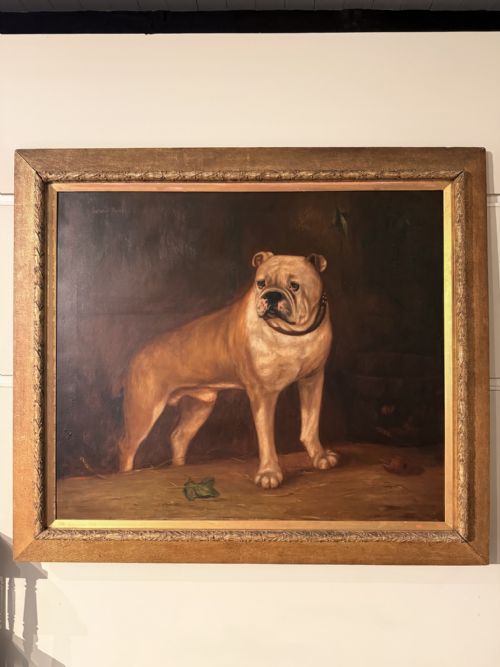
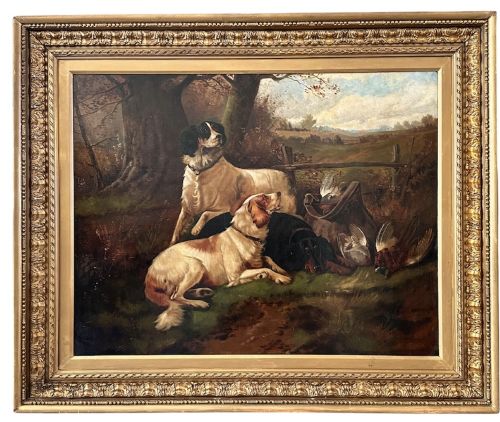

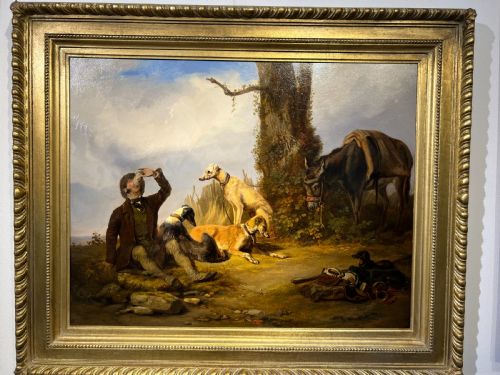

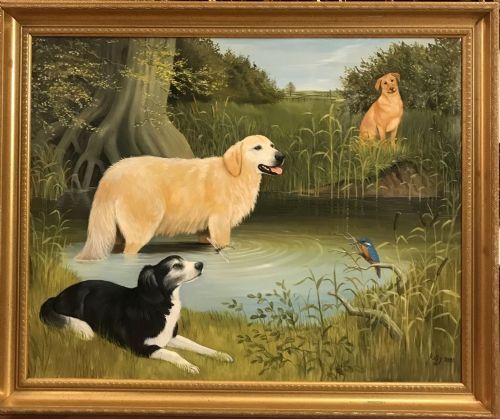
Framed Canvas Dog Painting
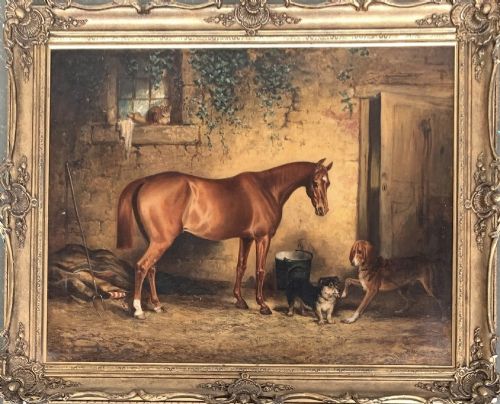
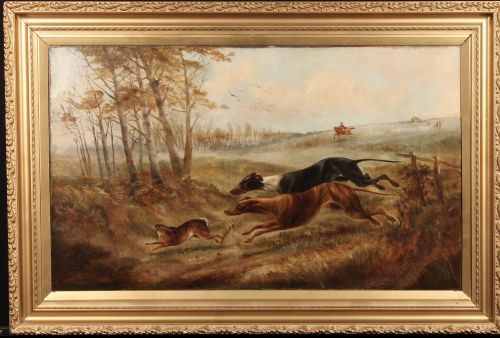
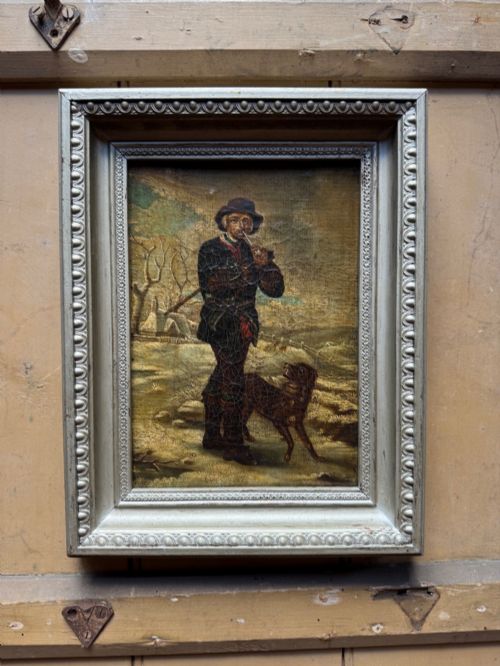
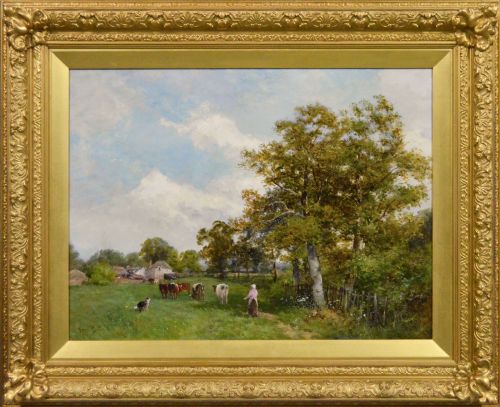
These framed canvas dog painting examples capture canine character through centuries of brushwork, offering buyers enduring oil portraits of spaniels, hounds, and terriers.
Framed Canvas Dog Painting
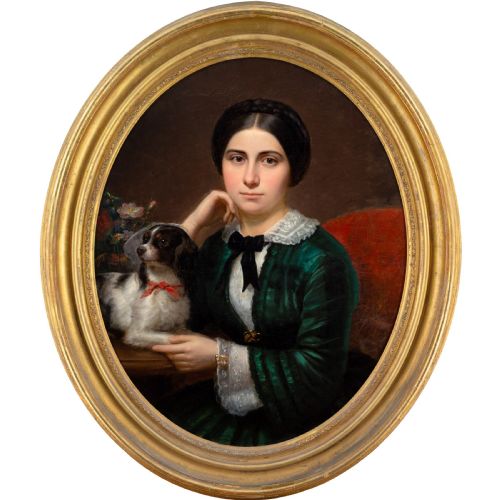
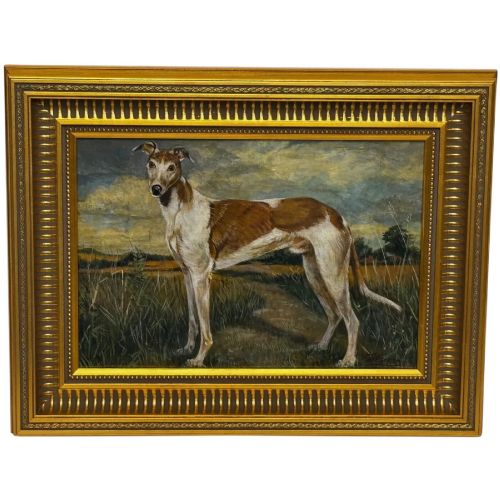
A framed canvas dog painting represents a distinct tradition within fine art, capturing individual animals or working packs in oils. When a buyer searches for a framed canvas dog painting, they encounter works ranging from 17th-century European scenes to mid-20th-century portraits.
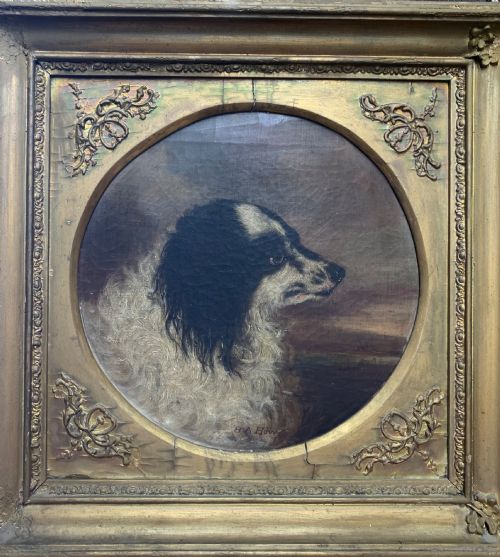
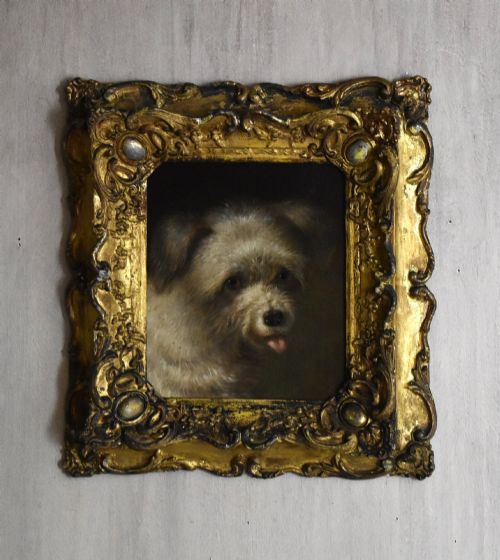
The selection spans formal Victorian sporting art, intimate spaniel and terrier studies, and narrative pieces involving gun dogs with the day's bag. Most examples found here originate from the 19th century, reflecting the era's fondness for animal portraiture and rural pursuits.
Materials and Techniques
Artists painted these works using oil paint applied to stretched woven canvas, sometimes utilising wood panels or board as a base. Pigments were layered to build depth in animal coats, capturing the texture of fur through careful brushwork and glazing techniques.
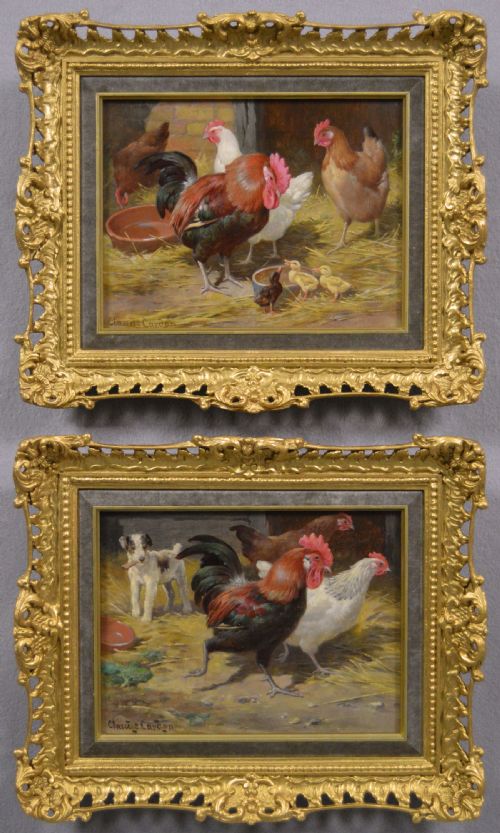
The finished canvases sit within wooden surrounds, frequently comprising period giltwood or gilded wood frames enhanced by gold leaf. These frames often complement the scale of the painting, ranging from simple mouldings to elaborate ornamental borders.
Several canvases capture dogs mid-heist, caught red-handed stealing food directly from woven baskets.
Distinctions in Quality
Quality rests primarily in the painter's ability to render anatomy, expression, and texture with conviction rather than mere decoration. Superior examples capture the specific disposition of breeds like curly-coated retrievers, collies, or spaniels with anatomical precision and lively brushwork.
The integration between the canvas and its housing also dictates the piece's standing, with period gilt frames that match the age and scale of the artwork elevating the presentation. Condition of the canvas, minimal overpainting, and clear attribution to known animal artists further separate standard decorative works from collector-grade pieces.
Henry Barraud·George Armfield·Valentine T Garland·David Bates·Martin Theodore Ward·John Sargent Noble·Sir Edwin Henry Landseer·Claude Cardon·Frans Snyders·John Emms·William Barraud·George E Sharpe·Colin Graeme Roe·John Trivett Nettleship·John Horsburgh·Fannie Moody
The Framed Canvas Dog Painting Glossary
- Oil on Canvas
- A painting medium where pigments suspended in drying oil are applied to a woven fabric support stretched across a wooden frame. This combination allows for rich blending of colours and lasting durability.
- Giltwood
- Timber, typically carved wood, coated with gold leaf or metallic powder to create a reflective golden surface. It is commonly found on traditional frames housing fine art.
- Sporting Art
- A genre of painting depicting bloodsports, hunting, shooting, and the animals associated with them. Canine subjects in this category often include hounds, spaniels, and gun dogs.
- Naïve
- A style of art characterised by a childlike simplicity in perspective and proportion, often produced by self-taught painters. These works possess charm through their direct observation rather than academic technique.
- Provenance
- The documented history of ownership of an antique artwork, helping to establish its authenticity and origin. Records often trace a piece back to specific collections or exhibitions.
Framed Canvas Dog Painting: Frequently Asked Questions
What periods do these dog paintings date from?
The selection encompasses works spanning several centuries, with a strong representation from the Victorian era and the broader nineteenth century. Earlier seventeenth-century examples and mid-twentieth-century pieces also appear.
This chronological spread allows collectors to trace the evolution of animal portraiture and British sporting art across different stylistic periods.
How do I hang a heavy framed oil painting?
Large framed canvases require secure fixings directly into wall studs or masonry using appropriate picture hooks rated for the weight. Ensure the hanging wire or D-rings on the frame are robust and professionally fitted before mounting.
Position the painting away from direct sunlight and heat sources to protect both the canvas and the giltwood frame from temperature fluctuations.
What is the difference between a study and a formal portrait?
A formal portrait typically places the animal as the primary subject, often posed within a landscape or interior setting commissioned by an owner. Studies are more immediate observations focusing on the anatomy, posture, or expression of breeds like terriers or spaniels.
Both forms utilise oil on canvas, but studies often reveal looser brushwork and a more spontaneous approach by the artist.