



Framed Canvas Cityscape Artwork
Framed canvas cityscape artwork brings urban architecture and bustling street scenes into domestic interiors through oil paint on stretched fabric.
Framed Canvas Cityscape Artwork
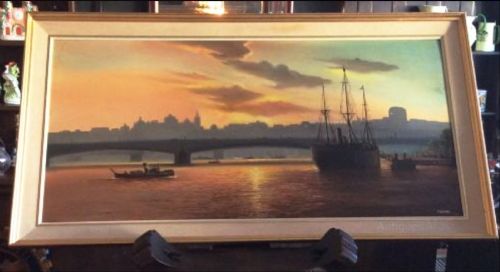
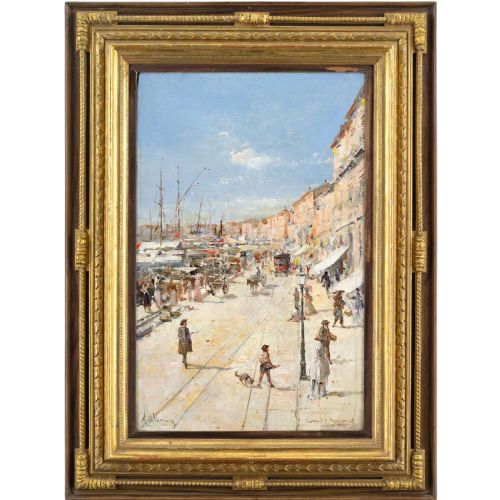
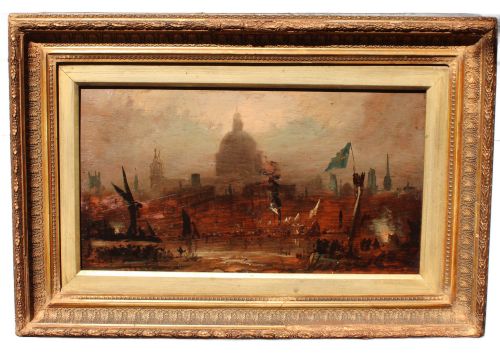
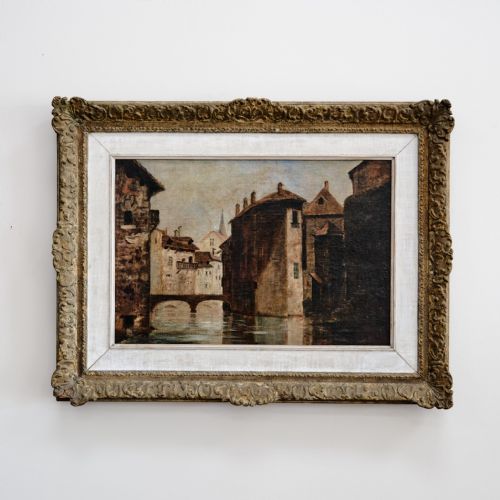
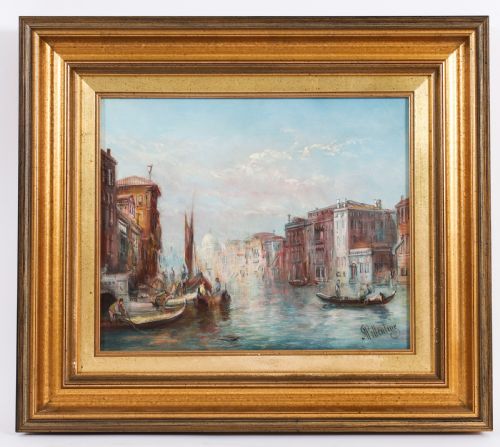
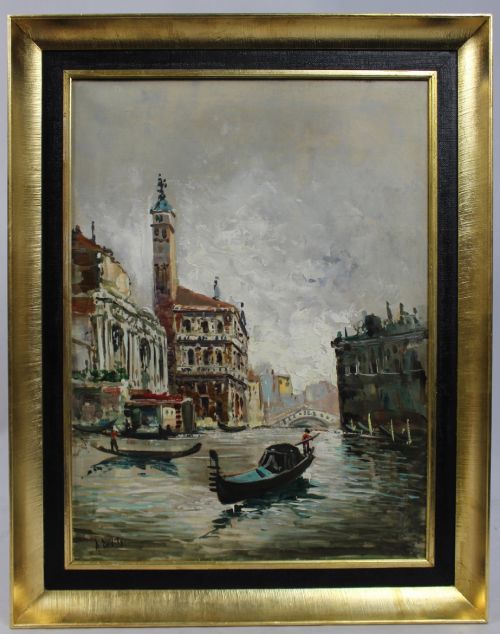
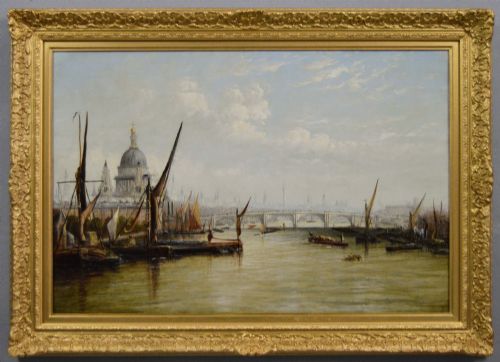
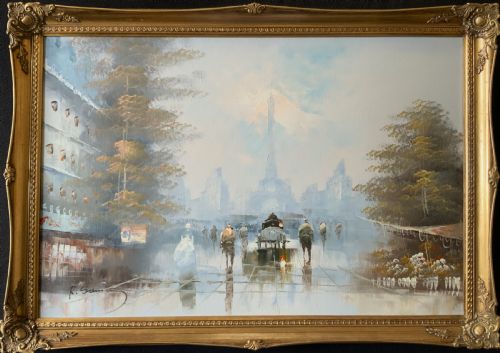
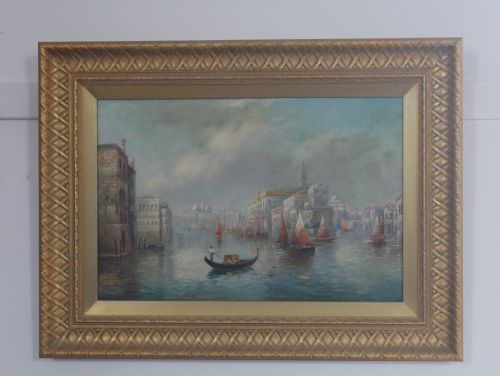
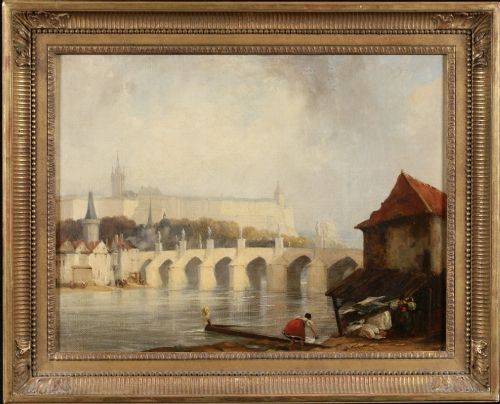
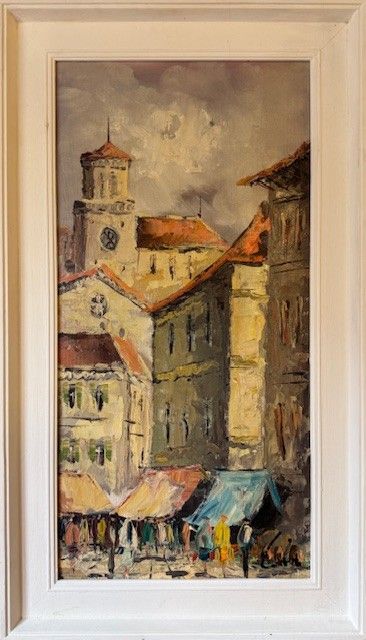
Framed canvas cityscape artwork captures urban environments, riversides, and architectural landmarks through painted interpretations spanning the nineteenth and twentieth centuries. These works range from detailed Victorian canal views of Venice and London to mid-century impressionist street scenes of Paris.
The selection on this page relies heavily on oil paintings on canvas, frequently housed within decorative surrounds of wood, gesso, and gilt. Buyers encounter panoramic river vistas, bustling markets, and quiet historic squares originating from British, French, Italian, and Dutch artists.
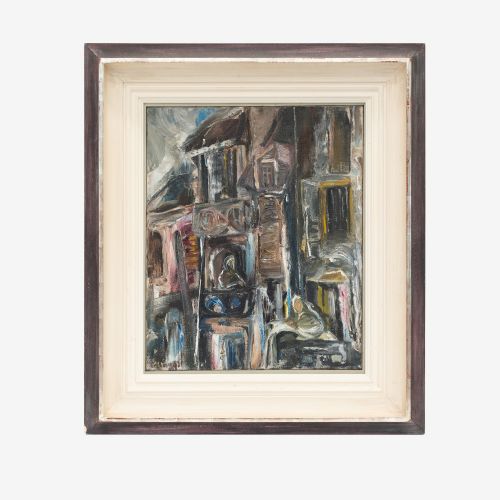
Both named painters and anonymous hands contribute to the genre, recording city growth, bridges, and waterways across periods like the Belle Epoque and mid-century expressionism. The framing, whether original giltwood or later vintage moulding, defines the perimeter of each urban view.
Materials and construction
Artists built these cityscapes using oil paint applied to woven canvas stretched over wooden frames, occasionally incorporating thick impasto texture to create physical depth in architectural elements and crowds. Pigments capture the changing light of urban atmospheres, from misty London Thames scenes to sunlit Venetian canals.
Surrounding the canvas, the frames themselves combine carved or moulded wood finished with gesso, gold leaf, and gilt. These protective surrounds often reflect the aesthetic of the painting period, ranging from ornate nineteenth-century Victorian mouldings to simpler mid-century profiles.
Listings feature oil paintings on canvas spanning from the 1870s Victorian era through mid-century impressionism, dominated by views of Paris, Venice, and London.
Factors that separate examples
Quality in these urban paintings rests upon the artist's command of perspective, light, and atmospheric depth when rendering complex architecture and human figures. Superior works convey the specific atmosphere of a city through confident brushwork rather than mechanical copying of facades.
The relationship between the canvas and its frame also dictates the integrity of the piece, where period-matching giltwood mouldings complement the artwork without overwhelming the painted composition. Preservation of the original oil surface, free from excessive craquelure or careless restoration, maintains the visual strength of the cityscape.
Augusto Alberici·Alfred Pollentine·Antonio DeVity·Francis Moltino·Lilian Colbourn·Caroline Burnett·Paul-Jean Anderbouhr·Gabriel Dauchot·Ron Folland·Merio Ameglio·Cornelis Christian Dommersen·Claude Jousset·Frederick Tully Lott·William George Meadows·William Raymond Dommersen·Marc Aldine·Jane Vivian·Eduard Leon Cortes
The Framed Canvas Cityscape Artwork Glossary
- Impasto
- Paint applied thickly to a canvas, standing out in relief from the surface. This technique allows artists to build tangible texture into urban stone, water reflections, or skies.
- Giltwood
- Wood that has been covered with a thin layer of gold leaf or gilt paint. It frequently forms the ornate frames surrounding nineteenth-century paintings.
- Gesso
- A paint mixture consisting of a binder mixed with chalk, gypsum, or pigment. It serves as a smooth base for wooden frames before gilding.
- Provenance
- The chronology of the ownership of a work of art. Documented history helps verify the authenticity and origin of older paintings.
- Manner of
- A term indicating that a work is executed in the style of a specific master but not necessarily by their hand. It denotes artistic influence rather than direct authorship.
Framed Canvas Cityscape Artwork: Frequently Asked Questions
How do I clean a framed canvas cityscape artwork?
Dust the canvas gently using a soft, dry brush without applying pressure to the painted surface. Avoid liquid cleaners or damp cloths, which can damage aged oil paint and exposed canvas.
For the frame, wipe wooden mouldings with a dry cloth. Consult a professional conservator if the oil surface requires deeper cleaning or varnish removal.
How can I tell a nineteenth-century cityscape from a mid-century piece?
Nineteenth-century works often feature tighter brushwork, romanticised lighting, and heavy giltwood frames reflecting Victorian or Belle Epoque tastes. Subject matter commonly includes historic landmarks rendered with academic precision.
Mid-century pieces frequently embrace looser impressionistic or expressionist brushstrokes, bolder colour palettes, and simplified framing. The handling of paint becomes more textural, particularly in post-war cityscapes.
Were these paintings always framed?
Most canvas artworks were fitted with frames soon after completion to protect the edges of the fabric and complete the composition. Frames often change over time due to damage or shifting decorative preferences.
Original frames provide context for the era of the artwork. A matching period frame enhances the historical completeness of the piece.
How should I hang and light these oil paintings?
Hang the artwork away from direct sunlight and steady heat sources to prevent the canvas and oil pigments from drying out or cracking. Stable indoor humidity protects both the wooden stretcher bars and the surrounding frame.
Use low-heat picture lights or ambient room illumination to highlight the brushwork. Ensure the wall anchors support the combined weight of the canvas and its heavy wooden frame.