


Framed Botanical Watercolour Art
Framed botanical watercolour art brings the crisp detail of natural history into interior spaces through hand-painted plant and flower studies.
Framed Botanical Watercolour Art
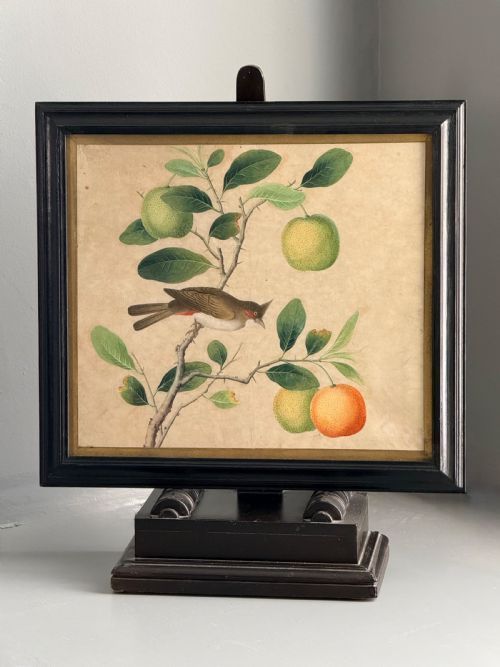
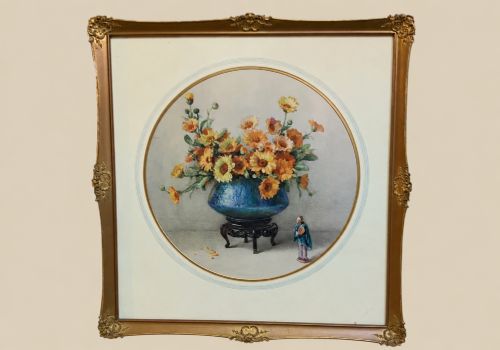
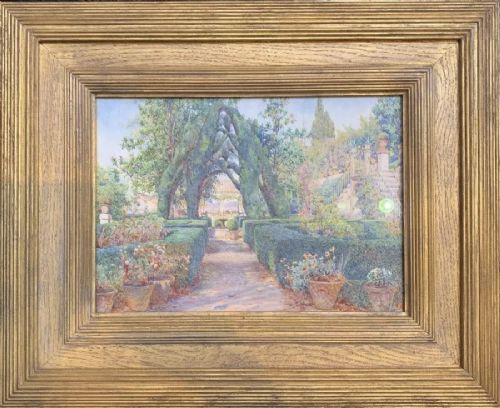
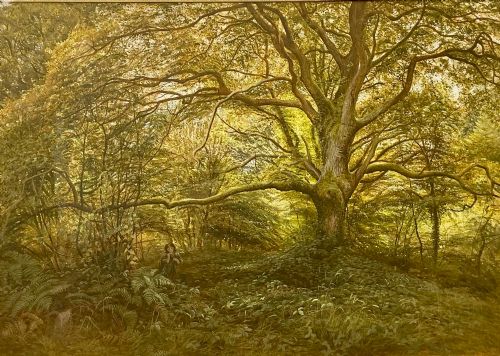
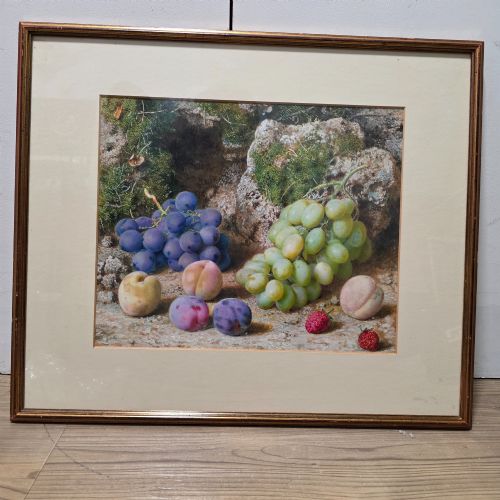
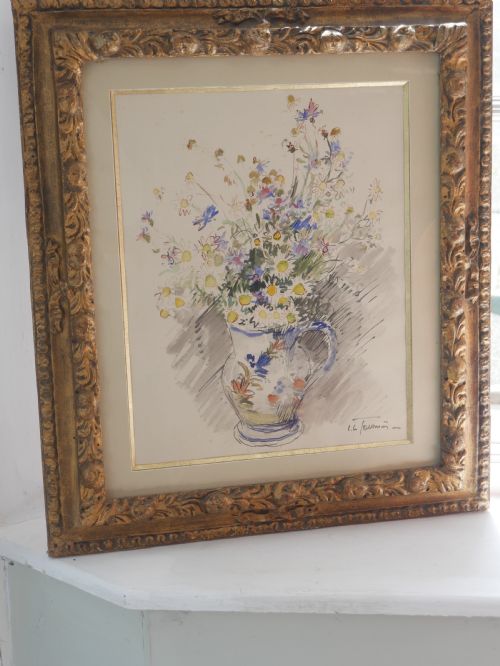
Framed botanical watercolour art captures detailed studies of flowers, fruit, and garden scenes rendered on paper surfaces. When browsing this selection, buyers frequently encounter nineteenth-century English school studies alongside Victorian and Regency depictions of garden flora.
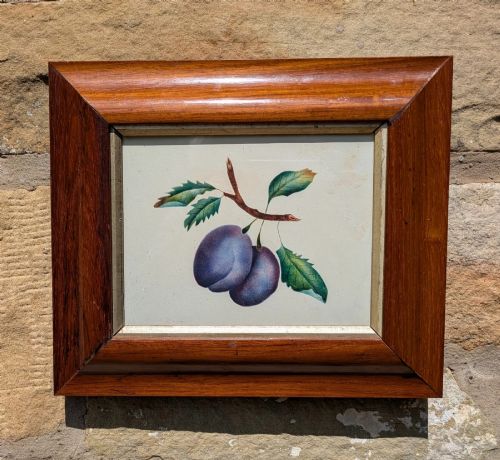
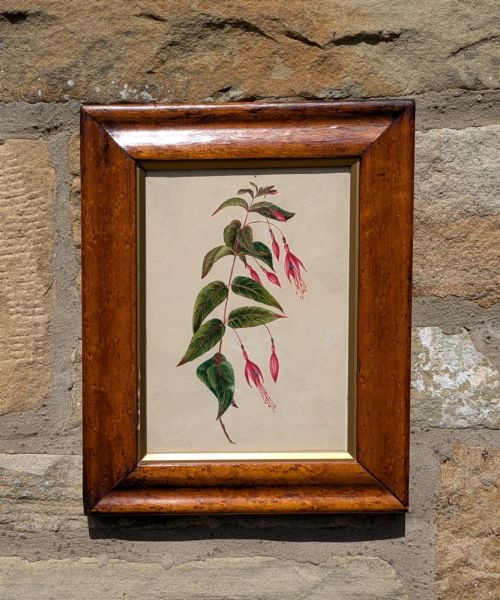
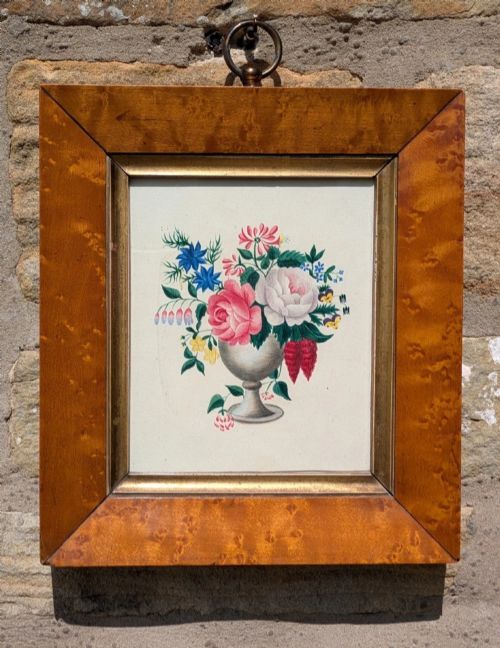
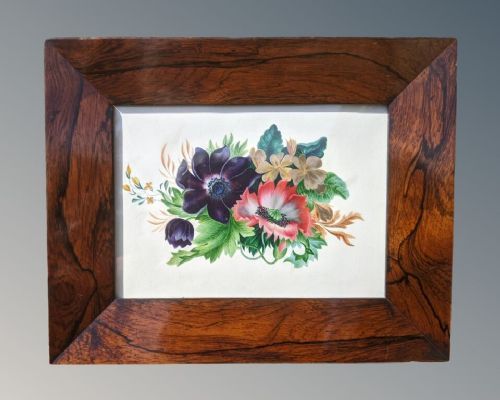
The assortment spans traditional floral still lifes, individual plant portraits like fuschia and plums, and broader garden landscapes. These works range from tightly focused scientific visual records to looser decorative interpretations framed in period wood or gilt designs.
Materials and Technique
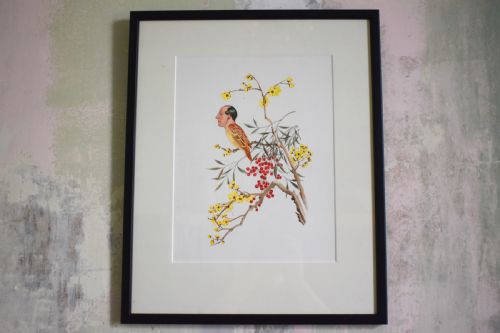
Artists executed these works primarily using watercolour pigment and gouache applied to paper sheets, occasionally incorporating pencil underdrawings for structural precision. Pith paper also appears as a traditional base for delicate handling.
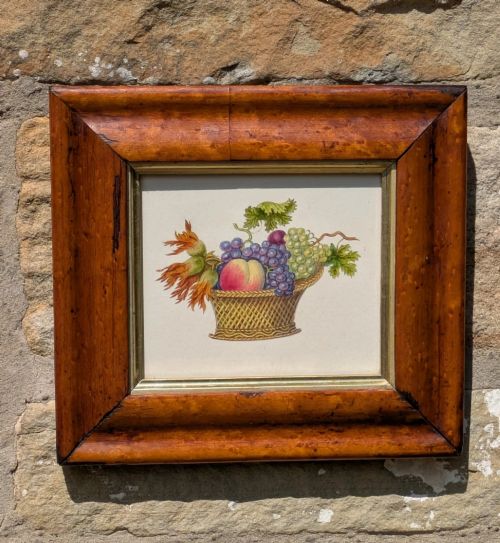
Finished paintings are typically housed behind protective glass within wooden frames, with notable examples set in rosewood or ornate period mouldings and French aesthetic movement pewter frames.
Framing materials recorded across the listings include traditional wood, rosewood, gilt wood, and specialised pewter.
Distinguishing Quality
The strength of a piece relies on the precision of botanical observation and the deftness of brushwork in handling delicate petals and foliage. Superior examples demonstrate a careful balance of colour transparency and structural accuracy without appearing stiff.
The harmony between the artwork and its original period framing elevates the overall integrity of the piece. Masterful control of water and pigment defines works that hold visual weight across centuries.
Ernest Arthur Rowe·John Sherrin·James Tower·Harry Wanless·Henrietta Creswell·William Edward Fox·William Andrews Nesfield·Lilian Stannard·William Hough·Eloise Harriet Stannard·Rowland Henry Hill·Grace Hastie·Margaret Laing·Phyllis I Hibbert·Marian Chase·Jabez Bligh·Owen Bowen·Charlotte Isa James·Arthur Wardle·Alice Macallan Swan
The Framed Botanical Watercolour Art Glossary
- Gouache
- An opaque water-based paint that provides solid areas of colour and dense highlights in mixed media botanical studies.
- Pith paper
- A traditional lightweight painting surface prepared from the pith of the Tetrapanax papyrifer plant, utilised for detailed Asian export art.
- Aesthetic Movement
- A late nineteenth-century design style prioritizing visual beauty and decorative craftsmanship over narrative content.
- Regency
- The stylistic period spanning the early nineteenth century known for refined classical restraint and elegant decorative arts.
- Provenance
- The documented history of ownership that traces the origins and past exhibitions of an antique artwork.
Framed Botanical Watercolour Art: Frequently Asked Questions
How do I date these watercolours?
Dating relies on stylistic markers within the painting technique, costume details if figures are present, and the construction methods of the accompanying frame.
Paper characteristics and contemporary inscriptions on the reverse further help anchor the work to a specific nineteenth or twentieth-century decade.
Are these works original paintings?
Every piece recorded in this selection is a hand-painted original work executed directly by the artist on paper rather than a mechanical reproduction.
Brush texture and pigment layering reveal the unique touch of the creator.
How should I display them safely?
Watercolours are sensitive to direct sunlight, which can fade delicate pigments over extended periods. Hanging pieces away from bright windows helps preserve the original colour depth.
Maintaining stable indoor humidity levels protects both the paper support and the antique wooden or gilt frames.
What defines nineteenth-century botanical art?
Nineteenth-century botanical art combines rigorous scientific observation with refined aesthetic presentation, capturing accurate plant structures.
Artists during this era frequently worked from live specimens in gardens or greenhouses to achieve lifelike colour fidelity.