
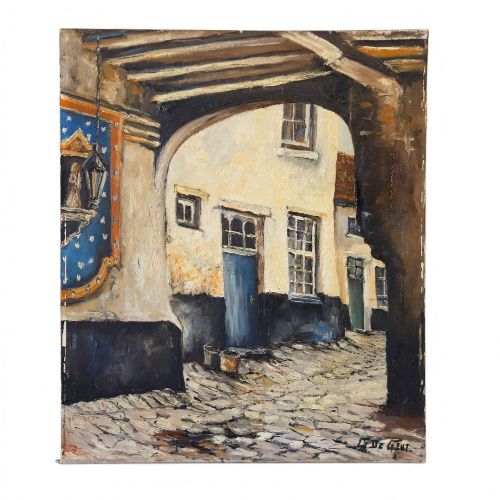


Framed Beige Oil Painting
A framed beige oil painting brings subtle, neutral tones and rich texture to an interior, offering calm scenes ranging from quiet streetscapes to delicate still lifes.
Framed Beige Oil Painting
A framed beige oil painting comprises works executed in oil paint on canvas, panel, or wood, enclosed in a wooden frame. These pieces span periods from the nineteenth century through the mid-twentieth century, capturing subjects like winter scenes, cityscapes, and quiet landscapes.
The most common versions encountered here are mid-twentieth century works, particularly those from nineteen-sixty, alongside earlier nineteenth-century and nineteen-twenty examples. They encompass styles such as impressionism, post-impressionism, and neoclassical approaches, rendered in subdued and neutral palettes.
Buyers frequently seek a framed beige oil painting for its versatile, understated colour scheme that integrates easily into contemporary and traditional rooms alike. The subjects vary from Flemish street scenes and Dutch winter landscapes to desert views and serene coastal beaches.
How they were made
These works are created using oil paint applied to supports such as woven canvas or rigid wooden panels. Artists layered pigment to build depth, visible brushwork, and tonal variation across the surface.
Each canvas or panel is housed within a wooden frame, which provides structural support and complements the composition. The combination of oil medium and wood framing defines the physical construction of these works across every period.
Paintings of desert camels and playful cherubs prove that artists found inspiration in both arid landscapes and mischievous mythology.
What varies in quality
Quality in a framed beige oil painting rests on the dexterity of the brushwork and the subtlety with which the artist handles tonal shifts. Superior works display confident composition and atmospheric depth within a restrained palette.
The integrity of the physical materials also distinguishes the range, particularly the preservation of the oil paint layer and the craftsmanship of the wooden frame. Works that maintain their original surface texture and structural stability represent the finer end of the selection.
L. De Gent·Mercedes Legrand·Donald McIntyre·Freda Marston·William Greaves
The Framed Beige Oil Painting Glossary
- Oil paint
- A slow-drying paint made by combining pigments with drying oils such as linseed. This medium allows for rich blending and textured impasto application.
- Canvas
- A heavy woven fabric stretched across a wooden support to serve as a durable painting surface. It is the primary support found in these works.
- Panel
- A flat piece of wood used as a rigid support for painting instead of flexible canvas. Panel paintings offer a smooth, stable surface for fine detail.
- Impressionism
- A nineteenth-century art movement characterised by relatively small, thin, yet visible brush strokes and an emphasis on accurate depiction of light. Works in this style focus on everyday subjects and atmospheric qualities.
- Trompe L'oeil
- An art technique that uses realistic imagery to create the optical illusion that the depicted objects exist in three dimensions. It translates as to deceive the eye.
Framed Beige Oil Painting: Frequently Asked Questions
How do I clean a framed beige oil painting?
Dust the surface gently with a soft, dry brush to remove loose particles without disturbing the pigment. Avoid using water, liquid cleaners, or chemical solvents on the paint or the wood frame.
For deeper cleaning or conservation issues, consult a professional art restorer rather than attempting home remedies. This preserves the integrity of the canvas and the original finish.
Where should I hang these paintings?
Position the artwork away from direct sunlight and steady moisture sources, such as bathrooms or damp walls, to protect the canvas and wood. Stable indoor temperatures prevent the paint and panel from expanding or contracting.
Select a wall space that receives indirect ambient light to best appreciate the subtle tones of the composition. Ensure the hanging hardware securely supports the weight of the wooden frame.
How do I date an oil painting?
Examine the stretcher bars, the weave of the canvas, and the construction methods of the wooden frame for clues regarding age. Older pieces often exhibit hand-carved frames and aged canvas characteristics.
Signatures, dates inscribed by the artist, or exhibition labels on the reverse provide direct historical evidence. Stylistic markers and period techniques also help narrow down the decade of creation.
What is the difference between canvas and panel?
Canvas is a flexible woven textile stretched over a wooden frame, offering slight give under the touch. Panel refers to a rigid wooden board that provides a firm, unyielding surface for the oil paint.
Both supports were used across different periods, with panels frequently appearing in smaller Dutch and Flemish scenes. Each material interacts differently with ageing oil paint.