
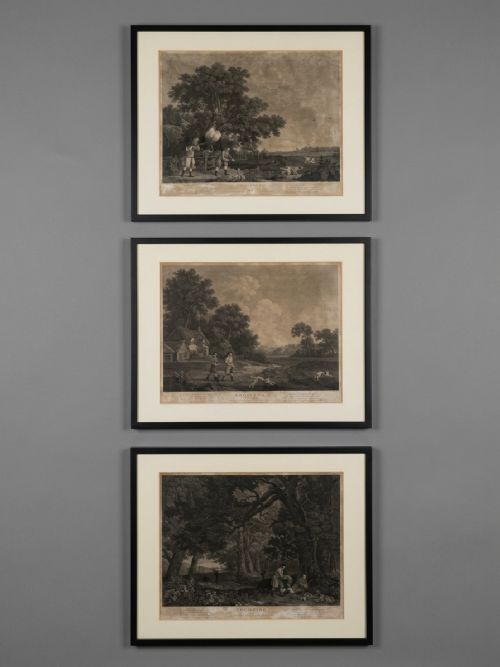
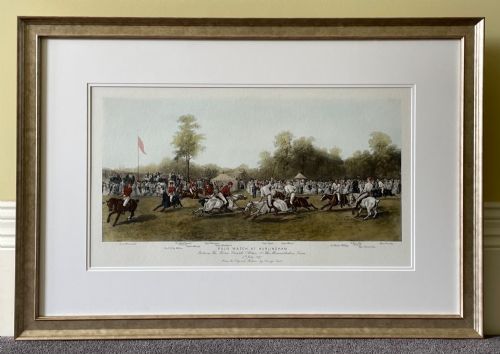
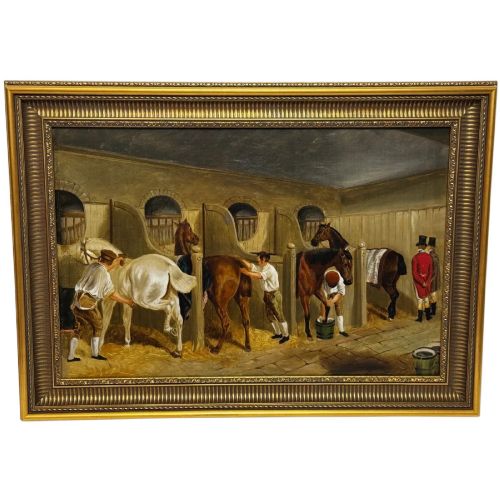
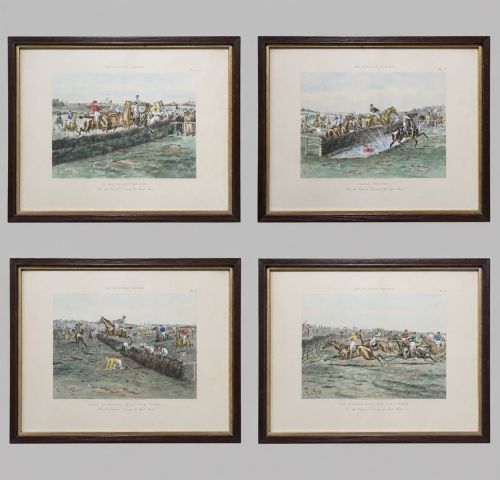
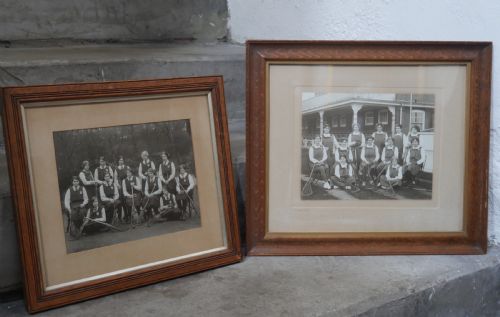


Framed Sports Prints
Framed antique sports prints capture the drama of nineteenth and early twentieth century pastimes, bringing historic energy to any wall.
Framed Sports Prints
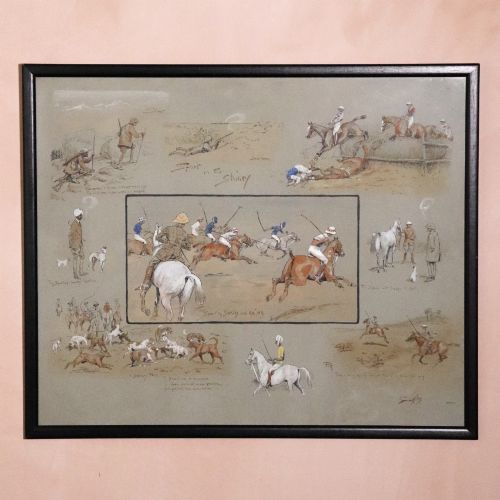
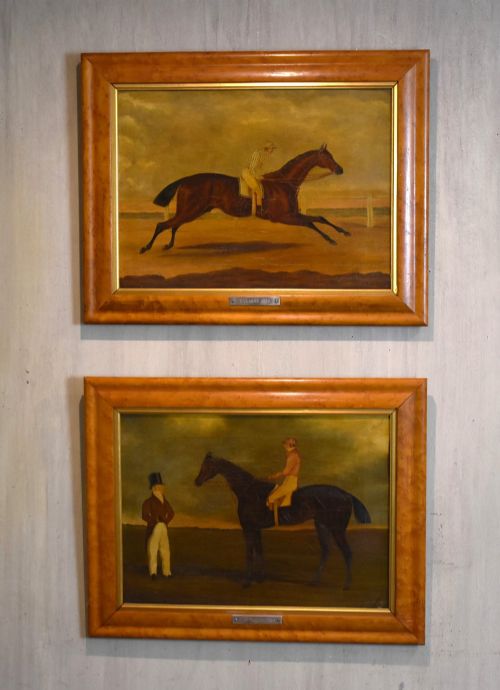
When you search for framed antique sports prints, you encounter a specialised selection of historic imagery documenting field sports, racing, hunting, and athletic contests. These works encompass lithographs, engravings, aquatints, and original watercolours alongside oils, spanning periods from the Georgian era through to the mid-twentieth century.
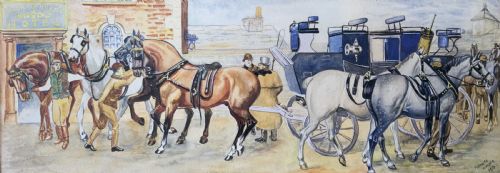
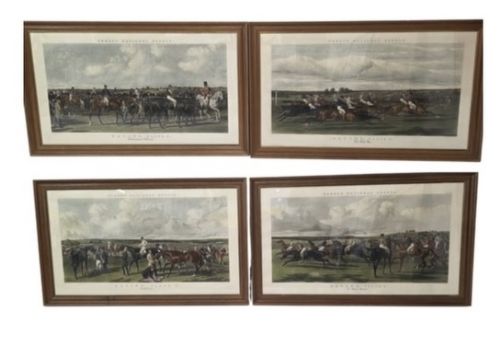
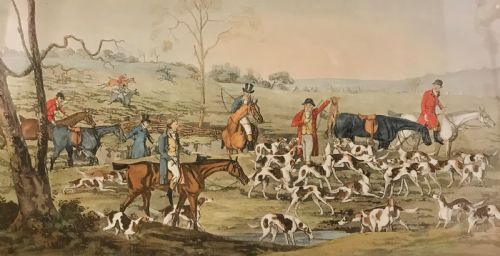
The selection on this page relies heavily on nineteenth-century and early twentieth-century examples, particularly Victorian and Edwardian portrayals of horses, hounds, and equestrian events. You will frequently find hand-coloured engravings, chromolithographs, and sets of prints depicting horse racing, hunting meets, and polo matches housed within period wood or gilt frames.
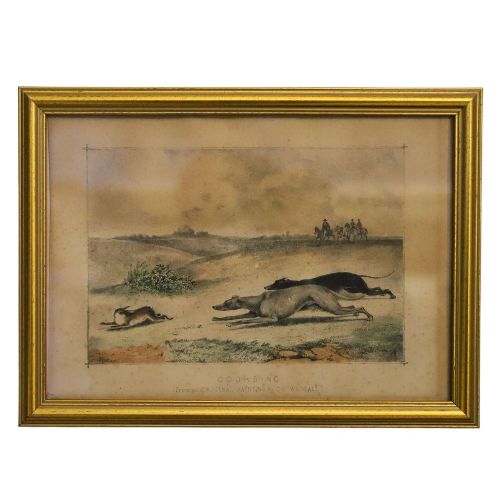
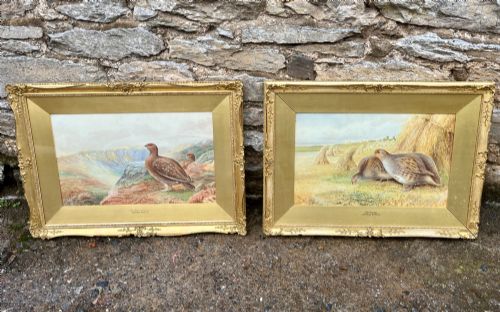
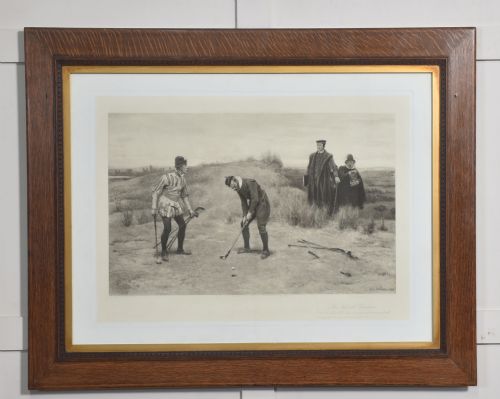
Beyond equestrian subjects, the groupings include works dedicated to shooting, golf, and canine subjects such as greyhounds and terriers. These pieces serve as tangible historical records of British sporting art, preserved behind glass in frames that often match the age of the paper or canvas they enclose.
Materials and techniques
The physical objects rely on traditional paper, ink, and watercolour substrates housed beneath glass and secured within timber enclosures. Printmakers utilised copperplate engraving, lithography, and aquatint processes, frequently applying hand-colouring with watercolour pigments to monochrome impressions after the printing stage.
Frames are constructed from wood, including oak and giltwood, occasionally featuring specialised techniques like eglomise glass panels. These protective mountings preserve delicate works on paper and canvas from environmental damage while complementing the aesthetic of the artwork.
Available forms include framed prints, oil paintings, watercolours, etchings, and illustrated periodical pages.
Quality variations
Quality rests upon the crispness of the original impression and the skill of the printmaker or artist. Finer works maintain sharp line definition in engravings and rich tonal graduation in lithographs, whereas lesser examples suffer from blurred plates or heavy, unsympathetic later colouring.
The condition of the paper and the integrity of the original framing significantly influence the standard of the piece. Superior items retain their original margins, vibrant pigments without excessive fading, and contemporary frames that complement the age of the artwork rather than cheap modern replacements.
George Finch Mason·C. H. Weigall·George Rankin·J. C. Dollman·John Frederick Herring Snr·Anne Goldthwaite·Herbert Dicksee·Abraham Cooper·Charles Faulkner·Alfred Wheeler·James Dobie·John Atkinson·Isaac Cullin
The Framed Sports Prints Glossary
- Aquatint
- An intaglio printmaking technique that produces areas of tone resembling watercolour washes. It was frequently employed for reproducing sporting watercolours during the eighteenth and nineteenth centuries.
- Chromolithography
- A planographic colour printing method utilising multiple stone plates for each hue. This technique allowed Victorian publishers to produce vibrant multi-coloured sporting prints and magazine supplements.
- Engraving
- A printmaking process where an artist cuts lines directly into a metal plate with a burin. The resulting impressions yield sharp, enduring details ideal for nineteenth-century hunting and racing scenes.
- Eglomise
- A technique involving the application of gold or silver leaf to the reverse side of glass, often combined with painted decoration. It appears on antique frames and specialist picture surrounds.
- Lithography
- A planographic printing process based on the chemical repulsion of oil and water on a limestone slab or metal plate. It became the dominant method for mass-producing illustrated sporting journalism and large-scale prints.
Framed Sports Prints: Frequently Asked Questions
Are these prints original period pieces?
The listings comprise authentic period printings, engravings, lithographs, and paintings dating from the eighteenth to the mid-twentieth century. Each piece originates from the era stated in its description rather than modern reproduction.
Examine the paper texture, printing ink characteristics, and framing materials to confirm the period manufacture of your chosen artwork.
Where should I hang framed sports art?
Display these works away from direct sunlight and excessive moisture to protect delicate watercolours, coloured inks, and historic paper from fading or foxing.
Libraries, studies, and hallways traditionally suit these thematic subjects, echoing the historic domestic interiors where sporting art was originally housed.
How do I identify different print types?
Look closely at the surface using a magnifying glass to distinguish between fine engraved lines, smooth lithographic tones, and the granular dot patterns of aquatints.
Hand-coloured examples often show subtle brushwork over monochrome printed lines, while chromolithographs display distinct layers of microscopic coloured dots from multiple print runs.