
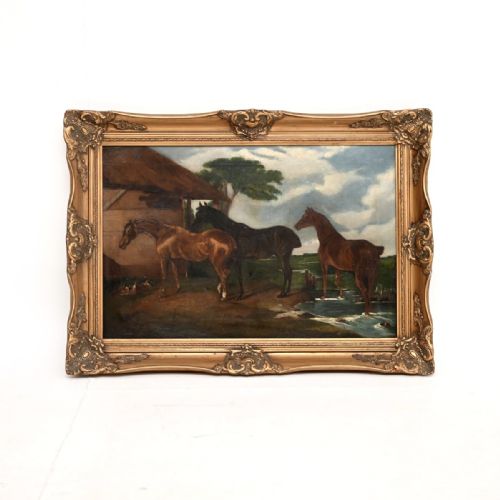


Framed Animal Landscape Artwork
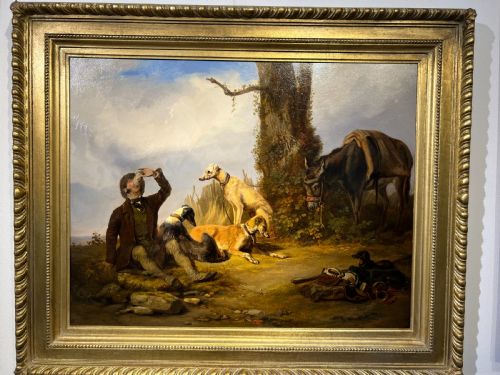
Framed animal landscape artwork captures rural life and pastoral scenes through oil and watercolour, bringing the natural world and domestic beasts into domestic rooms.
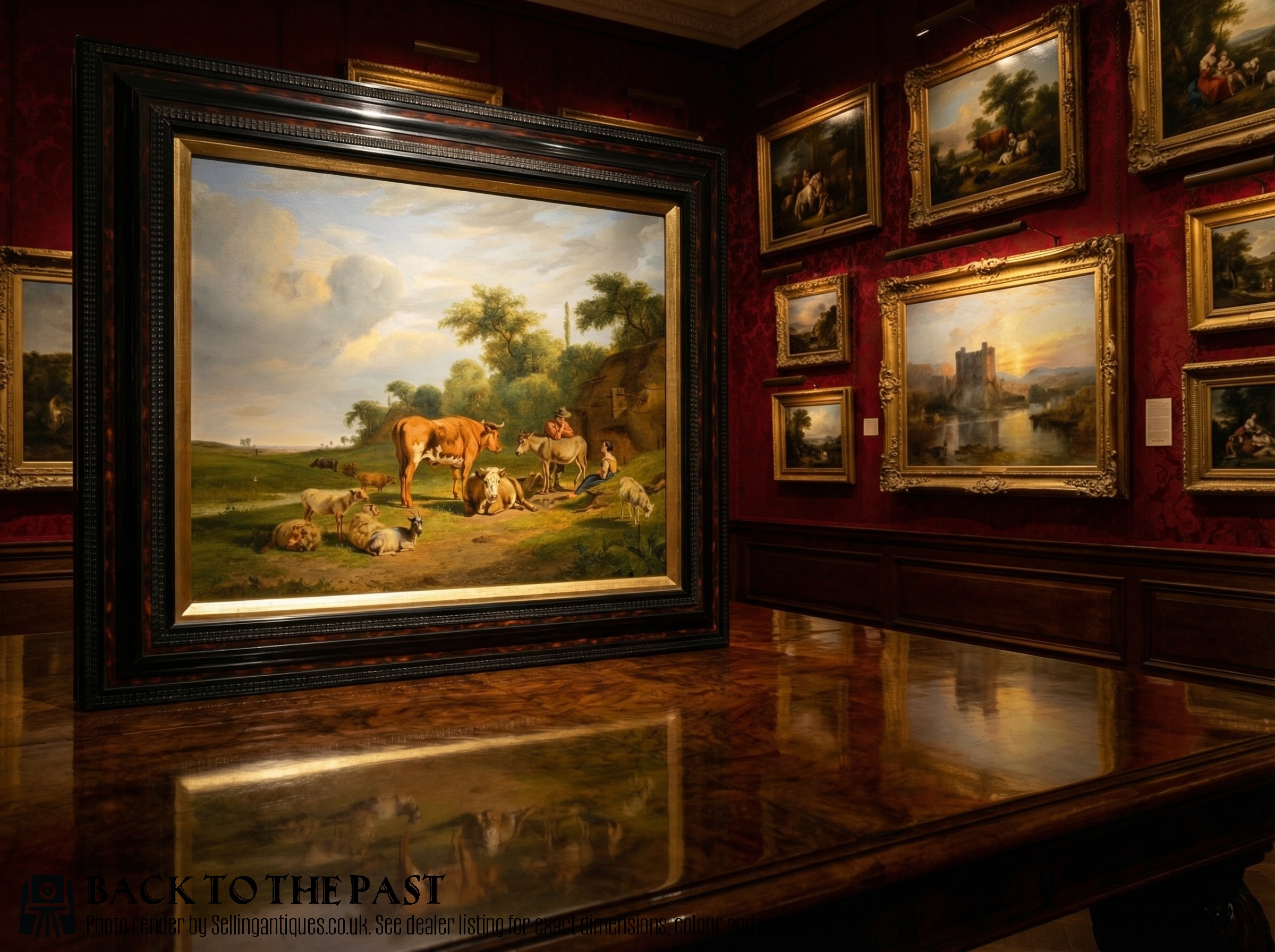
Framed Animal Landscape Artwork
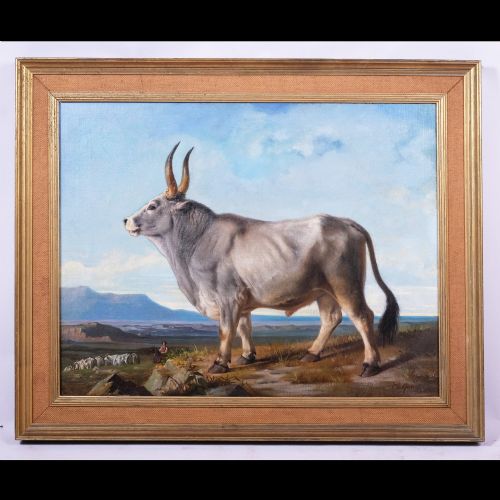
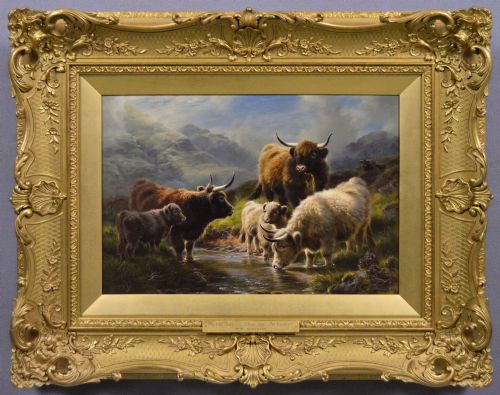
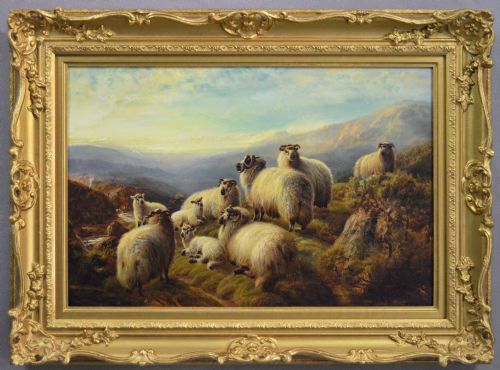
Framed animal landscape artwork spans oil paintings, watercolours, and fine art pieces depicting pastoral scenes, farmyards, and sporting subjects within period frames. The selection centres heavily on nineteenth-century works, alongside eighteenth-century examples and early twentieth-century pieces.
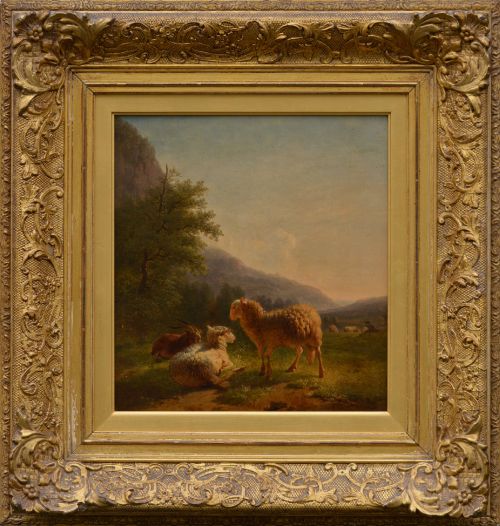
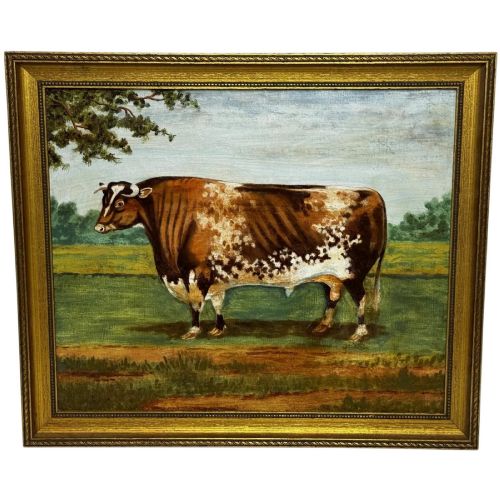
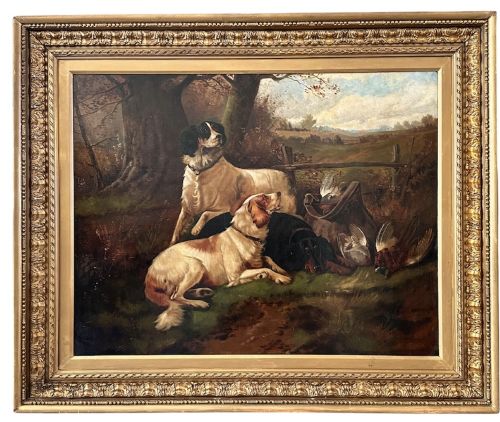
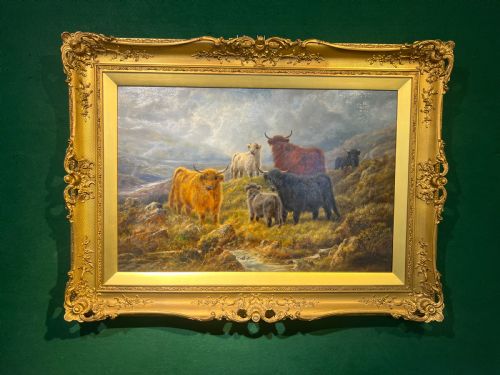
Subjects range from Highland cattle, sheep, and horses to hunting hounds, farmyard poultry, and working dogs placed in detailed countryside settings. Domestic animals and livestock dominate the compositions, often rendered by established animal artists of the period.
The prevailing aesthetic encompasses Victorian realism, pastoral scenes, and nineteenth-century romanticism, reflecting a deep cultural fascination with agriculture, rural enterprise, and animal portraits.
Materials and construction
Artists painted primarily in oil paint on canvas or wooden panel, whilst others utilised watercolour on paper to capture lighter tonal gradations in skies and fields. Oil on canvas dominates the surviving output, offering rich layers of colour and durable surfaces that have survived across centuries.
Frames form an integral part of the physical object, constructed from wood and finished with gesso, gold leaf, or gilt. Elaborate giltwood and gesso mouldings frame the paintings, providing structural support and visual depth suited to period interiors.
Several canvases record specific historical animals, including a prized shorthorn bull and a nobleman's favourite hunting hounds.
Distinctions in quality
Quality rests upon the artist's anatomical precision in rendering the animals, the handling of light across the landscape, and the cohesion between the beast and its background environment. Superior works demonstrate meticulous brushwork in fur, feathers, and muscle structure rather than generic background filler.
The preservation of the original gilt frame and the stability of the canvas or panel influence the overall integrity of the piece. Works retaining their untouched surface texture and authentic period framing carry greater historical completeness.
Eugène Verboeckhoven·John Sargent Noble·Robert Watson·Sir Edwin Henry Landseer·William Watson Jnr·John Emms·Margaret Maitland Howard·Henry Robinson Hall·Arthur Wardle·William Henry Mander·Thomas Sidney Cooper·C W Tuck·Franz van Severdonck·Philipp Peter Roos·John Frederick Herring Jnr·William Barraud·Samuel Joseph Clark·Marmaduke Cradock·Jacob Bogdani·Eugene Joseph Verboeckhoven·Percival Glenfern·John Frederick Herring·Helena Maguire·James de Rijk·Fannie Moody
The Framed Animal Landscape Artwork Glossary
- Giltwood
- Wood carved and covered with a thin layer of gold leaf or metallic powder. This material frequently forms the ornate frames surrounding nineteenth-century canvases.
- Gesso
- A plaster-like mixture applied to wooden frames as a base for gilding or painting. It allows craftsmen to carve intricate decorative mouldings.
- Pastoral
- A genre of art depicting rural life, shepherds, and domestic livestock in idealized country settings. These scenes emphasise a calm, agrarian existence.
- Realism
- An artistic movement focusing on everyday subjects and accurate depictions of physical reality without idealisation. In animal art, this translates to precise rendering of anatomy and farm life.
- Watercolour
- A painting method where paint is made with water-soluble pigments on paper. It creates transparent washes of colour, often seen in nineteenth-century works on paper.
Framed Animal Landscape Artwork: Frequently Asked Questions
What subjects appear in these artworks?
Paintings feature domestic livestock, working dogs, horses, and farmyard birds set within open countryside or agricultural settings. Cattle, sheep, and hunting hounds dominate the compositions.
Artists of the period focused heavily on rural trades, farming life, and sporting pursuits, placing animals at the centre of natural landscapes.
How do I identify the period of a painting?
Dating relies on costume, agricultural equipment, painting style, and the construction methods of the wooden frame. Victorian works often show dense realism and dramatic lighting.
Examining the canvas preparation, stretcher frames, and artist signatures or inscriptions on the reverse provides further confirmation of the era.
Were these paintings always framed?
Period artworks almost invariably received custom wooden frames finished in gesso and gold leaf to complement the interior aesthetics of the time. The frame protects the edges of the canvas and completes the composition.
Original frames matching the age of the painting contribute significantly to the historical integrity of the piece.
How should I care for an antique oil painting?
Keep paintings away from direct sunlight, high humidity, and rapid temperature fluctuations to prevent canvas slackening and paint cracking. Dust the surface gently with a soft, dry brush.
Avoid using water or chemical cleaners on the paint surface or the gilt frame, consulting a professional conservator for cleaning.