
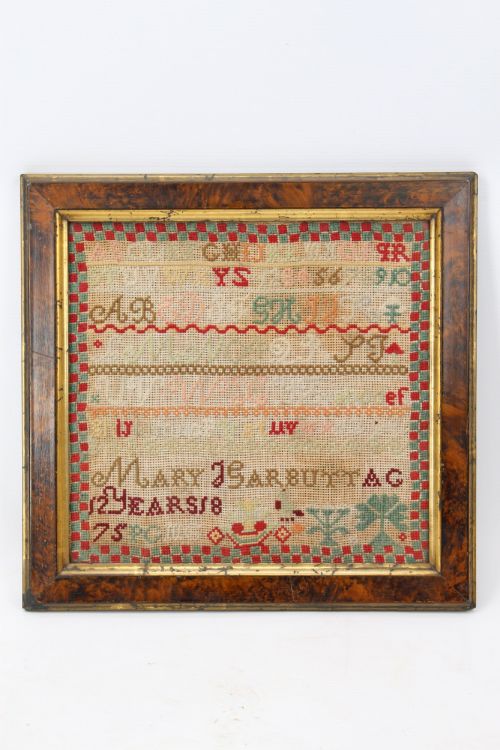
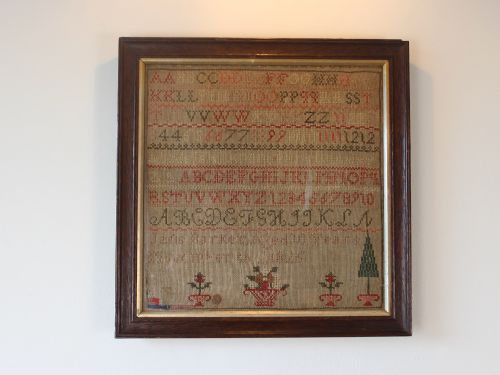
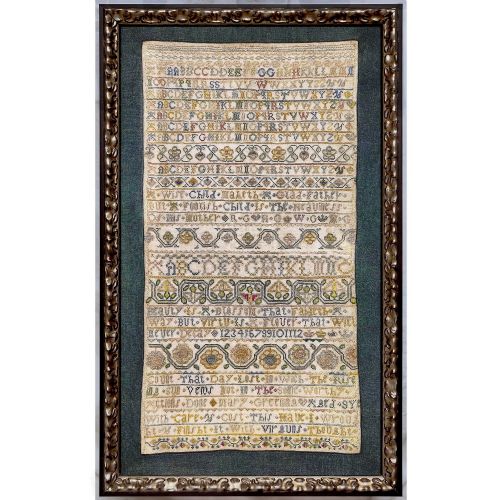


Framed Alphabet Sampler
A framed alphabet sampler holds centuries of youthful patience behind its glass, offering a direct touch with domestic history.
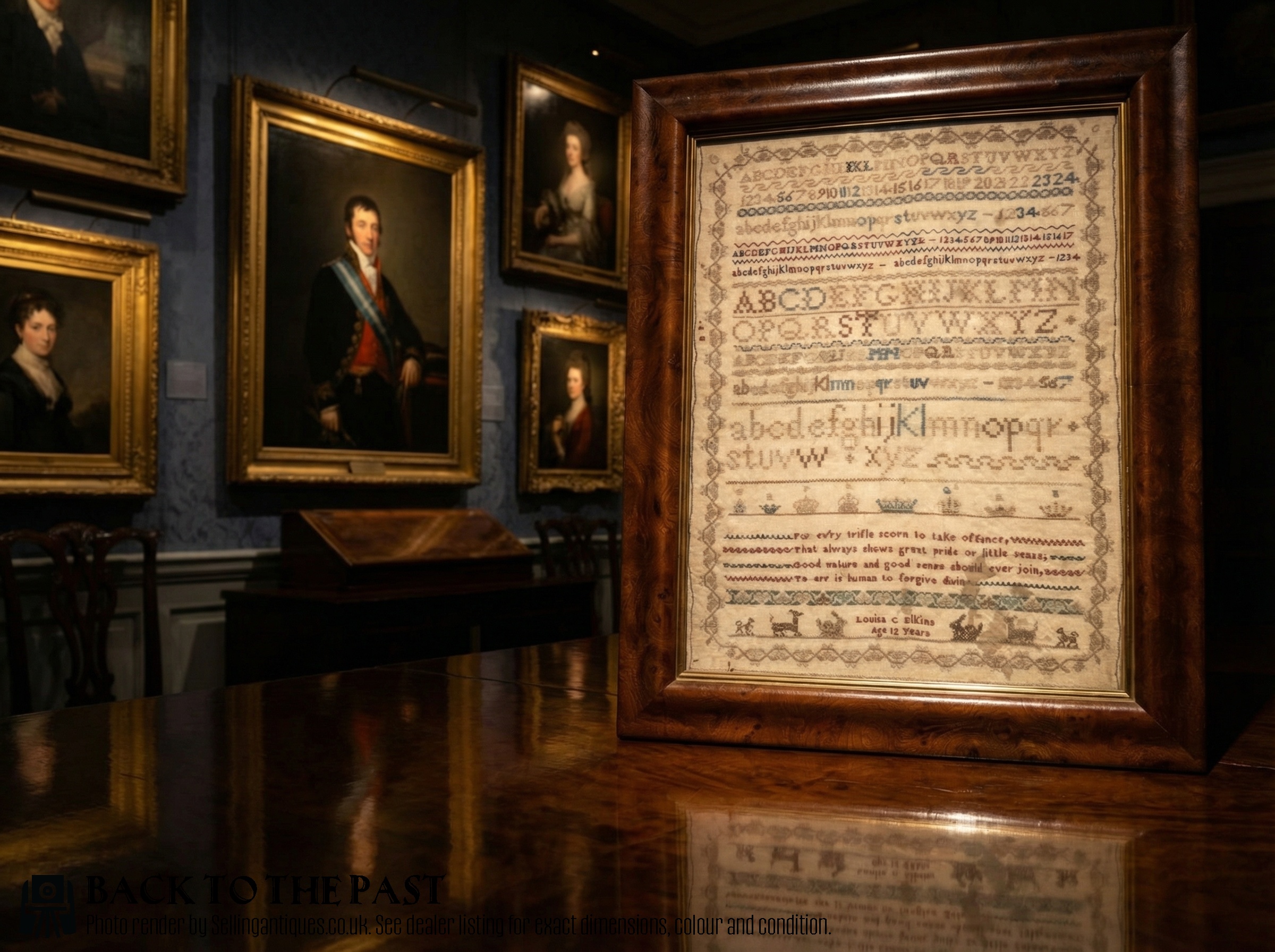
Framed Alphabet Sampler
When you search for a framed alphabet sampler, you are looking at stitched textile exercises that record letters, numbers, and pious verses made by young hands. These needlework pieces range from late 17th or early 18th century English band samplers down to late Victorian examples.
The most common version you will meet on this page is a 19th century or Victorian needlework sampler bearing a name, age, and date alongside rows of alphabets. Examples span the Georgian period, the reign of George IV, and Victorian folk art styles.
Many works incorporate embroidered panels, miniature formats, or specific texts such as the Lord's Prayer and the Commandments. They frequently arrive in period wood frames protected by glass.
Materials and construction
These works rely on a foundation of woven linen stretched and secured within wood frames. Stitchers worked needle and thread across the cloth to form letters and motifs.
Makers utilised wool, silk, and standard thread to build their patterns. Silk thread and fine wool provide variations in texture and colour across the surface of the panel.
Surviving pieces sit beneath glass within wooden surrounds. This framing protects the delicate textile art from dust and handling.
Current listings span the 18th century, Georgian era, and Victorian period, utilising linen, wool, silk thread, and wood frames.
Evaluating quality and execution
Quality rests in the precision of the stitching and the clarity of the alphabet rows. Tighter, more even needlework distinguishes accomplished makers from simpler schoolroom exercises.
The complexity of the surrounding motifs also elevates a piece. Border designs, pictorial elements, and complete genealogical or school details add depth to the composition.
Condition of the linen and thread matters greatly. Stable fibres and minimal fading separate well-preserved examples from those showing heavy degradation.
Mary J Garbutt·Mary Greening·Annabella Samon·Jane Wettmore·Louiss Elkins·Elizabeth Horn·Ann Hodson·Margaret Ann Blackow·Maggie Muir·Sarah Baker·Ann B Gilies·Martha Hall·Rachel·Emma and Hannah Barnes·Sarah Reading·Jane Pattinson·Eleanor Grady
The Framed Alphabet Sampler Glossary
- Band sampler
- An early form of sampler where various horizontal bands of distinct patterns and stitches are worked across a long piece of linen. These preceded the more pictorial alphabet formats.
- Needlepoint
- A style of embroidery where yarn is stitched through a stiff open-weave canvas or linen ground. It creates a dense, durable surface that covers the foundation entirely.
- Folk art
- Creative work originating from a cultural tradition or community context rather than academic training. These pieces display charming individual character and local style.
- Tapestry sampler
- A needlework panel employing various tapestry stitches to build up dense pictorial or textual designs. They often record school names or locations alongside dates.
Framed Alphabet Sampler: Frequently Asked Questions
What is a framed alphabet sampler?
It is a historical textile piece stitched with letters, numbers, and often verses by young makers learning needlework. These panels were mounted behind glass in wood frames to preserve the delicate thread work.
They serve as primary records of domestic education and youthful skill from past centuries. Each piece captures a distinct moment in needlework history.
How can I tell the age of a sampler?
Dates, names, and ages stitched directly into the linen provide the most reliable chronological markers. Stylistic shifts in lettering fonts, borders, and materials also help narrow down the period.
Earlier examples tend to feature band designs, while 19th century pieces focus heavily on structured alphabets and moral verses. Framing methods and wood types offer additional clues to age.
Were these made by children?
Yes, many extant works were produced by young girls in domestic settings or schools as part of their education. Ages listed on the panels frequently range from nine to fourteen years old.
Schools such as the Oswestry National School assigned these projects to teach discipline and literacy alongside needle skills. The stitches record hours of painstaking juvenile labour.
How should I display one at home?
Keep framed textile art away from direct sunlight to prevent silk and wool threads from fading. Stable indoor humidity protects both the antique wood frame and the vulnerable linen ground.
Hang the piece securely on an interior wall using appropriate fixings suited to the weight of the wood and glass. Gentle placement ensures the fragile needlework survives for years to come.