
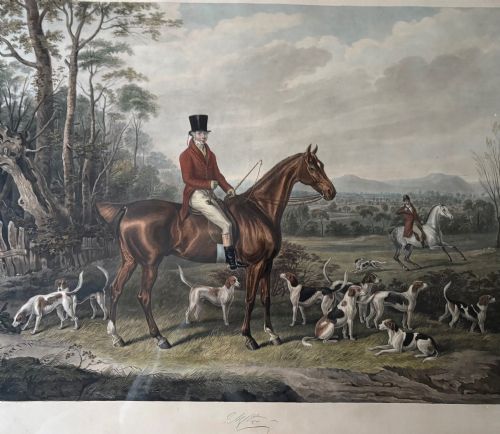


Fox Hunting Wall Art
These fox hunting wall art pieces capture the speed and tradition of the chase through oils, watercolours, and early prints.
Fox Hunting Wall Art
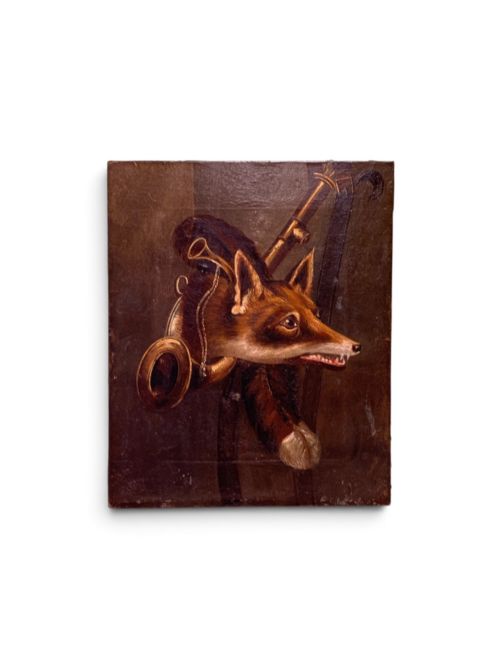
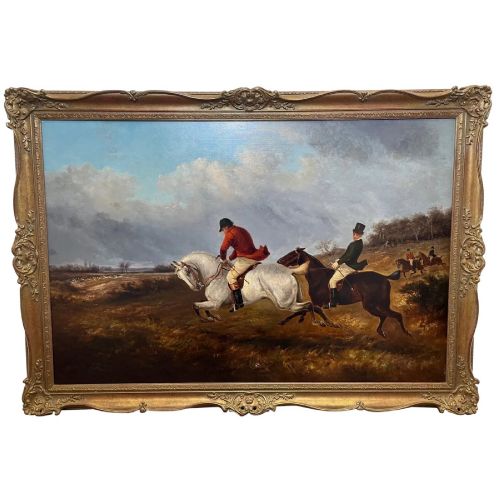
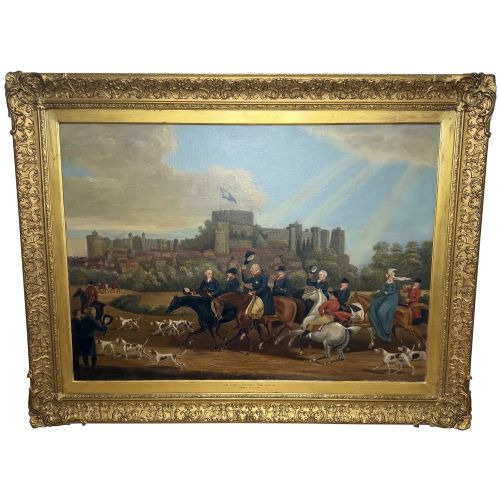
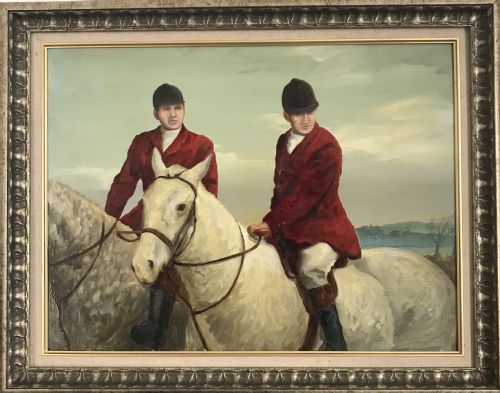
When you search for fox hunting wall art, you encounter a focused range of equestrian paintings, framed prints, and watercolours spanning the nineteenth and twentieth centuries. The Victorian era supplies many of the oil paintings on canvas and board, depicting huntsmen, hounds, and galloping horses across traditional British sporting art styles.
You will also find hand-coloured engravings and lithographs from later decades, often presented as sets recording sequences like the meet, the full cry, and the death. These works reflect the enduring popularity of classic hunts such as the Quorn, Belvoir, and Cottesmore.
Materials and Techniques
The medium defines the work, with artists applying oil paint to canvas or board to build rich textures in horse coats and winter landscapes. Watercolours and pencil sketches offer a lighter touch on paper, frequently enhanced with ink or chalk.
Reproduction works rely on hand-coloured engravings and chromolithographs, which bring multiple impressions into circulation while retaining detailed line work and subtle colour washes.
Listings feature oil paintings, watercolours, and engravings across Victorian, Edwardian, and mid-twentieth-century periods.
Quality and Execution
Mastery of equine and canine anatomy separates fine sporting art from standard illustrative work. The handling of a horse at full gallop or the alert posture of hounds reveals the artist's direct observation of movement and temperament.
The integrity of the framing, the preservation of the paper or canvas surface, and the clarity of the original signature or publisher details further distinguish the pieces.
Thomas Smythe·John Arthur Lomax·Basil Nightingale·Philip Henry Rideout·Michael Lyne·Charles Faulkner·Fannie Moody·John Sanderson-Wells·Charles Johnson Payne Snaffles·Guillaume Urban Régamey·George Goodwin Kilburne·William J Hodgson·H. Alken·Charles Hunt·Francis Calcroft Turner·Geoffrey Mortimer·J F Herring·Frank Algernon Stewart
The Fox Hunting Wall Art Glossary
- Aquatint
- An etching technique that produces tonal areas resembling watercolour washes. It was often used for multi-plate sporting prints.
- Chromolithograph
- A colour lithographic print produced from multiple stones. This method allowed for vibrant reproduction of original watercolours.
- Full cry
- A stage in the hunt when the pack of hounds has found the scent and bays together in pursuit. It remains a central subject for sporting painters.
- View halloo
- The shout given when the fox is sighted escaping covert. Artists use this dramatic moment to structure dynamic composition.
Fox Hunting Wall Art: Frequently Asked Questions
What periods do these pieces date from?
The selection spans from the early nineteenth century through to the mid-twentieth century, with a strong representation of Victorian and Edwardian works.
Dates are identified through stylistic cues, artist signatures, and framing materials characteristic of each era.
How are these artworks typically framed?
Many pieces are preserved in traditional wooden frames, sometimes featuring gilt accents that complement the subject matter.
Original framing helps maintain the historical context of prints and watercolours from the Victorian and Edwardian periods.
Are the prints original period items?
The listings include original period engravings, chromolithographs, and watercolours produced during the active lifetimes of the artists and publishers.
Techniques such as hand-colouring indicate the production methods standard to nineteenth and early twentieth-century printshops.
How do I identify different hunts in the artwork?
Artists frequently inscribed the specific hunt name, such as the Quorn or the Berkeley Hunt, directly onto the mount or within the composition.
Details like the distinct regional landscape and the specific commentary in the title assist in identifying the depicted hunt.