

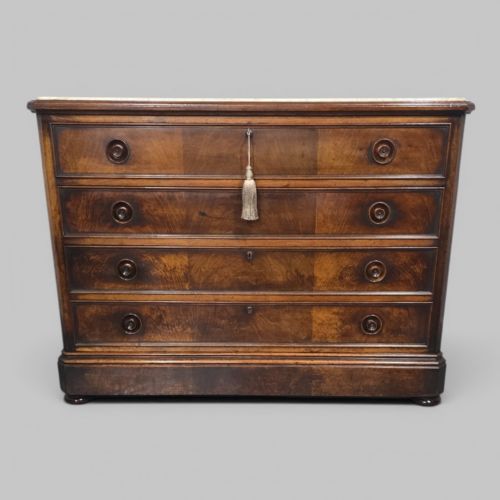
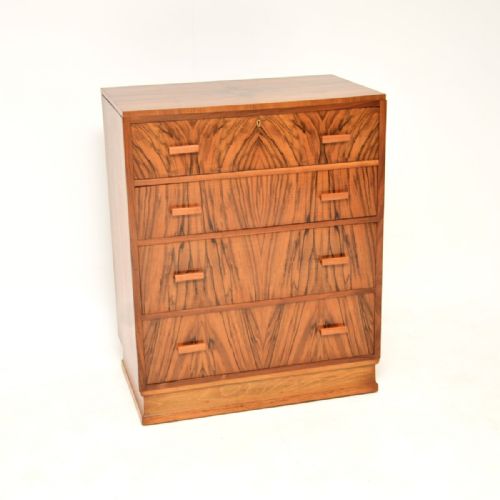
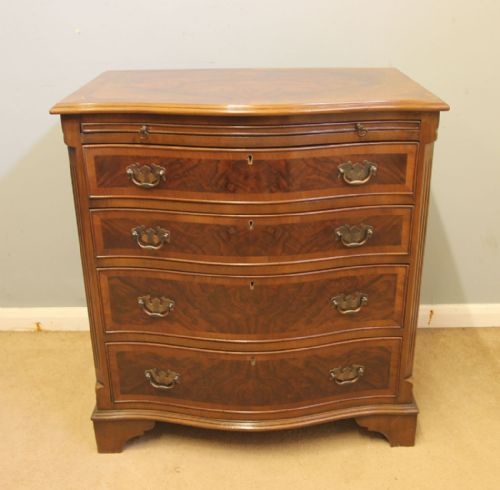

Four Drawer Walnut Commode
A four drawer walnut commode brings warm timber tones and generous storage to a room through centuries of cabinet-making tradition.
Four Drawer Walnut Commode
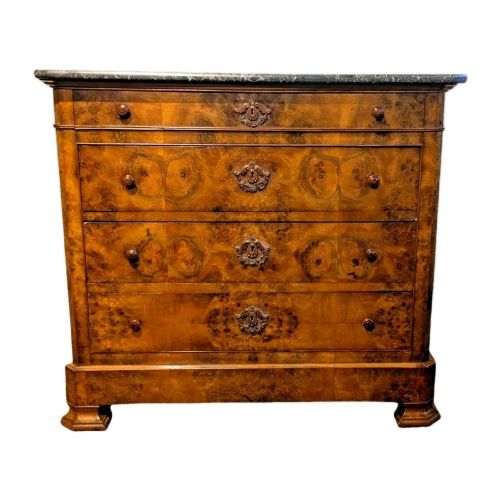
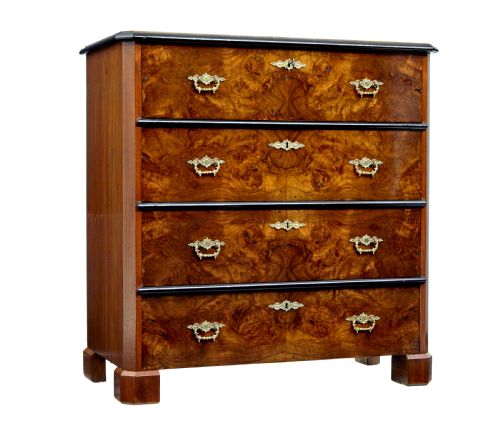
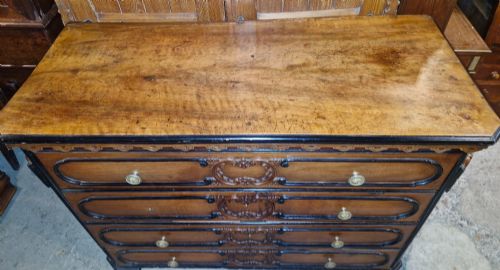
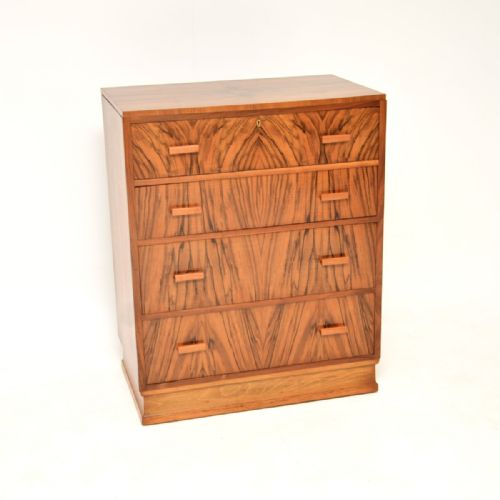
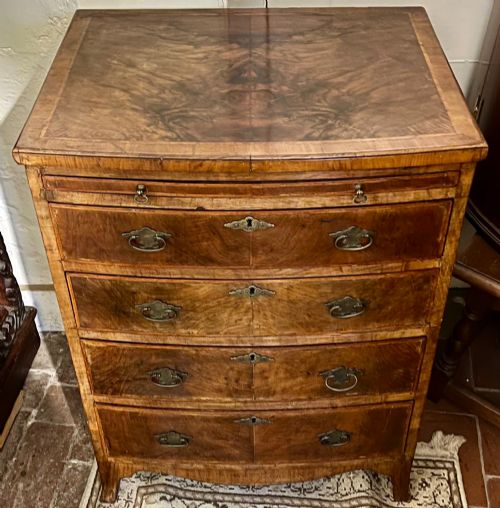
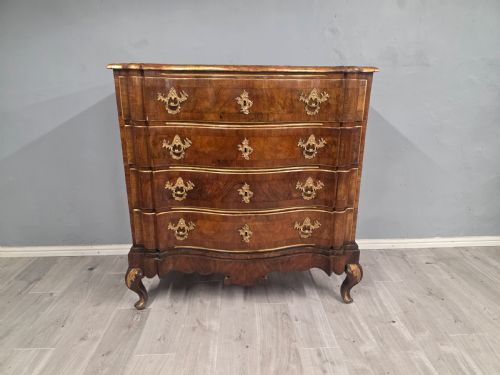
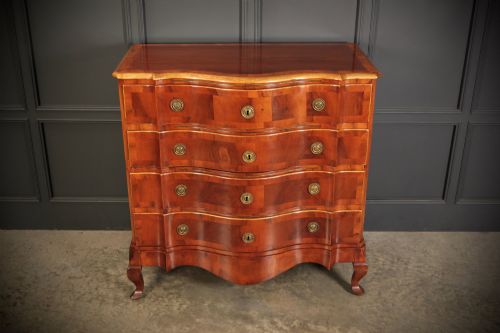
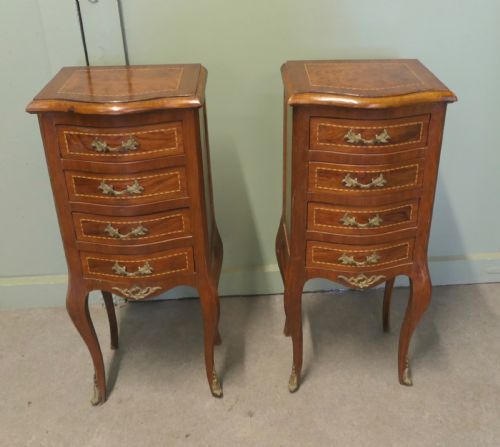
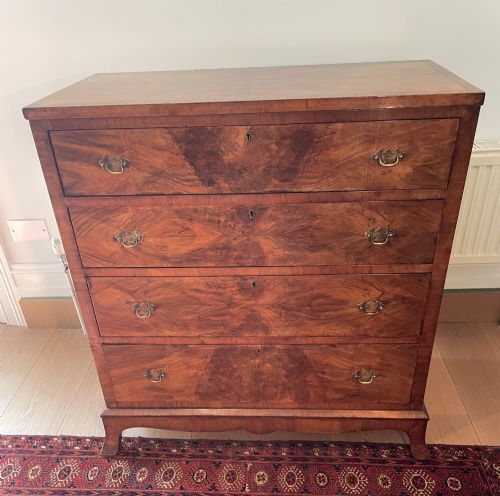
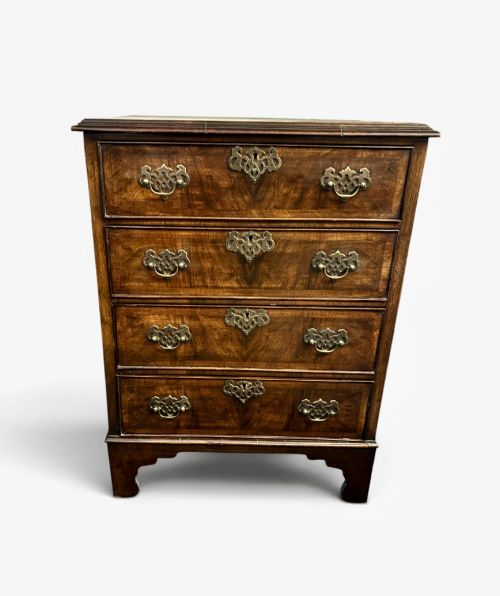
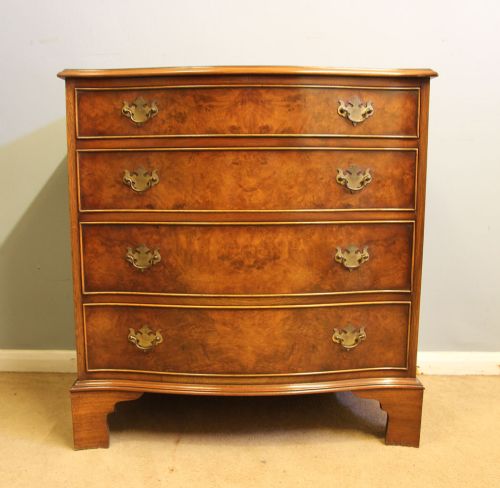
A four drawer walnut commode serves as a substantial storage chest and a decorative centrepiece in domestic interiors. These pieces appear in forms ranging from Georgian proportions to continental serpentine shapes.
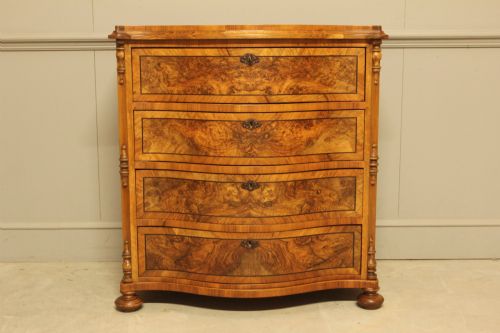
The selection on this page centres primarily on walnut timber, featuring straight grain, burr patterns, and figured surfaces. Pieces arrive from periods spanning the seventeenth century through to the Art Deco era and the 1930s.
Continental examples from Sweden, France, Italy, and Germany sit alongside British Georgian and Victorian interpretations. Buyers encounter straight-fronted chests alongside serpentine and bombe silhouettes.
Materials and construction
Cabinet-makers constructed these carcasses using solid timber frames of pine or oak as a stable base for decorative veneers. Walnut and burr walnut veneers were then applied to the primary surfaces to create dramatic grain patterns.
Brass handles, escutcheons, and occasionally ormolu mounts complete the drawer fronts and corners. Some European commodes incorporate marble tops above the four drawers for added weight and surface resilience.
Four Drawer Walnut Commode Retail Price Guide 2026
Typical asking prices for four drawer walnut commode among the pieces listed under this phrase on Sellingantiques today, from the lower quarter to the upper quarter. They describe what is for sale here now, not the wider market.
Materials appearing alongside walnut include brass, ormolu, marble, oak, and pine.
Assessing quality
Quality rests upon the selection and matching of the walnut veneer across the drawer fronts and top surface. Symmetrical burr patterns and continuous grain flow indicate superior cabinet work.
The refinement of the carving, particularly on serpentine and bombe profiles, distinguishes standard production from exceptional artistry. Hardware integration and the crispness of brass or ormolu mounts further separate the tiers.
The Four Drawer Walnut Commode Glossary
- Serpentine
- A furniture front curved with a convex centre flanked by concave ends, creating a gentle wave effect. This contour demands advanced woodworking skill to shape accurately.
- Burr Walnut
- Timber taken from the abnormal growths on walnut trees, yielding intricate, swirling grain patterns. Cabinet-makers prize this wood for high-status decorative surfaces.
- Commode
- A low chest of drawers or cabinet originating in France during the seventeenth century. The term applies broadly to decorative European chests.
- Ormolu
- Gilt bronze ornamentation applied to furniture for decorative contrast. This technique flourished in French cabinet-making.
- Biedermeier
- A Central European style dating from the nineteenth century characterised by clean lines and blonde veneers. It prioritises domestic utility alongside restrained elegance.
Four Drawer Walnut Commode: Frequently Asked Questions
What rooms suit a four drawer walnut commode?
These chests function effectively in bedrooms, hallways, and living rooms where surface display space and deep drawers are required. The warm tone of walnut integrates easily with both traditional and contemporary interior palettes.
Their substantial height provides ample top space for lamps and decorative objects while keeping clothing or linens organised below.
How do I care for walnut veneer?
Walnut benefits from occasional polishing with quality beeswax to nourish the timber and maintain a soft sheen. Direct sunlight should be avoided to prevent the rich brown tones from fading unevenly.
Keeping the room at a stable humidity protects the underlying oak or pine carcass from expanding and causing veneer lifting.
Are these commodes suitable for daily use?
The robust construction of antique and vintage timber chests makes them fully operational for daily storage needs. Drawer runners and internal framing were built to handle regular opening and closing.
Careful handling of period handles and locks preserves the original hardware for continued use.
How do I distinguish regional styles?
British pieces often favour restrained Georgian or Victorian proportions with straight or breakfront outlines. Continental examples from France, Sweden, and Italy frequently display pronounced serpentine curves, marquetry, or marble tops.
German and Austrian Biedermeier pieces showcase blonde woods and minimalist geometry without heavy carving.