
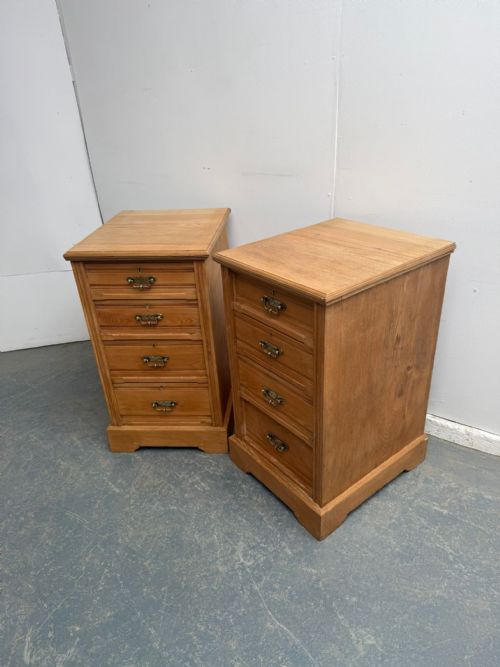
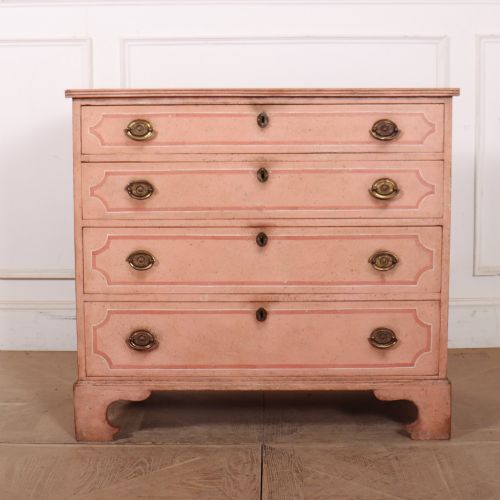

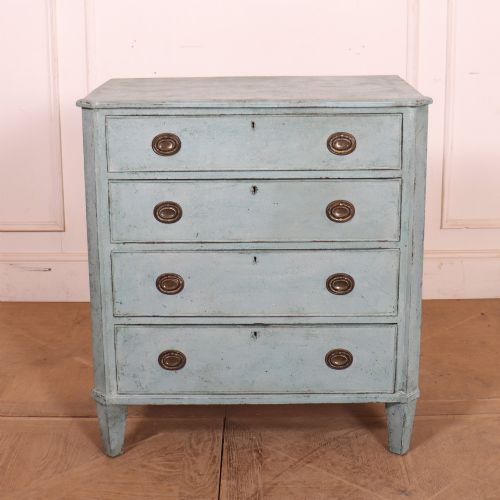
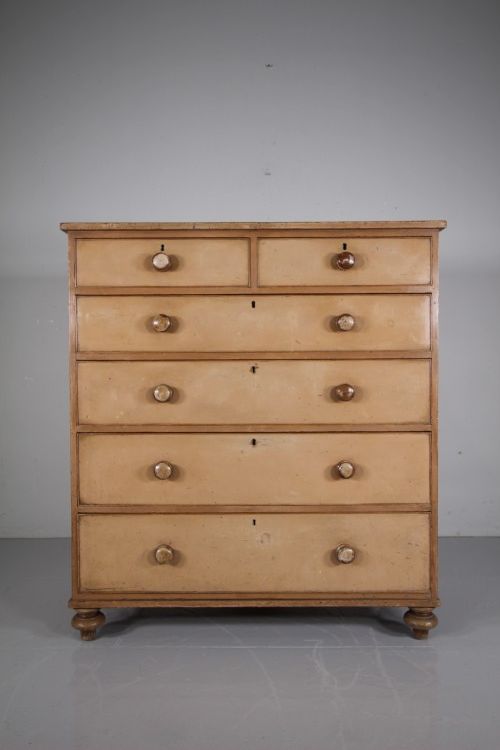
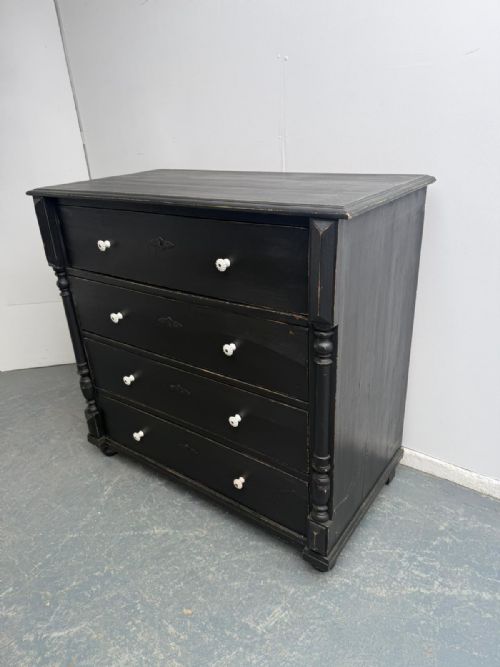
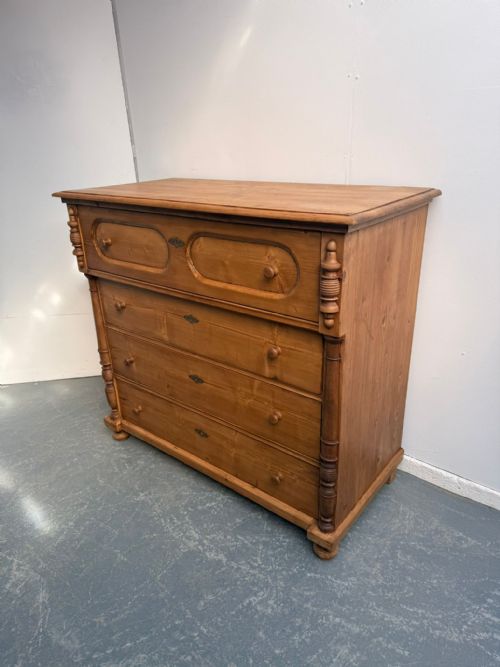


Four Drawer Pine Chest
A four drawer pine chest is a sturdy household storage piece, usually built from solid softwood and shaped by regional country cabinet-makers.
Four Drawer Pine Chest
A four drawer pine chest provides domestic storage through a stack of four graduated or equal-sized drawers contained within a rectangular timber carcass. When searching for a four drawer pine chest, buyers encounter pieces originating primarily from the nineteenth century alongside later twentieth-century examples.
The construction typically relies on native softwoods such as pine and ash, often encountered with painted surfaces, original varnish, or waxed finishes. Regional variations span English country workshops to Scandinavian and Hungarian domestic traditions, reflecting straightforward utility.
While chests of drawers dominate the form, related formats include bedside cabinets and side storage with similar drawer arrangements. The utilitarian design prioritises storage capacity over decorative flourishes, suiting everyday domestic placement.
How they were made
Makers constructed these chests using solid pine for the main carcass, drawer frames, and internal linings, occasionally incorporating secondary hardwoods like ash or beech for structural members. Panels and framing joined through traditional carpentry methods suited to regional workshops.
Surfaces received either clear treatments such as wax or varnish, or protective layers of paint, with some examples displaying sign-writing or simulated timber graining. Metal hardware, including brass pulls or iron handles, secured the drawer fronts.
Listings feature pieces spanning the 19th Century, Victorian period, and 1930s, constructed from pine, ash, and painted wood.
What varies in quality
The standard of a four drawer pine chest depends largely on the integrity of its original surfaces, whether preserved paint, early wax, or clear finish. Pieces retaining untouched patination and original handles stand apart from those stripped or altered over time.
Construction details also dictate quality, particularly the neatness of dovetail joints in the drawer construction and the stability of the timber carcass. Better examples maintain smooth drawer operation and solid backing boards without extensive replacement timber.
GEMLA FABRIKERS
The Four Drawer Pine Chest Glossary
- Pine
- A softwood derived from coniferous trees, widely utilised in British and continental furniture making for its accessibility and workability. It forms the primary structural material for the majority of these chests.
- Dovetail
- A traditional interlocking woodworking joint used to secure drawer corners together securely. The precision of these cuts often indicates the standard of workshop execution.
- Commode
- A term historically applied to ornamental chests of drawers or cabinets, frequently seen in continental European listings. These pieces serve the same functional storage role as standard chests.
- Gallery
- A raised wooden border or superstructure fixed to the top surface of a chest. This feature prevents items placed on top from rolling off.
- Provenance
- The documented history of ownership or origin associated with a specific piece of furniture. Sign-written examples often provide direct clues to their commercial background.
Four Drawer Pine Chest: Frequently Asked Questions
How do I date an old pine chest?
Dating relies on observing construction methods, timber preparation, and handling hardware. Hand-cut dovetails and original surface treatments typically point towards nineteenth-century production.
Later twentieth-century examples display different mechanical milling traits and standardised fittings. Comparing the carcass structure with known period styles helps narrow the decade.
Are painted pine chests original?
Many pine chests received coats of paint during their working lives, either applied originally by the maker or subsequently by owners. Original paint surfaces show wear patterns and craquelure consistent with age.
Distinguishing between early decorative paint schemes and later modern applications requires inspecting layer buildup around edges and hardware. Hungarian and Scandinavian pieces frequently retain distinctive regional painted finishes.
How should I care for waxed pine?
Waxed pine surfaces benefit from occasional application of natural beeswax to nourish the softwood and maintain a protective barrier. Avoid placing these chests near direct heat sources or strong sunlight to prevent timber splitting.
Cleaning should involve only a dry or slightly damp soft cloth. Harsh chemical polishes strip the historic wax layer and dull the timber patination.
What is the difference between English and continental chests?
English country chests generally favour simpler waxed or scrubbed pine finishes with straightforward rectangular proportions. Continental examples, particularly from Sweden or Hungary, frequently feature painted decoration and distinct moulding profiles.
Construction details also vary by region, reflecting the local softwoods and hardware available to the cabinet-maker. Both traditions prioritize practical storage capacity over elaborate ornamentation.