

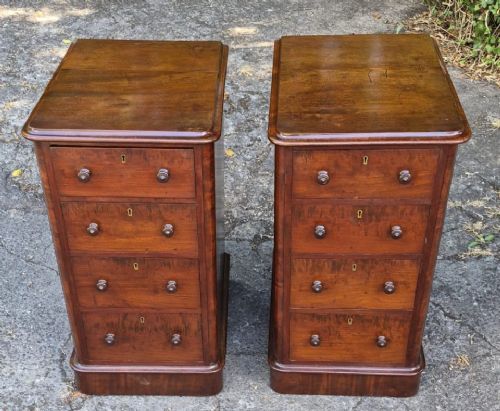
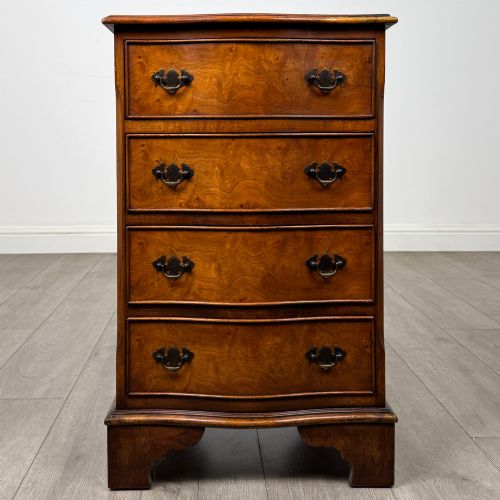
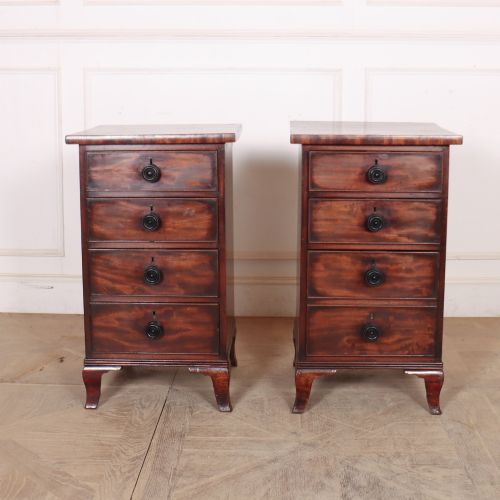
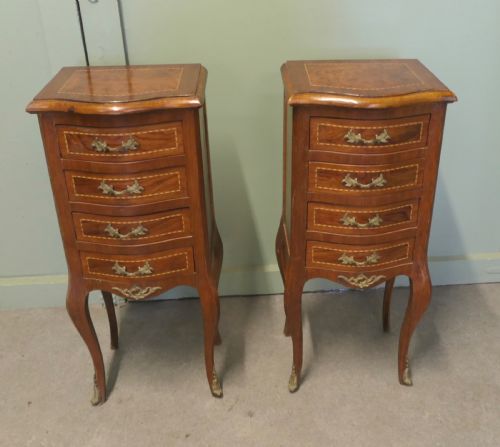


Four Drawer Bedside Tables
Four drawer bedside tables offer useful bedside storage, uniting compact proportions with practical vertically stacked drawers.
Four Drawer Bedside Tables
When searching for four drawer bedside tables, buyers encounter compact chests of drawers and bedside cabinets originating from the Victorian, Edwardian, and Georgian periods. These pieces provide substantial drawer storage within a narrow footprint suited to domestic placement beside a bed.
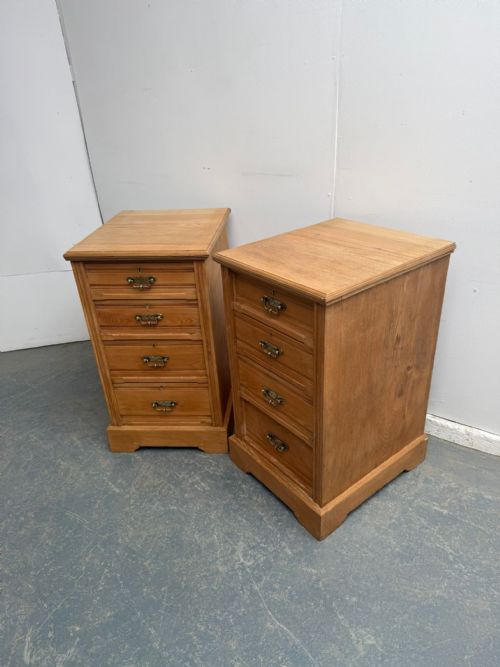
The pieces listed on this page span styles from Victorian country and late Victorian work to French Louis XV and Arts and Crafts examples. Walnut, mahogany, and ash form the primary carcases, often constructed as matching pairs.
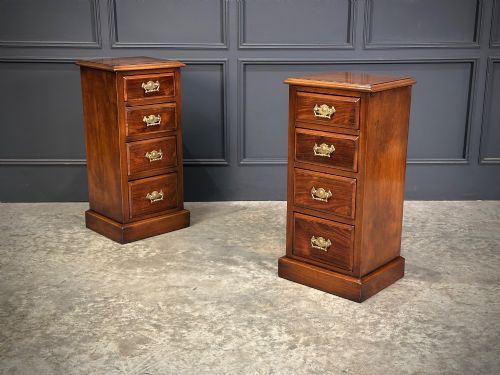
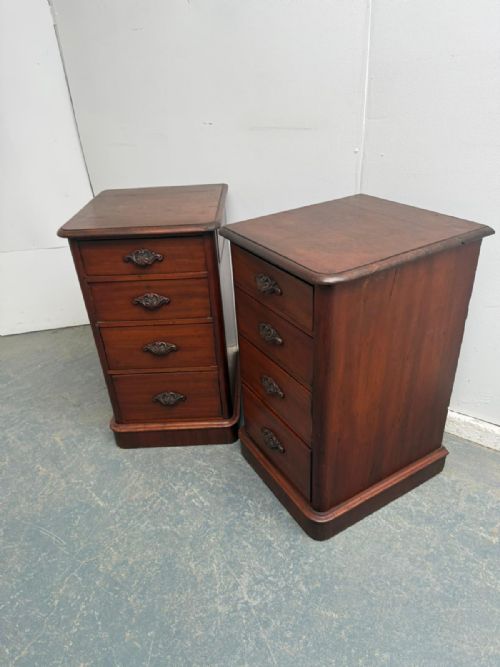
Forms vary from traditional bedside chests and tall side lockers to nightstands and small chests of drawers. Buyers frequently meet pairs featuring four graduated drawers fitted with brass handles.
How they were made
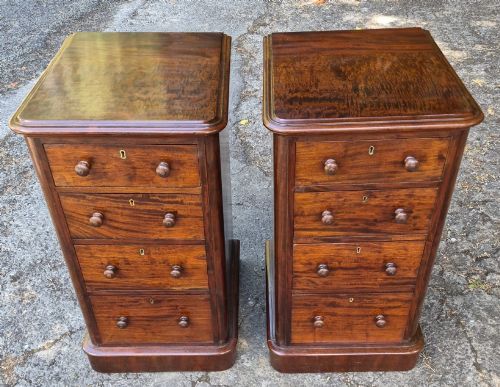
Cabinet makers utilised solid timbers alongside decorative veneers including flame mahogany and burr walnut. Wood inlay and brass mounts provide ornamental detail across several periods.
Surfaces frequently display a waxed finish applied to highlight the grain of ash, walnut, or mahogany. Certain French nightstands incorporate marble tops alongside panelled figured walnut carcases.
Several diminutive chests manage to squeeze four full drawers into a height barely exceeding a low mattress.
What varies in quality
The calibre of a piece rests upon the selection of timber veneers, such as figured walnut or flame mahogany, and the crispness of any wood inlay or brass hardware. Solid timber construction of the carcase and drawer linings determines durability.
Proportion and execution separate standard examples from finer items, particularly where serpentine fronts, ormolu mounts, or marble surfaces are integrated into the design.
James Shoolbred
The Four Drawer Bedside Tables Glossary
- Burr walnut
- A figured wood grain prized by cabinet makers for its swirling patterns. It appears frequently on Victorian and later bedside chests.
- Flame mahogany
- A veneer showing a distinctive flickering grain pattern resembling flames. This material is typical of finer 19th-century case furniture.
- Ormolu
- Gilded bronze ornamentation applied to furniture. It is characteristic of French style side lockers and nightstands.
- Serpentine front
- A furniture front curving outward at the ends and inward at the centre. This shape demands high skill from the woodworker.
Four Drawer Bedside Tables: Frequently Asked Questions
What periods do these pieces date from?
The pieces span the Georgian, Victorian, Edwardian, and early twentieth-century eras. Most examples date from the nineteenth century.
Craftsmanship and materials shifted across these decades, moving from plain mahogany to burr walnut and ash.
Are pairs common in these tables?
Many listings consist of matching pairs intended for placement on either side of a bed. These paired items share identical timber and hardware.
Single items also appear among the selection for spaces requiring only one bedside chest.
How do I care for waxed wood?
Waxed surfaces require occasional gentle cleaning with a soft cloth and the periodic application of traditional furniture wax. Avoid placing them in direct sunlight or near heat sources.
Proper maintenance preserves the lustre of mahogany, walnut, and ash finishes.
What materials were used?
Makers employed solid woods and veneers including mahogany, walnut, burr walnut, ash, and rosewood. Brass handles and metal fittings appear regularly.
Some French nightstands feature marble tops integrated into the timber carcase.