

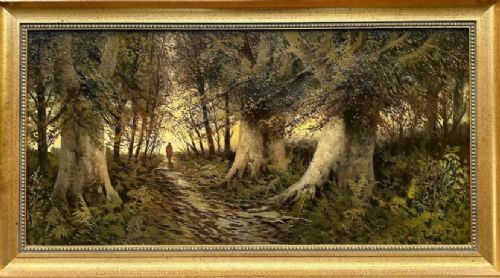
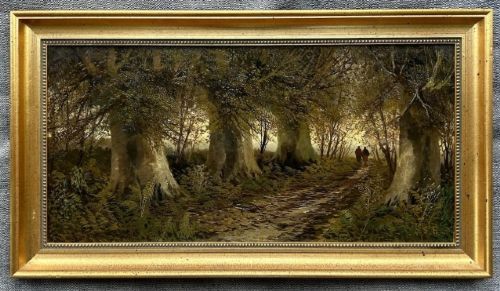
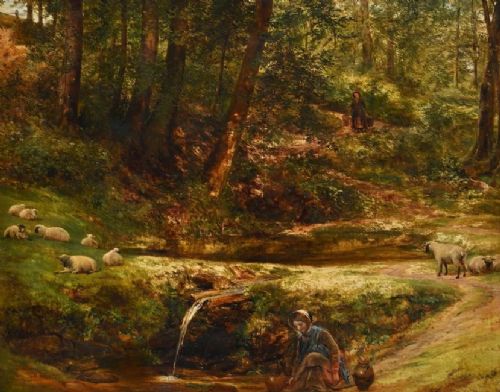


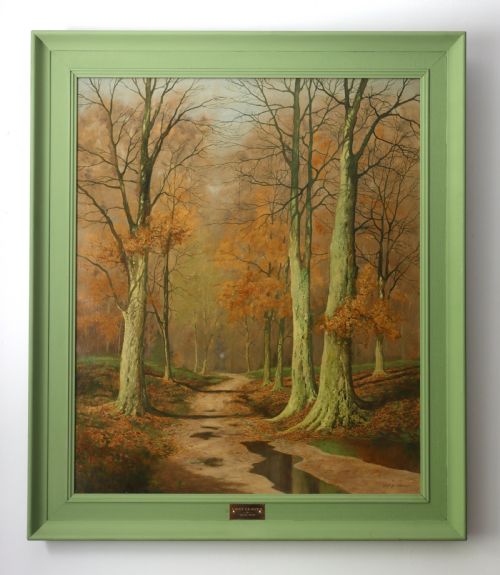


Forest Scene Oil Painting
A forest scene oil painting brings the quiet depth of woodland light and ancient timber directly into a room.
Forest Scene Oil Painting
A forest scene oil painting captures wooded landscapes, rivers under canopy, and timbered clearings through the layered application of oil paint. These works span centuries of artistic interpretation, from atmospheric Dutch compositions to mid-century impressionist sketches.
The pieces appearing on this page range from nineteenth-century realism depicting figures and cattle among English trees to twentieth-century impressionist interpretations of leafy lanes. Buyers encounter canvases and wood panels created by named artists and regional schools alike.
Subjects frequently centre on seasonal woodland shifts, incorporating autumnal palettes, summer foliage, or winter snow across British and continental landscapes. The execution varies from intimate panel studies to large framed canvas works.
How they were made
Artists built these works using oil paint applied to stretched canvas or prepared wood panels, often adding layers of varnish to preserve the depth of pigment. The medium allowed for rich blending to render shadows beneath branches and the glint of sunlight through leaves.
Support structures typically involved woven canvas fixed to wooden stretchers or solid wood boards that provided a stable ground for detailed brushwork. Gilt and carved wood frames frequently accompanied these paintings, complementing the tones of the forest floor and sky.
Listings feature works spanning from the eighteenth century to the mid-twentieth century, executed in oil on canvas and wood panel.
What varies in quality
Quality rests in the handling of light through the canopy and the structural integrity of the painted surface, where confident brushwork distinguishes master observation from routine output. The subtlety of transitional tones between deep woodland shadow and sunset skies marks the finer examples.
The condition of the original canvas or wood panel, alongside the preservation of the paint layers without extensive overpainting, dictates the standing of a piece. Original frames suited to the period of the work further elevate the whole composition.
William H Myers·Thomas W Lascelles·Richard Redgrave·David Watts·James Proudfoot·Jan Evert Morel·J McIntyre·Augustus William Enness·Walter Emsley·William Mellor·Sam Bough·Carl Milton Jensen·Joseph Thors
The Forest Scene Oil Painting Glossary
- Oil paint
- Pigment suspended in a drying oil, typically linseed, which allows for slow blending and rich colour depth. It forms a durable film that darkens very little with age.
- Wood panel
- A rigid wooden support used instead of canvas, often found in earlier works. Panels provided a smooth, stable surface for fine detail.
- Impressionism
- A style focusing on the accurate depiction of light and its shifting qualities rather than minute detail. Artists captured the immediate visual impression of a scene.
- Canvas
- Heavy woven fabric stretched across a wooden frame to serve as a painting surface. It flexes slightly with atmospheric changes.
- Gilt
- A thin layer of gold leaf applied to the wooden frame surrounding a painting. It adds a warm metallic border that enhances the tones within the artwork.
Forest Scene Oil Painting: Frequently Asked Questions
How do I date a forest scene oil painting?
Dating relies on examining the canvas preparation, stretcher construction, and the style of the frame alongside any signatures or inscriptions on the reverse. Costume details on figures within the woodland also provide clear chronological markers.
Changes in pigment usage and artistic convention from the eighteenth century through to the mid-twentieth century help narrow the period of execution.
Where should I hang a woodland oil painting?
Choose a wall away from direct sunlight and sudden temperature shifts, such as active fireplaces, to protect the oil paint and canvas. Stable indoor conditions prevent the wood panel or canvas from warping.
Position the painting at eye level where ambient room light can catch the varied textures of the brushwork and the sheen of the gilt frame.
What is the difference between canvas and wood panel works?
Canvas provides a flexible, woven support that absorbs environmental changes well when properly tensioned on a wooden frame. Wood panels offer a completely rigid ground that allows for minute, highly detailed brushwork.
Panel paintings from earlier periods require careful humidity monitoring to prevent the wood from splitting over time.