

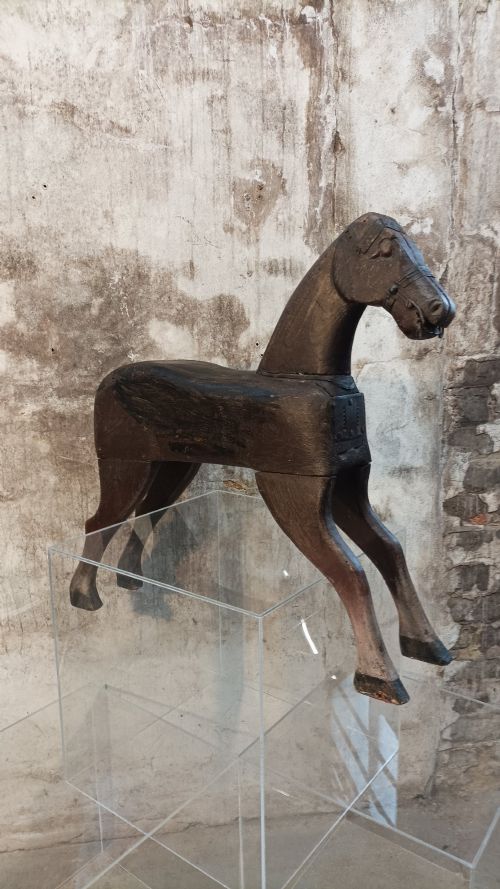
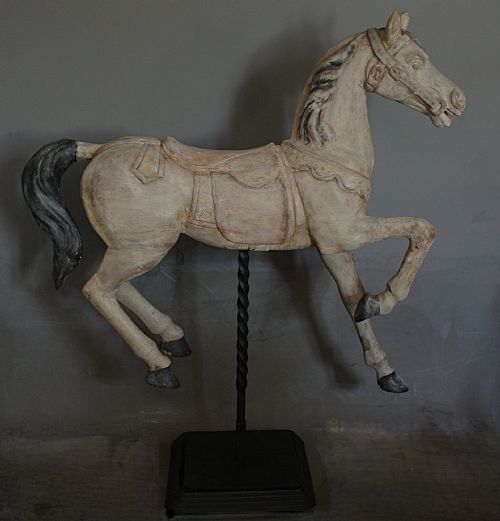


Folk Art Wooden Horse
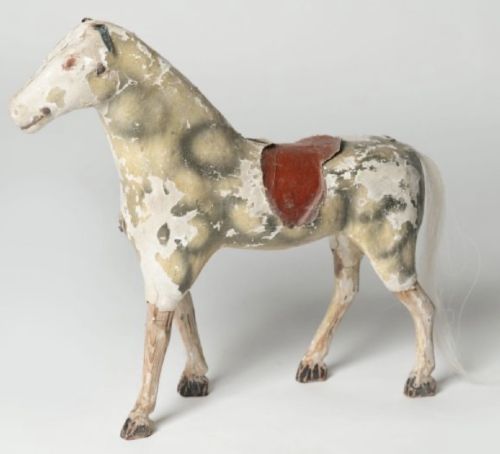
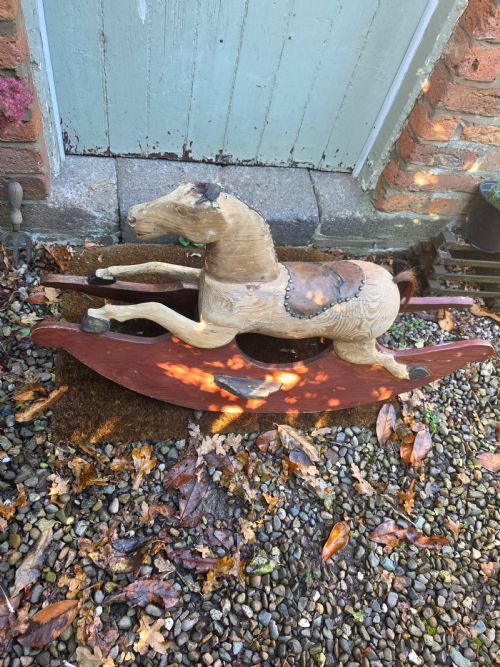
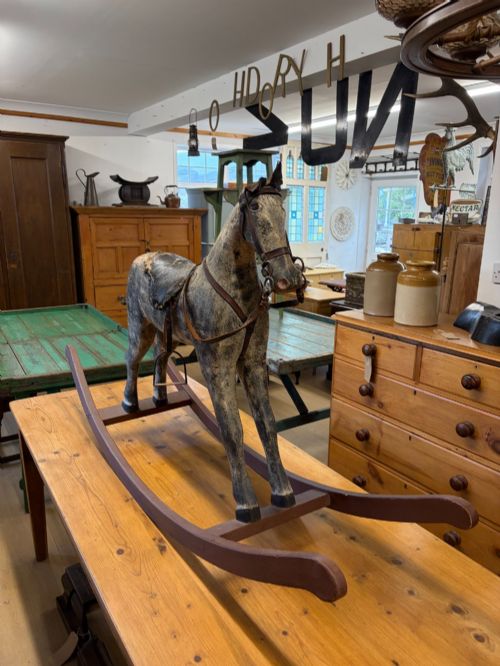
These folk art wooden horse pieces range from early rocking horses to carousel figures, bringing untutored hand-carved character into a room.
Folk Art Wooden Horse
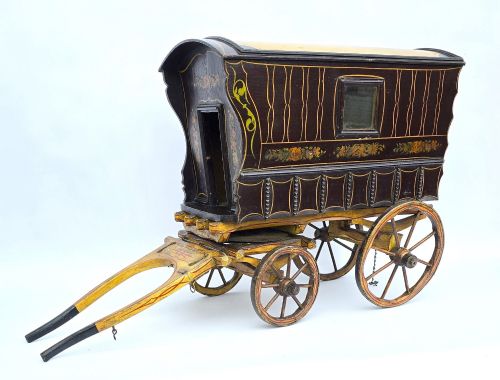
A folk art wooden horse brings together utilitarian craft and vernacular sculpture, spanning full-scale playground rockers and small carved figures. When searching this phrase, buyers encounter everything from large carousel animals to naive toys and scale models.
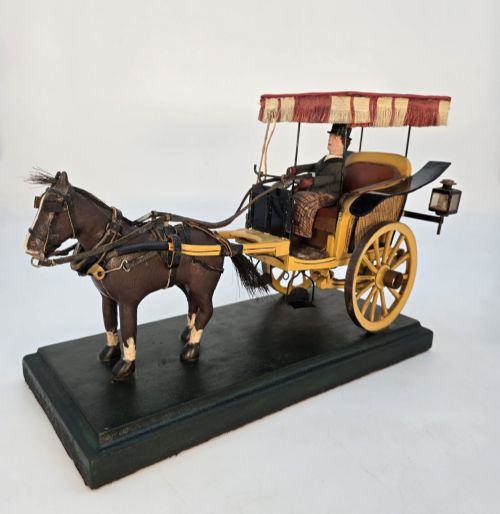
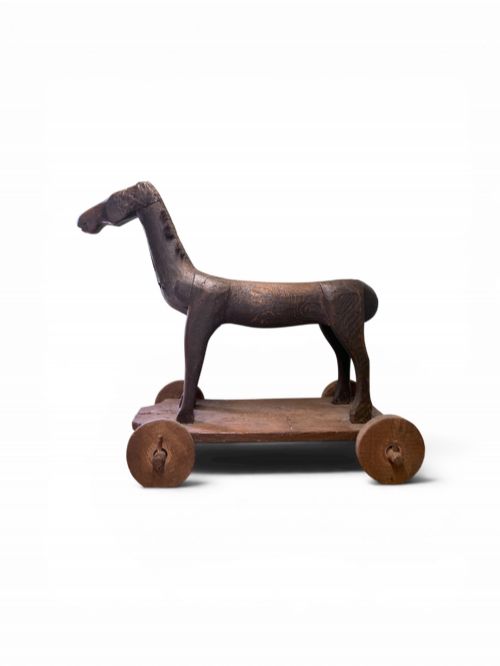
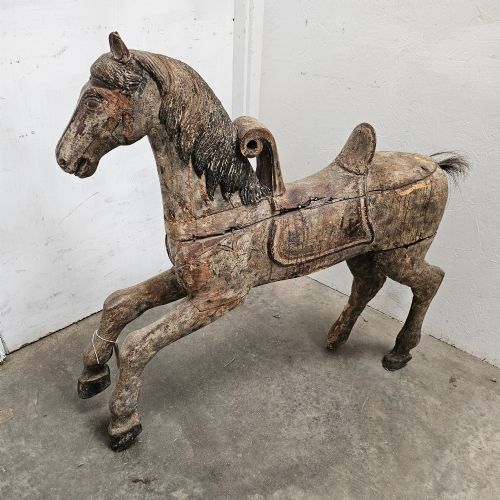
The majority of pieces seen here originate from the nineteenth century and the early twentieth century, showing regional British, French, Scandinavian, and continental European styles. These objects include painted rocking horses, fairground survivors, and carved wooden models originating from varied domestic workshops.
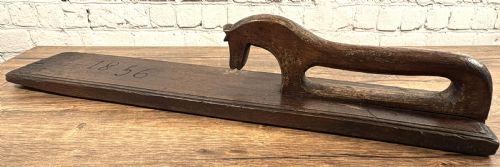
Forms vary from sturdy rocking horses on pine stands to decorative sculptures, mangle board handles, and architectural carvings. Each object reflects the hand of a maker working outside official academy traditions, relying on inherited local patterns.
Materials and construction
Carvers shaped these figures primarily from solid wood such as pine, oak, and varied hardwoods, often applying layers of oil or water-based paint to finish the surface. Many pieces incorporate supplementary materials like iron hardware, leather straps, and real horsehair for manes and tails.
Makers constructed larger rocking horses and fairground figures using joined or laminated timbers carved with gouges and chisels, while smaller toys and models exhibit simpler whittled or scratch-built techniques. Surfaces frequently retain original polychrome paint schemes, showing decades of wear beneath subsequent overpainting.
Folk Art Wooden Horse Retail Price Guide 2026
Typical asking prices for folk art wooden horse among the pieces listed under this phrase on Sellingantiques today, from the lower quarter to the upper quarter. They describe what is for sale here now, not the wider market.
A nineteenth-century gingerbread mould featuring a man on horseback proves that early folk carvers saw no reason why baking equipment shouldn't double as sculpture.
Assessing quality and character
Quality in a folk art wooden horse rests upon the strength of the carving and the survival of an original painted surface. Untutored pieces with bold, expressive carving lines and genuine handling wear command greater visual presence than later, more mechanical reproductions.
The integrity of the surface skin dictates much of the appeal, with undisturbed original paint layers providing historical depth. Structural honesty, such as unreplaced wooden bodies and untouched leather or iron components, separates superior survivals from heavily restored examples.
R.D. Roberts·Robert Kime
The Folk Art Wooden Horse Glossary
- Folk art
- Objects created by self-taught or local artisans using traditional methods outside academic fine art conventions. These pieces prioritise practical utility and vernacular expression over classical proportion.
- Polychrome
- Decorated in multiple colours of paint. This surface treatment appears frequently on carousel figures and rocking horses to simulate dappled coats and harness details.
- Mangle board
- A domestic wooden board used historically in Scandinavia for smoothing linen, typically fitted with an ornate carved handle shaped like a horse head. These boards demonstrate high-status folk carving traditions.
- Fairground horse
- A carved wooden animal produced for amusement rides and carousels, designed to withstand public use while carrying dynamic, spirited postures. They often feature robust construction and layered paint schemes.
- Naive
- A descriptive term for art produced without formal training, characterised by charming perspective or anatomy. Naive wooden horses show direct observation interpreted through traditional local skill.
Folk Art Wooden Horse: Frequently Asked Questions
How do I date a wooden horse?
Dating relies upon tool marks, construction methods, and the composition of underlying paint layers. Nineteenth-century examples often exhibit hand-forged iron nails and dense pine bodies shaped with traditional drawknives and gouges.
Later pieces from the twentieth century frequently show machine-sawn timber and different primer layers. Examining wear patterns around the seat and footrests also helps determine the age of use.
Where were these wooden horses made?
The pieces originate from domestic workshops, farmsteads, and fairground carvers across Britain, France, Scandinavia, Russia, and India. Each region utilised local timbers and distinct painting traditions.
For instance, Scandinavian makers produced carved mangle boards with horse motifs, while English and continental workshops focused on rocking horses and carousel figures.
How should I clean original paint?
Original painted surfaces require minimal intervention to preserve the historic patina and flakey layers of pigment. Dusting gently with a dry, soft brush is usually sufficient for routine maintenance.
Avoid using water, chemical solvents, or modern cleaning products that can strip the fragile binders in early oil or distemper paint. Professional conservators should handle any necessary consolidation of flaking surfaces.
What is the difference between a toy and a fairground horse?
Toys were generally smaller, lighter, and designed for domestic play by children, resulting in intimate scale and simpler internal bracing. Fairground horses were built heavier to mount onto carousel platforms and withstand public amusement.
Fairground pieces also display more dramatic, windswept postures and complex multi-layered paint finishes intended to catch the eye in motion.