



Folk Art Wooden Head
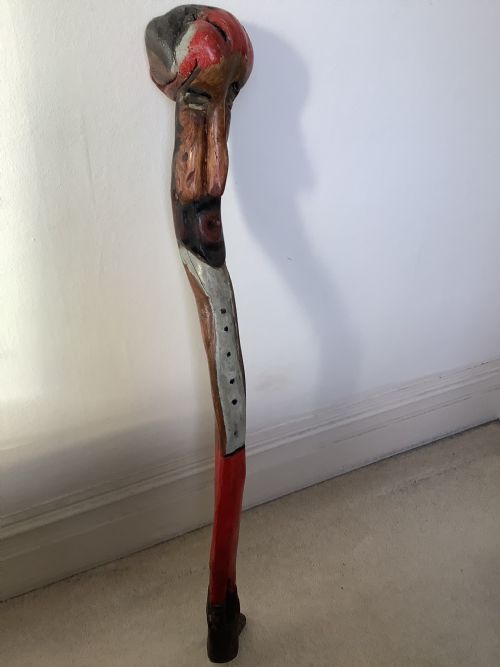
A folk art wooden head brings immediate character to a room, drawing the eye with its direct carving and individual expression.
Folk Art Wooden Head
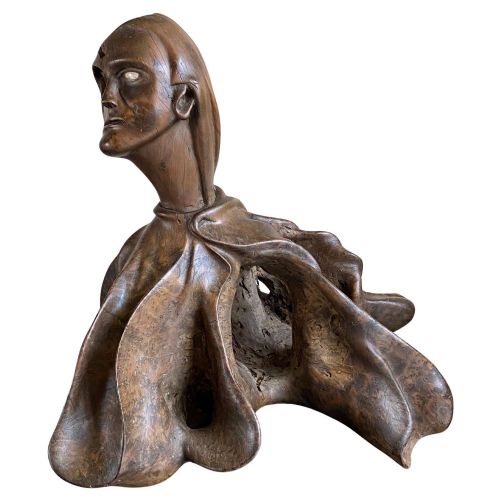
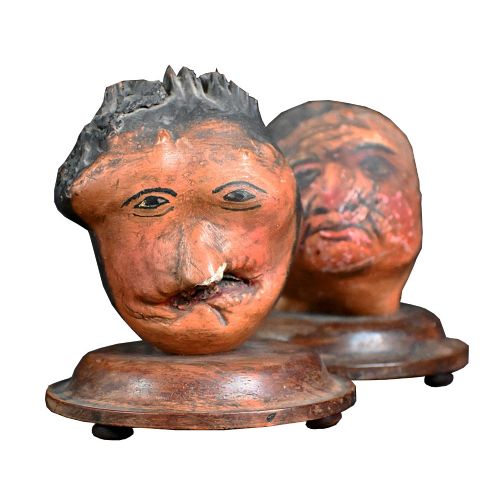
When you search for a folk art wooden head, you find an eclectic mix of functional items and sculptural pieces shaped by hands far removed from academic training. These range from utilitarian objects like snuff boxes and nutcrackers to decorative wall plaques, milliner's heads, and life-size human forms.
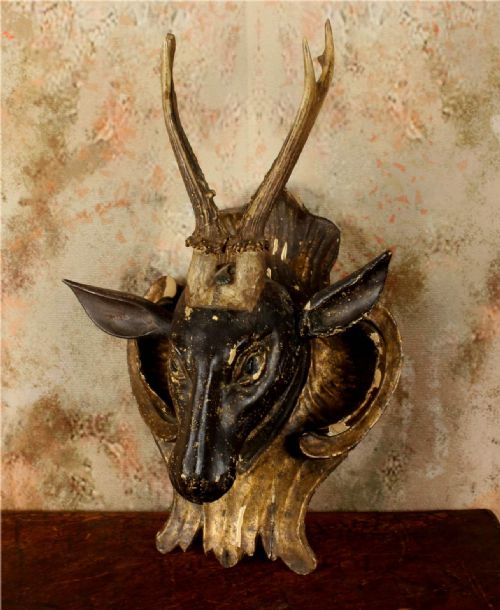
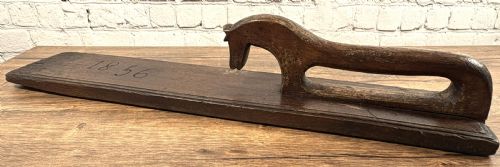
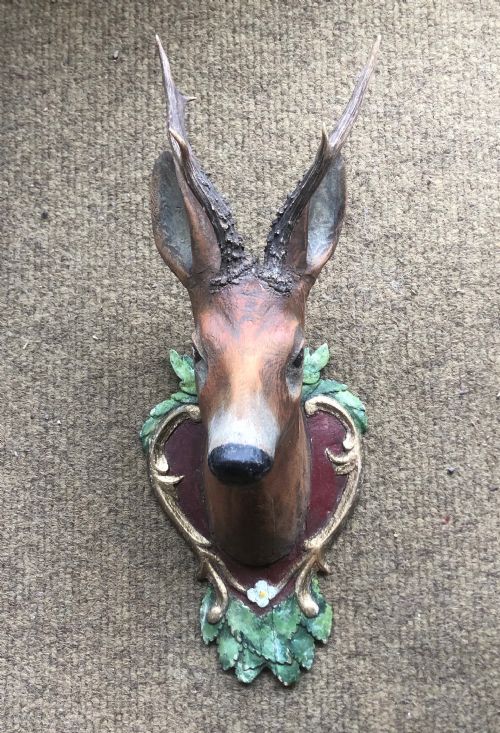
The selection on this page leans heavily towards nineteenth-century examples and Victorian novelty pieces. Alongside human visages, the offerings frequently showcase animal forms including deer heads, ram's heads, stags, dogs, and horses.
Regional traditions emerge clearly through styles such as Black Forest carving, Scandinavian country work, English country vernacular, and Japanese Mingei folk art. Each object carries the distinct mark of its maker's local environment and available materials.
Materials and construction
Carvers utilised whatever timber lay to hand, resulting in pieces fashioned from oak, yew burr, thorn wood, and general carved wood. Some makers incorporated natural elements directly into the design, attaching real antlers or bone to carved wooden mounts.
Surface finish plays a vital role in defining these objects, with many pieces retaining original polychrome paint, parcel gilt details, or simple plain wood surfaces. The tool marks left by gouges and knives remain visible, recording the immediate process of shaping the timber.
Listings feature wood, paint, carved wood, antler, oak, polychrome paint, parcel gilt, and yew burr across the nineteenth and early twentieth centuries.
Assessing quality
Quality rests primarily on the vigour of the carving and the strength of the expression. A superior piece captures personality or anatomical energy with economy and confidence, whereas weaker work feels stiff and hesitant.
Original surface preservation distinguishes finer examples from those stripped or heavily restored. The integrity of the polychrome paint or the rich patina of bare wood adds considerable depth to the object's visual impact.
The Folk Art Wooden Head Glossary
- Black Forest
- A style of intricate wood carving originating from the Brienz region of Switzerland and the Black Forest in Germany. The work typically depicts realistic animals and elaborate household items.
- Polychrome paint
- The application of multiple colours to the surface of a carved wooden object. This finish enhances the realism or decorative appeal of the piece.
- Yew burr
- A growth on a yew tree producing highly figured and knotted wood grain. Carvers value this material for its dense, intricate patterns.
Folk Art Wooden Head: Frequently Asked Questions
What were folk art wooden heads used for?
Many of these carved heads served practical functions rather than sitting as pure sculpture. You will find them integrated into walking sticks, snuff boxes, nutcrackers, and mangle boards.
Others performed specific trade roles, such as milliner's heads used in hat shops or fairground figures designed to attract attention. Over time, their utility faded and people kept them purely for their sculptural presence.
How do I date a wooden folk art head?
Dating relies heavily on tool marks, timber choice, and surface wear. Nineteenth-century pieces often show hand-carving techniques that predate modern machinery.
Paint analysis and style provide further clues, as Victorian novelty work and Scandinavian country pieces often share specific regional motifs. Comparing the wear patterns on the wood helps confirm the age of the object.
Where should I display a wooden head?
These pieces suit mantelpieces, bookshelves, and tables where their sculptural form can be viewed closely. Wall plaques and mounted animal heads require secure fixings suited to the weight of the timber.
Keep them away from direct heat sources and strong sunlight to protect the wood and any original polychrome paint from fading or cracking.
How do I care for antique carved wood?
Maintain a stable indoor humidity to prevent the timber from drying out or splitting. Dust the surface gently with a dry, soft cloth rather than using liquid polishes.
Avoid applying modern waxes to pieces with original painted surfaces, as foreign substances can alter the fragile historic finish.