





Folk Art Walking Stick
These folk art walking sticks are carved pieces of functional sculpture that bring tactile history and individual character straight into a room.
Identifying folk art walking sticks
A folk art walking stick is a hand-carved support piece created outside formal academic traditions, often by anonymous makers. The examples found here span the Victorian period, the nineteenth century, and around eighteen-eighty, capturing a distinct era of domestic craftsmanship.
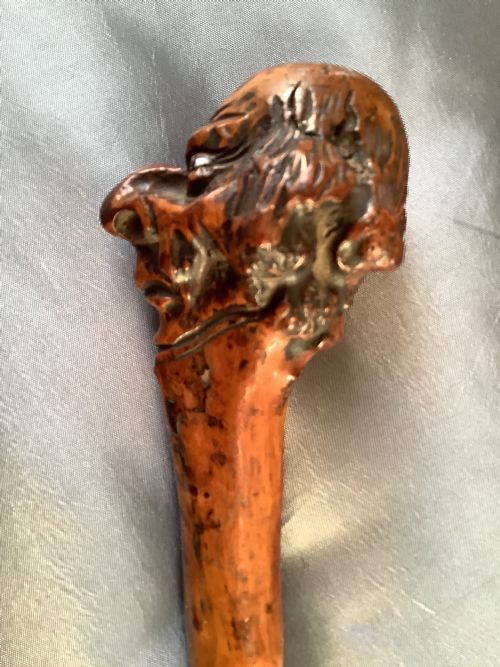
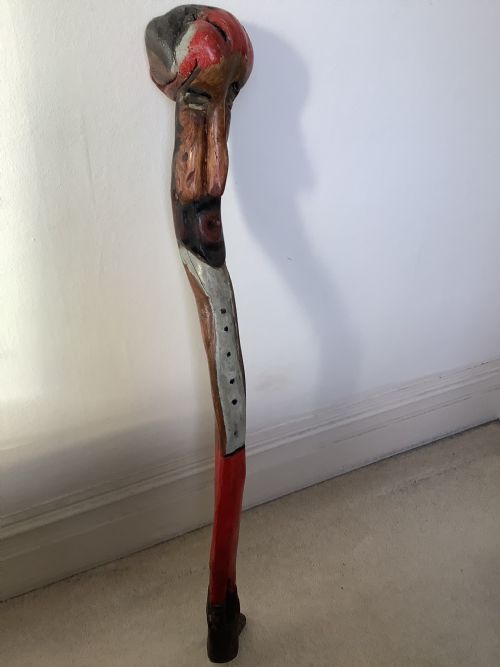
The most common versions encountered on this page are nineteenth-century wooden walking sticks featuring carved figurative tops. These range from clenched fists and carved dog heads to stylised animal forms and naturalistic shapes.
Makers often drew inspiration from daily life, nature, and personal expression rather than official design canons. This gives each walking stick a singular narrative and a direct link to the hands that shaped it.
Materials and construction
Makers utilised a variety of native timbers, including elm wood, fruitwood, boxwood, and general wood, selecting each piece for its grain and resilience. Some sticks incorporate bone, horn, and metal elements to form contrasting handles and ferrules.
Carvers shaped the handles using hand tools to create detailed motifs such as hares, clenched fists, and clasping hands. Long hours of handling and natural oils over generations imparted deep patinas to the wooden surfaces.
Assessing quality
Quality rests primarily on the anatomical accuracy and expressive depth of the carving. A well-modelled animal head or hand shows confident toolwork that animates the material.
The integration of contrasting materials like bone and horn with wooden shafts elevates the composition. Furthermore, a deep, undisturbed patina indicates age and regular use without losing the sharpness of the original cuts.
The Folk Art Walking Stick Glossary
- Patina
- The lustrous surface sheen developed over decades of handling and exposure to air. This deep colour is a key indicator of age.
- Ferrule
- The protective metal cap fitted to the bottom of a walking stick to prevent wear during use. It grounds the piece both visually and physically.
- Fruitwood
- A dense, pale timber from fruit-bearing trees such as apple or pear that accepts fine detail well. Carvers favoured it for intricate handles.
- Boxwood
- A hard, yellowish wood with a fine grain used for detailed miniature carving. It holds sharp edges exceptionally well over time.
Frequently Asked Questions
What are folk art walking sticks?
These are handmade walking supports carved by non-professional makers, typically during the nineteenth century. They often feature figurative handles like hands, dogs, or hares.
Unlike factory-produced canes, each stick reflects the personal taste and resourcefulness of its creator, using accessible materials like elm, fruitwood, bone, and horn.
How were these sticks used?
Victorian walkers utilised them as daily outdoor aids for balance and locomotion, as well as fashion accessories. The carved handles provided a comfortable grip during long strolls.
Beyond practical support, carrying a distinctive carved stick served as a subtle form of personal expression or social display for the owner.
How should I display a walking stick?
Many collectors place them upright in heavy ceramic umbrellas stands or wall-mounted wooden racks. This keeps the carved handles visible at eye level.
Ensure they are kept away from direct heat sources and strong sunlight to protect the historic wood and bone components from drying out.
How do I identify nineteenth-century examples?
Look for traditional Victorian forms, specific wood types like elm and fruitwood, and signs of genuine hand-carving without modern machinery marks. A deep, natural patina also points to extended age.
Comparing the style of the carving against documented nineteenth-century folk pieces helps confirm the correct period of origin.