




Novelty Walking Cane Handle
These novelty walking cane handle pieces turn everyday support into miniature sculpture, capturing animal heads, golf clubs and hidden tools.
Novelty Walking Cane Handle
A novelty walking cane handle sits at the top of a walking stick, cane, parasol, or swagger stick, serving as a grip shaped into an animal, object, or mechanical gadget. When you search for a novelty walking cane handle, you encounter decorative grips from the nineteenth century, the Edwardian era, and the Art Deco period.
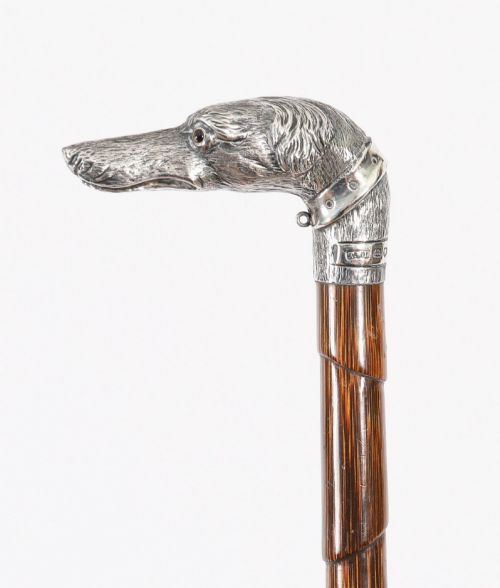
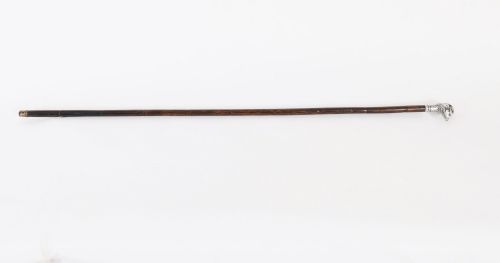
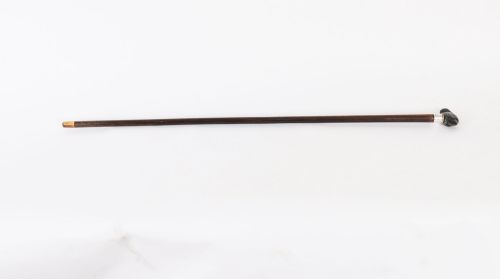
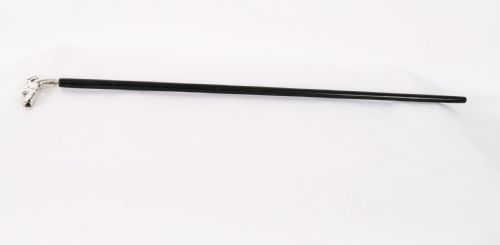
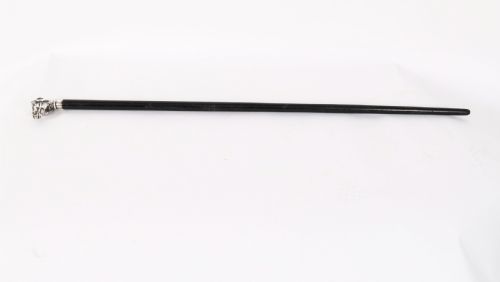
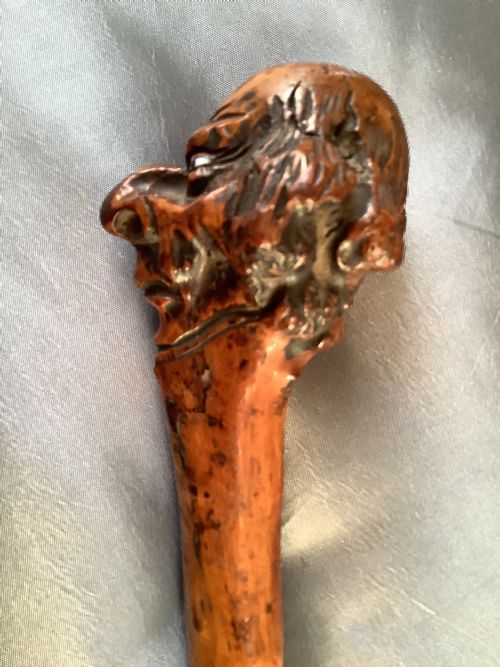
The pieces appearing on this page take the form of greyhounds, swans, ducks, parrots, horses, rabbits, hares, golf clubs, and clenched fists. Animal heads rendered in silver dominate the selection, alongside utilitarian forms incorporating hidden corkscrews, snuff boxes, swords, or flutes.
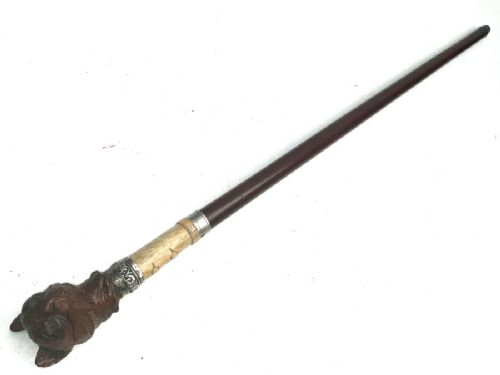
Makers produced these functional accessories for gentlemen and ladies across Victorian and Edwardian society, utilising woods such as hardwood and ebonised wood alongside horn, glass, and sterling silver. Many examples combine a carved wooden shaft with a solid silver or horn terminal, while parasol handles offer a lighter variant of the same decorative impulse.
How they were made
Craftsman assembled multi-part items by joining silver terminals to ebonised wood or timber shafts, often incorporating hidden mechanical compartments for corkscrews, snuff boxes, and blades. Horn pommels were shaped and polished to create smooth, durable grips suited to daily use.
Novelty Walking Cane Handle Retail Price Guide 2026
Typical asking prices for novelty walking cane handle among the pieces listed under this phrase on Sellingantiques today, from the lower quarter to the upper quarter. They describe what is for sale here now, not the wider market.
What varies in quality
The distinction between standard items and superior examples lies in the sharpness of the model and the weight of the metal. A finely chased silver bird or hound head retains crisp feather and fur definition, whereas lower-tier pieces show softened lines from worn moulds or heavy polishing.
Complexity of construction also separates the range, as pieces housing concealed corkscrews, flutes, or snuff boxes require precise engineering to maintain structural integrity in the shaft. The choice of material influences quality, with substantial sterling silver mounts and dense hardwoods sitting above simpler plated or softwood constructions.
The Novelty Walking Cane Handle Glossary
- Pommel
- A rounded knob or terminal forming the top grip of a walking stick or cane. This term frequently describes horn or metal hand-rests.
- Ebonised wood
- Timber treated with a dark finish to imitate expensive ebony. Makers utilised this material to provide a dark, uniform shaft beneath bright silver handles.
- Swagger stick
- A short, light cane carried by military officers or civilians as a fashion accessory rather than for physical support. These often feature decorative silver tops.
- Gadget cane
- A walking stick containing a concealed utility such as a sword, flute, corkscrew, or snuff box. These items combine disguise with functional mechanics.
- Sterling silver
- An alloy consisting of ninety-two point five percent silver by mass, used extensively for the decorative animal heads on these handles.
Novelty Walking Cane Handle: Frequently Asked Questions
What is a novelty walking cane handle?
A novelty walking cane handle is the decorative grip at the top of a walking stick or cane, shaped to resemble an animal, sports equipment, or a clenched fist.
These pieces turned functional walking aids into personal statements and conversation items during the nineteenth and early twentieth centuries.
How were concealed gadgets used?
Hidden mechanisms inside gadget canes allowed owners to carry items like corkscrews, small blades, or musical flutes discreetly.
By unscrewing or releasing the handle, the user accessed the tool housed within the wooden shaft without altering the exterior appearance of the cane.
How do I identify a Victorian handle?
Victorian handles often feature naturalistic animal carvings in silver or wood, reflecting nineteenth-century tastes for folk art and detailed portraiture.
Makers working in this era utilised heavy timber shafts, horn, and cast silver mounts decorated with motifs such as four-leaf clovers.
Are these handles detachable?
Most handles are permanently fixed to their original wooden shafts as structural components of the walking stick or cane.
While some parasol handles and swagger sticks were constructed as distinct units, walking cane handles form an integrated top section designed to bear weight.