
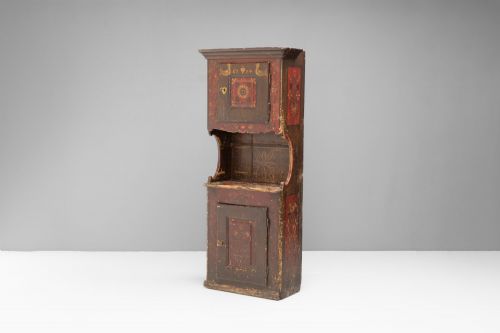


Folk Art Painted Cabinet
A folk art painted cabinet brings provincial character into a room through regional finishes and utilitarian storage.
Folk Art Painted Cabinet
A folk art painted cabinet encompasses storage forms built across European and British provinces, including wall cupboards, dressers, chests of drawers, and marriage armoires. The selection here leans heavily towards Scandinavian examples, particularly Swedish cupboards dating from the nineteenth century alongside pieces from Hungary, Austria, and England.
Makers constructed these storage items for domestic utility in farmhouses and country homes, utilising pine and other native timbers before applying decorative surface treatments. Forms range from compact hanging wall cupboards to tall kitchen dressers and multi-tiered linen presses intended for rural households.
How they were made
Carpenters built these pieces primarily from solid pine using traditional jointing methods suitable for regional furniture workshops. Iron and brass hardware such as hinges, latches, and key escutcheons secure the doors and drawers.
Surfaces received hand-applied coats of paint, frequently in regional colour palettes like cream, teal, and green, alongside specific decorative techniques including ragwork and polychrome detailing.
The listings feature nineteenth-century pine furniture decorated with regional paint treatments, including Hungarian dressers and Swedish ragwork cupboards.
What varies in quality
The integrity of the original paint surface determines much of the distinction between examples, as untouched historic pigment carries greater visual depth than later repainting. Structural survival also plays a role, separating pieces retaining their original backboards, hardware, and internal shelving from those with extensive timber replacement.
Melissa White·Roosje Hindeloopen
The Folk Art Painted Cabinet Glossary
- Ragwork
- A decorative paint finish created by manipulating wet pigment with rags or cloths to produce mottled, textured patterns on the wood surface. This technique appears frequently on Scandinavian pine furniture.
- Polychromed
- Painted or decorated in several colours. This term often applies to folk art altars and figurative storage pieces.
- Marriage armoire
- A large wardrobe or cupboard traditionally commissioned to celebrate a wedding, often bearing dates, initials, or symbolic folk motifs.
Folk Art Painted Cabinet: Frequently Asked Questions
Where were folk art painted cabinets made?
These pieces originated in various European regions, with a strong representation from Sweden, Hungary, Austria, and provincial England.
Local workshops built them for domestic storage using native softwoods and regional decorative traditions.
How do I identify a Swedish Gustavian cabinet?
Gustavian pieces typically display restrained neoclassical lines inspired by French fashions adapted to Swedish tastes.
They often feature pale painted surfaces, fluted details, and simpler cornices than their continental counterparts.
What is ragwork paint?
Ragwork is a surface decoration technique where painters applied and manipulated colour using cloths to create textured patterns.
This method was common in nineteenth-century Scandinavian furniture to imitate richer materials or add visual depth.
How do I care for an antique painted surface?
Keep painted furniture away from direct sunlight and steady temperature fluctuations to prevent the wood and pigment from drying out.
Dust gently with a dry cloth and avoid harsh chemical cleaners that might strip historic finishes.