


Folk Art Marriage Coffer
A folk art marriage coffer is a substantial storage box decorated for a union, offering robust utility and vernacular charm.
Folk Art Marriage Coffer
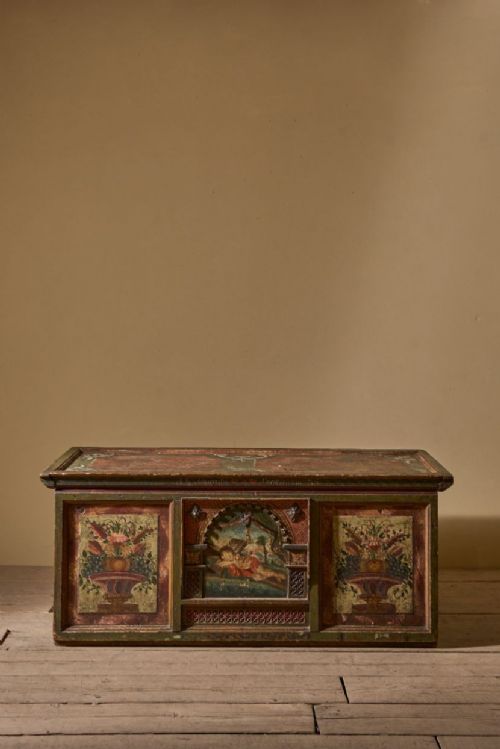
When you search for a folk art marriage coffer, you encounter large timber storage chests built for weddings and dowries across Europe. These pieces take the form of blanket boxes, mule chests, dome-top coffers and shaped boxes on stands.
The versions most frequently met on this page originate from Sweden and Hungary, alongside examples from Italy, the Alpine region and Romania. They date predominantly from the nineteenth and eighteenth centuries, with Georgian and Victorian periods also represented.
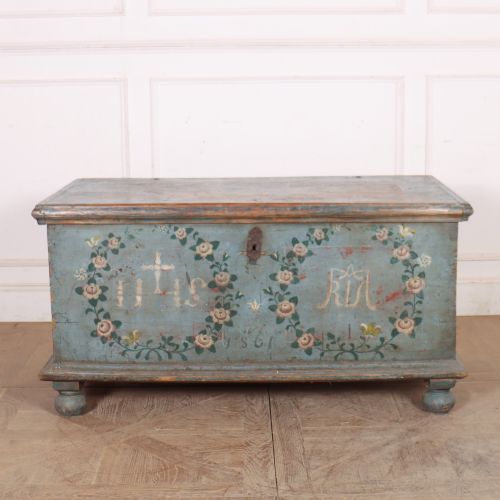
Constructed to hold household linens and personal property, these chests serve as primary records of regional decorative traditions. Makers applied vibrant pigments and tempera paint directly onto timber surfaces to record dates and familial motifs.
How they were made
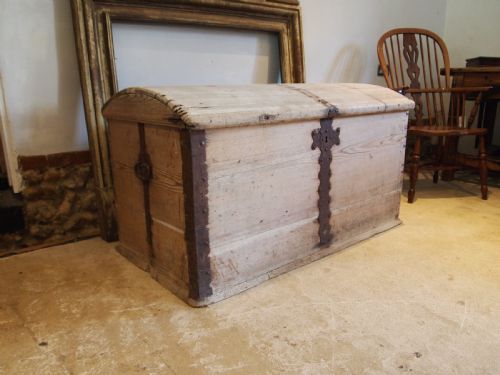
Carpenters built these marriage coffers using pine and oak as the primary structural timbers. Boards were joined to form deep rectangular bodies and secured with wrought iron hinges, locks and straps.
Makers then applied layers of paint, pigment and tempera to the wooden surfaces. This painted decoration often included floral designs, dates and regional folk art motifs applied directly over the pine or oak ground.
Several Swedish dome-top coffers still bear painted dates that outlasted the marriage vows inscribed upon them.
What varies in quality
Quality in a marriage coffer rests primarily on the preservation of the original painted surface. Pieces retaining their early pigment and tempera display the distinct hand of regional folk artists more clearly than those with later overpainting.
Construction methods also separate standard utility boxes from superior dowry chests. Substantial timber framing, original wrought iron hardware and integrated stands or dome lids distinguish the more ambitious pieces.
The Folk Art Marriage Coffer Glossary
- Marriage coffer
- A large storage chest commissioned or decorated to mark a wedding, frequently used to house dowry linens and household goods. These pieces often feature painted dates and regional folk art motifs.
- Cassone
- An Italian term for a large chest or coffer traditionally used for holding bridal trousseaus. Examples found in this tradition display regional hand-painted decoration.
- Tempera paint
- A permanent, fast-drying painting medium consisting of coloured pigments mixed with a water-soluble binder. Makers utilised this medium to apply floral and geometric patterns to pine and oak surfaces.
- Dome top
- A rounded lid construction designed to shed water and increase internal storage capacity. This profile appears frequently on nineteenth-century Swedish coffers.
- Mule chest
- A storage chest fitted with one or more drawers beneath the main compartment. These forms combine the deep box storage of a coffer with accessible drawer space.
Folk Art Marriage Coffer: Frequently Asked Questions
What were marriage coffers used for?
These large chests served primarily to hold the household linens, garments and valuables that formed a bride's dowry. Families utilised them for secure storage in the home while displaying regional artistic traditions.
Over time, the chests transitioned from functional bridal storage to decorative furnishings within the domestic interior. Their durable construction allowed them to withstand generations of domestic use.
How do I identify a Swedish marriage chest?
Swedish marriage chests often feature distinctive painted surfaces in shades of teal, dark tones, or pale pine. They frequently incorporate dome-top lids or shaped box designs supported on stands.
Maker details on these Swedish pieces typically date from the nineteenth or eighteenth centuries. The painted floral motifs and folk art panels provide clear visual markers of Scandinavian origin.
What is the difference between an oak and pine coffer?
Oak marriage chests offer a denser, heavier timber frame that often includes hand-carved details alongside painted elements. They represent a more substantial structural approach compared to softwood variants.
Pine coffers provide a lighter ground that readily accepts vibrant tempera paint and pigments. Painters utilised this softwood extensively for regional folk art decoration across Hungary and Sweden.
How do I live with a painted folk art coffer?
Position your coffer away from direct sunlight and heat sources to protect the delicate tempera paint and pine timber. Use the interior space for storing textiles while keeping the lid free from heavy objects that might scratch the surface.
Allow the natural patination and historical wear to remain undisturbed. These surface characteristics document the age and authenticity of the piece.